 Deepa Mehta’s latest is a classic example of what happens when a respected and capable director gets so famous and achieves such international recognition that nobody around is willing to speak the truth to him/her. The intentions of Heaven on Earth( titled Videsh in India) are honorable; domestic violence, espectially in immigrant homes where the bride arrives from India without support systems in place, is a serious issue. The director herself introduces the subject in the opening sequences of the movie.
Chand Grewal ( Preity Zinta) comes to Canada as a new bride, never having met her in-laws before the day she arrives from India. At first her new family seems welcoming and normal but the relationship turns abusive almost immediately. Shocked by her circumstances and powerless to change them, Chand retreats into a sort of fugue state in times of stress, muttering lines from a fairy tale her mother told her as a child. She is put to work in a local garments factory ( the pay of course goes right to her husband) and befriends a Jamaican co-worker who recognizes the signs of abuse and tries to help her out.
At this point the movie veers into fantasy territory. I don’t want to give away too much of the plot but viewers familiar with Girish Karnad’s play Nagamandala will figure out what’s coming without any trouble. Chand’s ordeal gives her the strength to leave the marriage.
Preita Zinta gives the performance of a lifetime and surely deserves an award for this. She subsumes herself in the role better that the mainstream Bollywood star can ever hope to do and projects a vulnerability that will bring tears to your eyes. Sadly, the movie does not do justice to the issue she represents. The film has many scenes reflecting Chand’s powerlessness and the lack of support from her family back home, yet suddenly at the end Chand packs up and leaves, passport in hand. Where will she go? Who’s helping her?
Deepa Mehta makes a plea to victims of domestic abuse to reach out for institutional help ( WNI has featured Narika among the prominent advocates for such women in the Bay Area) but nowhere are these important organizations mentioned in the movie. Ultimately Chand finds the courage in herself and breaks away from her situation on her own, a choice not available to many women terrorised by their husband’s families and financially dependent on them. Also the scenes with the snake are just too far-fetched for this movie which touches upon a real, contemporary and relevant subject..domestic abuse is no fantasy.
Heaven on Earth feels like an indulgence on the part of the director. There is no doubt that Deepa Mehta is competent. Each scene is shot with sensitivity and she is really good at portraying disfunctional families and cruel behavior. But overall the movie does not work. It seems hastily made and feels like it is pandering to the issue of domestic violence.
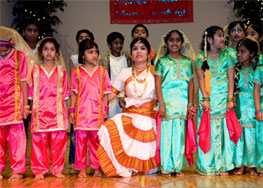 Given the profusion of dance forms that thrive in India, it would not be a stretch to say that Indians are born with a sense of rhythm. No one exemplifies the love affair that we have with movement better than Selvi Pragasam, the founder of the
  Life took a serious turn when her newborn son Aidan was diagnosed with a rare illness called Propionic Acidemia. She devoted herself to caring for his special needs for several years. Eventually she joined
 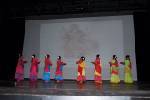 The school prides itself on the creativity of its offerings. “Bharatanatyam is a lovely art form, but it does have its fixed set of rules,” says Selvi, “and artists like Shobana who have tried to experiment with it have been heavily criticized. I would rather keep its purity and experiment outside the format.” She and her partner Lavanya Gopal experiment with incorporating belly dance, jazz, salsa and many other forms of dance into their performances.
 IFDA is not limited to teaching Bharatanatyam and fusion dance classes. Because of her background with special needs, Selvi puts up shows as fundraisers for Jeena and the Propionic Acidemia foundation, among other worthy causes. The academy also makes it possible for middle and high-school students volunteer at her special needs dance classes as part of their community service requirements through Selvi’s connection with
  The
The 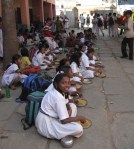 Through kitchens specially designed by engineers to leverage technology and sourcing its food stocks from local markets, Akshaya Patra is able to reduce costs associated with transportation and food spoilage while supporting the local economy. In a short time, the foundation has grown to become the largest, and certainly most innovative, school lunch program in the world. Akshaya Patra is a great example of what a non-profit organization can achieve– a cost effective, scalable solution with high quality service delivery.
 Water, No Ice