Monthly Archives: January 2009

More bad news about High Fructose Corn Syrup

High Fructose Corn Syrup(HFCS) has been directly linked to the obesity epidemic in the US, partly because of the nature of the sweetener itself( we’ll go into that later) and partly because of its ubiquity. It is found in virtually every processed food in the supermarket, from sodas to soups(!!), from crackers and cookies to pizza. It is found in stuff you would not normally think contains sugar, and therein lies the problem.

I’ve always been leery of HFCS because it has seemed to me to be such an artificial way of making a sweetener. (A quick check of my larder revealed the presence of HFCS in just two products – Ritz crackers and saltines.)Check out this nausea-inducing article for how corn syrup is really made.

High-fructose corn syrup (HFCS) is produced by processing corn starch to yield glucose, and then processing the glucose to produce a high percentage of fructose. …Three different enzymes are needed to break down cornstarch.

First, cornstarch is treated with alpha-amylase to produce shorter chains of sugars called polysaccharides. Alpha-amylase is industrially produced by a bacterium, usually Bacillus sp. It is purified and then shipped to HFCS manufacturers.

Next, an enzyme called glucoamylase breaks the sugar chains down even further to yield the simple sugar glucose. Unlike alpha-amylase, glucoamylase is produced by Aspergillus, a fungus, in a fermentation vat where one would likely see little balls of Aspergillus floating on the top….

The fructose in the corn syrup is not absorbed by the body the way glucose is. Says one doctor –

Glucose causes the pancreas to release insulin which drives sugar from the bloodstream into cells. Glucose causes fat cells to release leptin that makes you feel full so you eat less. Glucose prevents the stomach from releasing ghrelin that makes you hungry. On the other hand, fructose does not cause fat cells to release leptin and does not suppress ghrelin. This means that fructose increases hunger to make you eat more. Furthermore, the liver converts fructose far more readily to a body fat called triglyceride, than it does with glucose. High triglyceride levels raise blood levels of the bad LDL cholesterol and lower blood levels of the good HDL cholesterol, which increases heart attack risk. Recent data shows that large amounts of fructose cause insulin resistance, impair glucose tolerance, produce high levels of insulin, raise triglycerides, and cause high blood pressure in animals.

To be fair, cane sugar also contains similar proportions of fructose and glucose. But the way the glucose and fructose molecules bond in regular sugar is different from that of HFCS. In the latter, the glucose and fructose molecules are unbound and they apparently create something called reactive carbonyls when they hit the bloodstream. Carbonation( in sodas) increases the creation of these reactive carbonyls.

Reactive carbonyls, which have been linked to tissue damage and complications of diabetes, are elevated in the blood of people with diabetes. A single can of soda, however, has five times that concentration of reactive carbonyls. Old-fashioned table sugar, on the other hand, has no reactive carbonyls because its fructose and glucose molecules are “bound” and therefore stable, unlike the “unbound” molecules of HFCS.

Still, most of the current research so far has shown that all processed sugar is pretty bad for you and HFCS pretty much tops the list.

Now comes the really bad news

Almost half of tested samples of commercial high-fructose corn syrup (HFCS) contained mercury, which was also found in nearly a third of 55 popular brand-name food and beverage products where HFCS is the first- or second-highest labeled ingredient, according to two new U.S. studies.

Because of the complicated chemical-ridden process in which HFCS is made, there are chances of mercury contamination and the researchers in these two studies used off-the-shelf products from supermarkets as late as October 2008.

The moral of the story? Cut down on your sugar consumption in general and stay away from nasty stuff like HFCS totally. Start reading labels. Drink water, not soda or “fruit juice”.

H/T Nandini MInocha for the idea.

Bhagavad Gita – Chapter 6: How to become a yogi

By Gaurav Rastogi

We left Chapter 5 (The Way of Renunciation) knowing that there are two paths to liberation- renunciation (sannyasa) and detached action (karma yoga), and that it’s better to be a yogi in either case. Chapter 6 starts with Krishna equating renunciation and action, saying that one cannot do one without the other. Then he clarifies that mastery of oneself is the main thing. When you have mastered yourself, everything is the same.

yam sannyasam iti prahur, yogam tam viddhi pandava
na hy asannyasta-sankalpo, yogi bhavati kascana

“What is called renunciation is the same as yoga, or linking oneself with the Supreme, for no one can become a yogi unless he renounces the desire for sense gratification.”

Then, Krishna offers what I believe would be the first ever DIY instructions- how do you meditate all by yourself. These instructions- on how to set-up for meditation, and how do you know you’re doing it right, are very precise, and take up a large part of this chapter. Krishna ends this monologue by describing infinite bliss. Arjuna points out that this is a tall order, and asks a question all starter-yogis ask- “This sounds tough…what happens if I don’t make it”? Krishna reassures him that all effort counts towards progress, and that progress is better measured over life-times.

Absence makes the brain go wander: As Arjuna predicts in this chapter, taking up a challenge is not the same thing as sticking with it. I took on the task of reading the Gita for you, but my discipline failed me. I have read, and read the next three chapters in vain, only to face a blank sheet with dread every time I start to write down my thoughts. Oh! Krishna! What have I done? Good news is- Chapter 6 (which I take on again today) declares that all efforts count towards progress, and that progress is better measured in life-times.

Single Player version: When I read the part in the beginning where Krishna talks about self-mastery being the main thing, I was stuck with a mental image that’s unshakeable. Imagine the camera focusing on Arjuna’s face at the beginning of the chapter, then suddenly zooming out when Krishna starts talking. As the camera zooms out, I would expect to see the vast armies laid out on all sides, and faces of known relatives and friends flashing past. However, in this sequence, instead of seeing the Pandava and Kaurava armies, one sees nothing! No brothers, no elephants, no enemies, no friends, and no army. Nothing! Arjuna is alone.

As Krishna goes on talking, it becomes clear that the only action is needs to take is inside Arjuna, and there’s no war to be had outside. The story was not at all about the war outside, but instead about the raging war within. Arjuna’s task was to cancel out the inputs he was receiving from his senses, and just do what he’s here to do. No wonder Arjuna is confused- this is a very tall order, and he’s not sure if he has the practice to be in the moment.

Starter Yogis please read this first: The DIY instructions are very crisp, and not unlike what one finds in any modern hatha yoga book. Find a clean place, bring an empty stomach (not growling with hunger), body aligned, and mind controlled, detach you’re your daily thoughts and slowly become still. When your mind is serene, you’ll enjoy infinite bliss, seeing “me in everywhere, and everything sees in me, to him I am never lost, and he is not lost to me”.
samam kaya-siro-grivam, dharayann acalam sthirah
sampreksya nasikagram svam, disas canavalokayan
prasantatma vigata-bhir brahmacari-vrate sthitah
manah samyamya mac-citto yukta asita mat-parah

“One should hold one’s body, neck and head erect in a straight line and stare steadily at the tip of the nose. Thus, with an unagitated, subdued mind, devoid of fear, observing the vows of brahmacharya, one should meditate upon Me within the heart and make Me the ultimate goal of life.
This is fascinating stuff. It’s surprisingly simple and bureaucracy free. No yellow forms to fill in triplicate (do this penance here, pay for these sacrifices there), no intermediaries to ingratiate (buy “good karma” here), and best of all, no waiting in line (take a number and wait till judgment day). This sounds alarmingly simple, and one is expecting there to be a gotcha.
If at first you don’t succeed...At this point Arjuna points out the obvious roadblock in this west-coast-liberal-“freeway to infinite bliss”-business. To use a modern metaphor, Arjuna says that getting control over one’s mind is like “herding cats”. Arjuna asks what happens to those people who try but fail at this while being, as they say in my native Delhi, “good of heart (dil ka achcha)”.

… go to level 2 and re-start! The answer to this question is a logic that video-game players of all age understand clearly- you get multiple lives to achieve your goal and, oh!, you also get to carry forward the points. So, basically, if you cross level 1 but don’t finish the game, you will be reborn into a rich and pious family. If you cross level 2, you will be born into a family of yogis.
“but the yogi who strives with zealous mind, purified of all sin,
through many lives perfected, then comes to the supreme”.

When you’re happy and you know it…Imagine you’re passing along directions to go someplace, and you don’t have writing, drawing or printing technology. All you have to rely upon is word of mouth propagation of the directions. Your instructions have to be independent of the expertise of the follower. How do you make sure that the person following the instructions is not lost? Easy- you describe the path and the end state in many different ways. That’s what Krishna does here.
“As a lamp in a windless place does not flicker”, “where thought ceases and where the mind sees the soul”, “disunion form the union with pain”, and finally:
“who sees me everywhere and everything sees in me,
To him I am never lost, and he is not lost to me”

It’s very clear that these markers are the equivalent of “bread crumbs” left by Hansel and Gretel in the story by Brothers Grimm. If you’re not seeing these signs, then you’re not doing something right! Find a Guru!

Greater than, redux
The chapter ends with a formulaic ending, literally. Krishna says the following formula:
Yogi > Acsetic (Tapasvin)
Yogi > Wise man (Gyani)
Yogi > Man of Action (Karmi)
=>Therefore, become a Yogi, Arjuna. QED

Quotes and translations from http://www.asitis.com/

1 Cathartic Journey, 2 Circumstantial Victims, 4 Chakravarti Rajas: "Madhavi" Promises Drama Alright!

By Priya Das

“What is freedom? That I am finally freed of my intense love for you, or that I cannot hold my child even when my bosom yearns for him?” asks Madhavi, of her young and idealistic beau. Naatak’s 29th production, ‘Madhavi’ is as much a story of duty and debt as it is of the ‘business’ of love. It is a saga of two souls finding themselves in deal-striking circumstances that don’t always go their way. It is a riveting glimpse on what power struggles can be all about. Like the shocking few moments after you realize the water’s colder than you thought it would be before you jumped in, ‘Madhavi’ will stun first, and get you thinking and reacting furiously later.

That’s the thing with all aces: a script painted on the canvas of the Mahabharata, dialog by Bhisham Sahni (simplified by Naatak), deft directing, and acting. Each backs the other’s intrigue. The 45 minutes that I spent watching the rehearsal left me hanging on to every word that couldn’t be emoted fast enough by the characters.

In this play, Bhisham Sahni uses a little known story from the Mahabharata to comment on the subjugation and manipulation of women that has gone on through the ages. Galaav, arrogant disciple of sage Vishwamitra, insists on giving him gurudakshina, even though the sage wants nothing. Vishwamitra’s demands cannot be met by the impoverished Galaav who goes to King Yayati, who has a prodigious reputation for generosity. Yayati gives him his daughter Madhavi who is blessed with two boons: she can renew her virginity and youth whenever she wants and each son she bears will be a chakravarti. So Galav gives her away to one horse-owning king after another for just one year in return for a reward. She in turn gives them each a son.

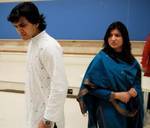
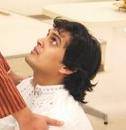
Gaalav, Madhavi’s beau is fittingly played by Ratnesh Rai, down to the long hair and idealistic fire in his eye. In Rai’s view, “Gaalav is mahatvakangshi( supremely ambitious). He is proud and selfish, and thinks nothing of scheming to get his needs met.” A professional theater person from Jabalpur, Rai would like to be famous one day. He admits that he identifies with Gaalav’s ambition to an extent. “Gaalav is like a flowchart, he knows what combination of boxes to push to get the right result. Who wouldn’t want to be an emperor, especially if it is offered on a platter at no cost to him?”

And that is what Madhavi offers him. She willingly agrees to the liaisons so Gaalav can pay his guru-dakshina. A case of duty gone awry, or selfless commitment to a cause?

I asked Sareeka Malhotra-Pancholi who plays Madhavi, whether she could identify with her character at all – “I definitely wouldn’t go the length as Madhavi did for love. Apart from that, there are shades in Madhavi that any woman would recognize.” Malhotra-Pancholi is a veteran Naatak’er. She’s played the lead, and smaller roles in Naatak’s productions, such as Phool Kanwar in the recent Sultana Daku. She has also produced plays and participates in American theatricals, in addition to being a researcher in her non-stage life.

As the audience, you will wonder whether Madhavi is an innocent, a martyr or simply a fool. At times, the play feels like the Hitchcockian Rebecca, the lead is felt rather than actually there. The other characters take over the story and her life. Gaalav, Yayati-her father, the various Rajas salivating for her beauty, even Marich, a non-royalty; have an opinion on what is right for her.

This kind of script makes it ideal for actors to show off their talent. Asheesh Divetia plays 2 roles, one of which is Raja Haryasch, a good man whose head is turned when he hears about Madhavi’s irresistible appeal- that she can bear him a Chakravarti son.  Divetia opines, “Haryasch is a deal-maker. He is a chauvinist, and alleviates any sense of guilt by a perception of duty, that of being a provider to his praja.” Divetia is a force on stage, as he plays King, his piercing glance challenges your perception of what is real and what is staged.

Speaking of what feels real, ladies, you may want to hang on to your stoles a little tighter- brilliantly played by Harish Sundaram-Agastya, Raja Divodas’ lecherous eyes will penetrate the darkness that envelopes the audience. “So are you proficient in Kama? Do you know what makes a man happy?” the raja lasciviously asks of Madhavi. The stage is where Sundaram-Agastya was born to be, he is a character actor par excellence, and plays two other roles in Madhavi, roles that need to be watched rather than written about! He also wears many hats, he directed ‘Final Solutions’ most recently for Naatak.

So who handles all these various shades to every character, who keeps the passion on the straight and narrow? As director, Abhishek Das has his work cut out for him. What makes it easier in some sense, is that Madhavi is his pet project. “I lived with ‘Madhavi’ for a year before deciding to do it. I wanted to bring alive the beauty of language, create the golden-era, 70s feel.”

Das started as a creative personality even in his student days at IIT Kharagpur. Interestingly, when he auditioned with Naatak after he got to the Bay Area he got turned down a few times for looking too young. He did drama classes and participated in Stanford theater productions. Next, he directed a quasi musical for Project Pulse, followed it up by making a movie, ‘8000 miles away’, which was screened in August 2008. Madhavi is his directorial debut with Naatak. The complex weave between the characters is what caught his imagination. And also what Madhavi’s motivations could be- they seem out of place in our times.

So, “Madhavi ka kya hoga?” Will Gaalav and Madhavi find their way to each other amidst the ambition and deal ridden path? Will Madhavi reclaim herself through her catharsis? Find out for yourself! The play promises masala and suspense, an evening well spent.

Pictures of rehearsal shot by Nikhil.

Madhavi
A play by Bhishma Sahni
Adapted by Naatak.

SHOW TIMES: 13th February, Friday 8 pm, 14th February, Saturday 6 pm, 15th February, Sunday 3 pm.

Where: Cubberley Theater, 4000 Middlefield Rd, Palo Alto, CA 94303. More info at www.naatak.com

Tickets: Online tickets can be purchased here.

Tales from New York City

P.R. Ganapathy lived in the San Francisco Bay Area from 1999-2009, when he was assigned to a posting in New York City for a year. This series is about his experiences moving from suburban California to urban Manhattan.

It pays to think ahead

I spent the week tying up other loose ends. We finally decided to rent most of the furniture for the apartment, from CORT furniture rental. We picked out a “1-bedroom package” which contains everything one needs, and will furnish (my son) Dhruv’s room with IKEA furniture later. The rest of our worldly possessions were scheduled to reach New York via Fedex.

Aisle-seat fracas

Thursday night rolled around, and we boarded our JetBlue red-eye flight. It was a “full-flight” (what are the airlines complaining about? Every flight seems to be “full”) and we didn’t all get seats together – my son Dhruv and I were in 5D and E, my wife Sandhya was in 4C . There was a single woman in 5C, so I asked her whether she’d be willing to swap seats with Sandhya. She stood up and was on the verge of agreeing, when she saw that the folks sitting next to Sandhya had a baby with them. I guess she had made up her mind not to move, and this gave her an excuse — so she said “Oh, I don’t want to sit next to a baby. I’m sorry.” At this point, I gave up. New York attitude? I hope not…!

First impressions

We arrived a bit early, to crystal clear weather in New York City. It was cold, but bright and sunny. Despite being a bit bleary-eyed after the red-eye, approaching the Midtown tunnel on the Long Island Expressway, we had a spectacular view of Manhattan in the rising morning sun. The Empire State Building towering over all the others, and the Citigroup Tower, reflecting the sun brightly off its steel and glass facade… Waterside Plaza (the place where we’re going to stay, on the East River) itself was also clearly visible, making the sight memorable in a personal way. Our home for the next one year! All the doubts and lethargy seemed to blow away with that one breathtaking view.

Supervising delivery

CORT furniture showed up a bit late, but still within their promised delivery window. They quickly installed everything, cleared out their stuff, and left.

The Cable guy showed up first the next morning, and he too quickly installed his equipment, had me test the Internet connection using my laptop (no TV) and then he left.

TV-purchase outing

I left the family in the apartment and headed out to get a TV. I had emailed several people using Craigslist, and there seemed to be a promising prospect in the East Village, a short distance away.

The address I was looking for turned out to be in the heart of the East Village. While driving by I noticed all sorts of interesting dining options in that area and marked them for the future. The building itself was a small and narrow “pre-war walk-up”, and the person I was buying the TV from lived in Apartment 17, which turned out to be on the top (fourth)  floor – so after trekking up four stories on a narrow stairway, I finally reached the small studio apartment. The TV was huge (27″) and it was a regular old tube TV, so you can imagine it was really heavy. They had apparently received a new flat-screen TV for Christmas, which is why they were selling this one. But their cable was plugged into the flat-screen, and so I couldn’t test to make sure the monster she was selling me actually worked. I guess I’m the trusting type, and so I believed her when she said “It works perfectly. If you have any problem at all, you can have your money back.”

The lady staying there was really kind to offer to help me carry it (I had been speaking to her boyfriend until then, but he decided to “step out” at that moment, so wasn’t there to help) and we both lugged it carefully down the narrow and well-worn stairs. After carrying it down, I figured that if it didn’t work, there was no way I was going to bring that TV back, lug it up 4 floors, to get my money back!

Thankfully, there were no mishaps, and 20 minutes later, I had it back at our apartment, where to Dhruv’s delight, the TV worked perfectly.

Craigslist to the rescue again! I received several calls that day, from other folks whom I had emailed, and I continue to be amazed at what a vibrant “market-place” that simple site has created.

Unpacking with our hearts in our mouths

I returned to find that the Fedex guys had taken about half the boxes upstairs and were continuing to work their way up. Sandhya saw stains on some boxes – it was obvious that something had broken inside and leaked out. We nervously watched as more boxes came and were stacked randomly all over our living room. And then the moment we’d both been dreading arrived — one of the Fedex guys casually started unloading one largish box, and it slipped from his hands, to fall to the floor with a sickening “crunch”. We quickly read the sign on the side of the box: “Glassware, Dishes” – we both knew what was in it – our wine glasses, China dinner plates, and other breakable stuff.

We began unpacking soon after they left, and for some reason, we both kept avoiding unpacking that one box – till late in the evening, when we had no other boxes to unpack. The wine glasses were closer to the top, and we were pleasantly surprised to find that all of them had made it unscathed. The dinner plates were at the bottom (the part that hit the floor) and as Sandhya unpacked, we kept counting – 3 safe, 6 safe, 9 safe, but unfortunately the last batch of 3 had broken.

41 boxes, two moving companies (Nor-Cal and Fedex) and the final tally – a few Corning bake-and-serve dishes, a couple of Sugar / Coffee canisters, three China plates, and few plastic containers. Not bad at all. Whew.

Home delivery heaven

On Friday night, Sandhya had ordered a whole lot of groceries using Fresh Direct and that arrived on Saturday afternoon. From apples to eggs, Oil and Toilet Paper, it all came in neat little boxes. That’s one big difference we’re going to have to get used to – of having things delivered. We’ve always picked up and lugged stuff home in California but without a car, with all the parking hassles, and given the easy availability and relatively low cost of home delivery, we are sure to use it a lot. Almost a bit like India, where your friendly neighborhood grocer would be only too happy to have a “boy” bring you your stuff at home.

Dinner in Little India

We walked into Little India for a nice dinner of Kathi Rolls at a small hole-in-the-wall called Rumali. It turned out really nice – the Kathi Rolls were close to the best we’ve had in Calcutta. Little India itself was really impressive – tons of Indian Restaurants – some quite posh, some a little more “value-for-money” and even one that advertised itself as “Kosher”!! And it’s just four blocks away!

Looking forward to next week

We have a tour of Dhruv’s school scheduled for Monday, and he’ll start on Tuesday. I also begin my new work-related assignment next week, with a few meetings already set up. The weather has been great – Bright, Sunny, albeit rather cold. As I sit here, looking out over FDR and at the brightly lit Chrysler Building, we’re both filled with excitement and anticipation at the coming weeks and months. The move has been quite smooth, and roadbumps, if any, have been very minor. Touch wood, and fingers crossed!!

More on the New York move can be found on P.R. Ganapathy’s blog  talesofnyc.blogspot.com

Picture of Manhattan by randubnick under Creative Commons license.

Picture of Little India by randubnick jodi*mckee under Creative Commons license.

Meera Masi introduces "Storyteller"

Bilingual book publisher MeeraMasi is kicking off 2009 with a new section on their website that invites their readers to contribute stories for children.

“Each of us shares our Indian culture with our children in varied ways. We want to give you an opportunity to take those threads and weave them into stories that can be shared with others. In our new Story Teller section, we invite you (and your kids) to share your unique children’s stories with the global MeeraMasi community. So put fingertips to keyboard and submit your special stories to storyteller@meeramasi.com.”- say the founders.

Shameless plug alert!!!

Their first story Anku’s White Christmas, submitted by yours truly. Read it here.

Show Me The Curry!

As any cook worth her/his salt will tell you, the best way to learn a new dish is to watch someone else make it in front of you. That is the simple idea that is the basis of Show Me the Curry, a cooking blog that is rich with videos of recipes both simple and exotic, with a bent towards Indian cuisine.

Show Me the Curry is the brainchild of Hetal Jannu and Anuja Balasubramanian, neighbors in the suburban Dallas town of Frisco,TX. As kids grew up and out into school, the friends decided to embark on a venture that allowed them to use their time productively while not missing out on a single moment of “mommy time.” Both loved to cook and a cooking video blog seemed like a perfect fit. Keenly desirous of keeping what is (literally) a home-grown business professional, the friends decided to post two videos a week faithfully, with a few extra ones during festivals and special occasions.

“Even I’m embarrassed to watch our early videos,” says Anuja with a laugh. The two taught themselves the basics of video production and editing and kept improving on the bi-weekly videos, while the website was designed with a lot of help from Hetal’s techie husband.

In an industry with very few entry barriers, Show Me the Curry distinguishes itself by the professionalism of its videos and the foolproof nature of its recipes. One friend gushed, “I made Gobhi Manchurian for the first time with the help of their video and it turned out perfectly.” Their recipes also have tips for the inexperienced cook. “I learnt all my cooking through trial and error,” says Anuja , “so I figured out cooking secrets and  shortcuts the hard way. Why should anybody have to reinvent the wheel?” For instance, the website features a perfect way to make chapatti dough ahead of time and freeze. Anuja is a self-taught cook and Hetal, who grew in the US, brings a unique perspective to Indian cuisine.

Not all recipes are Indian, though the bulk of them are make to suit the Indian palate. “As cooks, we tend to get stuck on our comfort zone,” says Anuja. “Hopefully these videos will encourage people to experiment with at least cuisines outside their region in India, if not western ones.”

SMTC also has a DVD out that helps cooks to put together a party menu stress-free. In addition, an affiliate program with Amazon allows novice cooks to get some of the hardware associated with cooking.

Show Me the Curry has been around for less than two years but it is already putting the two friends on the path to financial freedom. It is a free site but its popularity makes it an attractive proposition for advertisers. “We have close to 5000 subscribers between YouTube, SMTC and the community,” says Hetal. SMTC gets about 10,000 video views per day on YouTube and 20,000 on the website. It is a great example of a successful blog that is neither technology-related nor politically inspired.

Credit for the success must also go to SMTC’s marketing efforts. The videos are available of YouTube and SMTC is up on Twitter, FaceBook, Orkut and other social networking sites as well on mobile phones. The friends also decided to start a SMTC community where viewers could put up their own recipes. “And if one of them is really good, we make a video of it ourselves, with credit to the original poster,” says Anuja.

The website has been featured in many of the local media affiliates and on USA Today. “We want to become a household name one day,” says Hetal.

Here is a video on how to make perfect Ras Malai, one that is the favorite of the founders:

H/T to Madhavi Cheruvu for the article idea.

Rang De – Share the colors of joy!

It was five years ago that Dhanalakshmi decided to set up a small general store in her area. Her thrifty ways soon fetched her enough profits to acquire a milk agency. Her life partner is also her business partner, and operates from the same location, helping her to deliver the milk.

Dhanalakshmi is now striving to do better still. She observes that there is a crying need for school stationery to be made available easily. She has also set her sights on buying a refrigerator to store milk and other perishable goods.

Dhanalakshmi is a perfect example of how an ordinary woman can turn into a smart businesswoman. The loan of Rs.10000/-   that she received for the development of her store has gone into buying a refrigerator, a coin pay phone, storage containers and a variety of stocks that includes milk. She has effectively multiplied her sources of income and her original plan of stocking school stationery? Well- “That will also be bought with the profits from the store.” says a determined Dhanalakshmi.

Dhanalakshmi’s story was made possible by Rang De, a non-profit organization that facilitates micro-credit in India. Rang De offers a platform for individuals to become Social Investors for as low as Rs.500 and connect with borrowers. Smita Ramakrishna, co-founder and CEO of Rang De writes about the decision behind the organization.

RangDe.Org began with a simple question – Why charity? If you and I want money for business, education or health, we walk up to the bank for credit. We do not ask for a donation. Have you ever wondered what happens if your corner tea stall vendor or your vegetable shop vendor needs a loan to expand his/her business?

When Ram and I decided to relocate to India and get into the development sector, one of the obvious ways would have been to set up an NGO in India and work for a cause. When we thought a little deeper about some of the issues, we began to realize that all these causes are manifestations of poverty and unless we address poverty we will not make much headway. There was a need to address poverty in a sustainable manner by involving individuals through a platform where barriers of distance or economics would not become a hindrance.

And thus RangDe.Org was born as a platform through which, any individual can connect with a person who lives in poverty and needs financial support. This connection between people of different economic backgrounds, we feel, is very important if we want to see a change in India.

Through RangDe.Org you can connect with a borrower of micro-credit by lending small sums of money small sums of money to an individual of a low income household. The money that you lend serves as the working capital for a micro-enterprise in a village or in urban slums. The typical needs that we are talking about are petty shops, cattle rearing, telephone booths.

Take Zythoombi, for instance – This widow has been eking out a living for the last 25 years, rolling beedis. She is a daily wage earner. Recent interactions with a local support group lit a spark within her. She intends to source the raw materials herself, make the beedis and sell it directly to the agents. ‘All I need is the capital” says the confident Zythoombi. Zythoombi has received Rs.5000 from Rang De. But she is not satisfied.

The amount has fetched adequate beedi leaves and tobacco to keep her busy, but leaves her two accomplices sitting idle. “We could easily handle a Rs.10000 loan and get better returns.” says Zythoombi. Her goal now, is to pay back her loan quickly and start again, with a bigger capital.

So far Rang De has raised loans for 205 borrowers from Maharashtra, Tamil Nadu and Uttar Pradesh, and plan to reach out to about 1000 borrowers in the next 6-8 months.

Rang De believes that little deeds from individuals can create a positive impact. Not everyone needs charity. Give people an access to financial opportunity and see what difference you can make with small sums of money. Log on www.rangde.org to learn more.

Inauguration Concert at the Lincoln Memorial

By Rajul Awasthi

I attended the Inauguration Concert at the Lincoln Memorial yesterday. To be honest, I went to see, for free, the great names of music that I so love and admire – live! There were Bruce Springsteen, John Mellencamp, Stevie Wonder, U2, Shakira, Usher, Beyonce (who I didn’t actually see), and many others, as also actors like Samuel Jackson and Queen Latifah. It was a great opportunity. And it was truly wonderful to hear them sing and perform.

But I have come away with an experience very unlike – and much more profound – than witnessing a rock band perform. This was truly the spirit of America that I got to feel and see. There was such a mass of people, at least a couple of hundred thousand, people who had traveled many miles to be there, to celebrate and participate in a celebration that was theirs. Each one there, I could see, owned the moment. This was their country, their celebration, their victory, and Barack Obama, their leader, their hero. It was amazing to see, whenever the Jumbotron showed a close up of Obama – singing with the music or just nodding his head to the beat – the crowd cheered lustily. And the cheers were much louder than those even for their greatly loved and admired stars that performed on the stage.

Democracy is alive and well in America. There were whites and blacks and Latinos and Asians, and all united in their ownership of the great moment. Truly, they feel the ownership because they have helped create it – they have voted. And they know each vote counted, and they know that that was their vote that got Obama to the White House.

There was much talk of history during the concert – the music was interspersed with short speeches from celebrities (Tiger Woods was one such speaker). There were the usual references to Abraham Lincoln and Martin Luther King, Jr. and John F. Kennedy and Roosevelt and, of course, George Washington. But, today when I heard the speakers quote Abraham Lincoln or Martin Luther King I felt a jab in my heart, I felt a swelling in my throat, I felt a shiver down my spine. The words acquired a meaning for me today. These men were great, their ideas were great, and this country and its people that recognized their greatness and gave them such a hallowed place in its history are, therefore, great.

Sure, the world is going through real tough times: there are conflicts in every hotspot from the Middle East to India-Pakistan, the world economy is going through the worst downturn in decades, terrorism is rampant, religion is being abused; as Shakespeare wrote in Julius Caesar – “Oh judgment, thou art fled to brutish beasts and men have lost their reason”. Yet, seeing the spirit of freedom and celebration and democracy and victory that I got to see today, I have hope. The world shall yet be a better place. America has shown how and where it can begin.

Rajul Awasthi is an IAS officer who is in the US on a one year deputation with the World Bank.

Pic courtesy the Presidential Inauguration Committee under Creative Commons License.

Congratulations, Mr. President

For once, the cool and calm Barack Hussein Obama tripped over his words as he took the path of office as the 44th President of the United States. Congratulations Mr. President, you take office at a momentous time, an enormous burden on your slim shoulders.

The hopes and dreams of not just 300 million Americans but the entire world, beseiged by terrorism and beset by economic failure, rest on this humble but confident man, who genuinely believes he can bring us all together.

Such are the expectations from the new President that, on the eve of his inauguration, a poem from Yuddha Kanda, the Ramayana’s book of war, describing Rama’s reign seems appropriate-

And tis told by ancient sages, during Rama’s happy reign,
Death untimely, dire diseases came not to his subject men,

Widows wept not in their sorrow for their lords untimely lost,
Mothers wailed not in their anguish for their babes by YAMA crost,

Robbers, cheats, and gay deceivers tempted not with lying word,
Neighbour loved his righteous neighbour and the people loved their lord!

Trees their ample produce yielded as returning seasons went,
And the earth in grateful gladness never failing harvest lent,

Rains descended in their season, never came the blighting gale,
Rich in crop and rich in pasture was each soft and smiling vale,

Loom and anvil gave their produce and the tilled and fertile soil,
And the nation lived rejoicing in their old ancestral.

Good luck Mr. President, we are with you.

Eternal vigilance

As a terrific article in Vanity Fair points out, eight years ago –

On the day of the inauguration the White House chief of staff, Andrew Card, declares a moratorium on the Clinton administration’s last-minute regulations on the environment, food safety, and health. This action is followed in the coming months by disengagement from the International Criminal Court and other international efforts.

And as the Bush administration slinks away in shame –

As the administration prepares to leave office, it promulgates a raft of “midnight” orders to weaken environmental, health-care, and product-safety regulations. The unemployment rate is nearly 7 percent and rising. Income inequality is at the highest level since the 1920s. As of a week before the election, the stock market had lost a third of its value over a period of six months.

This is the circle of political life – a constant battle between opposing forces that is fought with human and environmental chess pieces. The Nation has a reprint of an article from March 8, 1933 which is eerily prescient of this battle. The article is called “A Farewell to Republicans.”

For twelve years the Republican Party has been in power. During ten of those years it controlled the executive and legislative branches of the government. When, a few years hence, an attempt is made to minimize the disaster of this last quadrennium, and to point to a preceding eight year period of material development and growth, let it be noted that in a purely material sense the American people are much worse off today than they were twelve years ago. Far more than was gained has been swept away. Savings have been dissipated, lives have been blasted, families disintegrated.

Misery and insecurity exist to a degree unprecedented in our national life. And spiritually the American people have been debauched by the materialism which made dollar-chasing the accepted way of life and accumulation of riches the goal of earthly existence. The record of Republicanism must be judged as a whole, although, in fairness, the consequences of the World War and the major responsibility of the Democrats for putting the United States into it must not be forgotten. The Republicans were as eager to make war—and both parties continued, until well after the crash, to be proud of their attitude in 1917. Moreover, economic disaster has been only a part of this sterile decade’s legacy, the burdens of which will descend to unborn generations. Our worthiest traditions have been impaired; vital tenets of American life have been destroyed.

On his first day in office, President Barack Obama will face a challenge much like the one FDR did 75 years ago. His first few acts will be to swiftly unravel the executive orders of the previous administration that embarrassed a once-glorious nation and endangered the world. He will put in motion orders to close Guantanamo, end the Iraqi occupation, restore environmental protections and sanctions and reintroduce regulations that check corporate greed and malfeasance. Maybe the valiant efforts of his administration can pull America out of the abyss it is in right now.

So can we expect that eight years from now,  the American public will once again succumb to the honeyed promises of the Republican Party as they, in their selective amnesia, fault the Obama administration for massive government spending and increased government interference in business? I can just visualize a scenario where the country, once again on a even keel, will be ripe for a message of fiscal conservatism and lower taxes from the same bunch of crooks that brought us to our knees today.

History is proof that we never learn our lessons. With a 278 billion dollar surplus in 2000, we chose not to continue with the administration that kept America safe and strong, getting distracted like children by the three-ring circus of the Clinton impeachment trials. Be sure that these distractions will continue to be manufactured, because that’s all the Republican Party in its current shape is capable of.

Don’t believe me? Here’s what Ken Blackwell, RNC Chairman candidate and former Ohio Secretary of State argued in his opposition to the reinvestment and recovery stimulus plan promoted by President-elect Obama.

…most federal employees, that are not political appointees, vote Democrat. Since Washington, DC is the seat of government, whenever new federal bureaucrats are created many live in Maryland and Virginia. In 2008, Virginia went Democrat for the first time since 1964, and Mr. Obama won it by 130,000 votes. Creating 600,000 new jobs might help cement Virginia in the Democrat column, making it harder for Republicans to retake the White House.

The only way we can stop history from repeating itself is vigilance. The interest and activism we brought to the this election cannot die down as American corrects course. While there is a strong temptation to put the Bush years behind us as a bad dream from which we are slowly awakening, we must never, never forget. And we must stay engaged in the business of governance, in our communities and in the politics of this re-emerging phoenix.

Take the first step today. Log in to USAService.org to find a community event near you that you can participate in, however briefly. I plan to take my kids to a book drop-off event in Palo Alto – an event that benefits one of the poorer schools in the community. If you have more time, you could participate in a clean up of local parks or volunteer at a shelter. Take that first step.