Category Archives: Features

Become a Green Kid

Pavan at the dump1At 4, little Pavan Raj Gowda was already disturbed by litter. Says mom Shanti, “He would get so upset that we would walk around cleaning it up.”

At 10, that young neatnik is a confirmed greennik. The founder of greenkidsnow.org, this precocious environmentalist has taken the message of reduce, reuse, recycle to heart. Started by Pavan a couple of years ago with help from Shanti, the website is an attempt to connect with other green kids and start a movement of sorts. “I’d like kids to pledge to care for the environment,” says Pavan.

Pavan began his efforts to spread the message of caring for the environment in his classroom at Glenmoor Elementary school in Fremont.

Says teacher Johnna Laird, “Pavan’s passion for the planet strikes a chord in the hearts of children and adults.”

When Pavan informed his class about his website, more than 20 students raised their hands, saying they want to join him in finding ways to make the planet healthier.

One student, Natalie, decided to enlist her Girl Scout troop in energy conservation projects.

Another student, Matthew, took Pavan’s Green Kids business card, attached his pencil as a stick and marched around with his mini-placard at recess advertising Green Kids, just as he had seen adults campaign for an important issue.

Anna used a spelling and preposition homework assignment to write about her concerns after Pavan spoke to the class:  “As for people who don’t litter, they should wear a badge on their shirts. If we all manage to keep the earth clean, we can change the world.  Whenever you see trash on the ground, pick it up and throw it away.”

Adds Laird, “Pavan is a catalyst for children.  He has figured a way to transform his feelings into action, into a practice to make a difference.  Other children want to be part of this process. They care. They know that Earth is their home and want to keep it healthy for years to come.” The school has already replaced its light bulbs with longer-lasting fluorescent ones as a first step in conservation. In the classroom, care is taken to use both sides of copying paper before it is recycled. Even the recycle bin was added at Pavan’s urging. At school birthday parties, biodegradable plates and spoons are used.

These are small steps, but imagine every classroom in Glenmoor, every school in Fremont, California, the United States, taking up these simple changes.

Pavan hopes the website will make his message a movement. Kids who are interested can sign up and create local teams. One child takes a leadership role and represents the kids in their efforts to make their own environment a little better. The kids work out cost-benefit analyses and write proposals to effect change in the schools and neighborhoods. They learn teamwork and leadership skills.

Already 97 kids have signed up. Chapters are being formed in Ohio, Indiana, and Washington state. Apart from the Fremont chapter, the Bay Area has another in San Ramon.

Pavan oversees these activities. Each regional team is helped by an adult, but in general the activities are led and managed by kids. Mom Shanti is working towards non-profit status for Green Kids Now. “Once we received the appropriate status, hours spent with Green Kids will count towards community service credits,” says Shanti. She hopes to get it by May 2010.

Still, being a 10-year-old with a passion for the environment when your friends are into Harry Potter and Super Mario can be frustrating at times. “People don’t take me seriously because I’m just a kid,” complains Pavan. “They ignore me.” Many of the kids at school couldn’t be bothered either. “I tell him not to give up,” says Shanti. “That kind of reluctance from the community is natural.”

Says Laird, “when I think of Pavan and his classmates, I think of the words to a Whitney Houston song:

I believe the children are our future
Teach them well and let them lead the way
.”

It’s not easy being green, as Kermit the frog realized, but Pavan hopes his efforts will help bring about those small changes that can hardwire environmental awareness into the consciousness of the next generation. If your kid wants to sign up, becoming a green kid is just a click away.

Here is a partial list of classroom tips from the website:

Use both sides of the paper
• Only buy recycled paper
• Have a recycle bin in the classroom, and mark it clearly with the recycle symbol
• Create a student job as a “Recycling Monitor”. This person would be in charge of making sure that people are recycling instead of throwing into trash bin
• Use reusable water bottles, rather than throw away plastic bottles
• Use biodegradable plates, cups, and spoons for class parties
• Do projects using recycled materials
• Do art projects from things that we throw away
• On a nice sunny day, let the sun light come inside and turn off the lights
• On a hot day, open the windows for fresh air, instead of using the air conditioner

Happiness, India style

By Isheeta Sanghi

Sunrise at India gateIt has now been about four years since the move to India, and I think I have finally been through all the stages that one needs to experience to accept moving to a new place.

No one will tell you this but the thing is, you will never be able to accept it one hundred percent- because it is so different, and the reality is no matter how much you try, you can not change your past, who you are and where you have come from. That said, you do the best you can do, and as long as that is good enough for you – it does not matter what any one else thinks.

“Here in India, you try to change the system, and the system changes you,” one of the most powerful dialogues in Rang De Basanti — the reality of living in India is that you can not change the system, because if you try you will actually go mad.

For instance, nothing is centralized in India; not even banks. And the best way to save yourself a lot of stress and anguish is to remember – everything is a surprise in India! When you walk into one branch of a bank don’t take for granted that they will be able to give you the same information/services as your “local” branch. In fact, trying to get new notes at a bank? Don’t expect the teller to have them. Why? I really have no idea, but if you can tell me, I’d be forever grateful.

Another thing, do not be fooled into believing that people will salute to you as you enter hotels, or buildings these days. Those days are gone! A friend of mine had parked his car at a high end luxury hotel in Bangalore, and when the valet brought his car to him, he realized something had been stolen from the car. At that time the management could only offer their condolences. A few weeks later he went to the same hotel again, and as the valet stepped into the car, my friend simply asked him to be careful as he had had a bad experience last time. The valet replied by saying that he could park his own car, that he parked Mercedes Benz and other ‘high end’ cars all day long.
Shocking huh?

India is not perfect, but you have to find your own strength and weed out the negative, irritating, annoying things and try hard to look at the really great things about living here because no one else but you can do that.

Make a list of the things that make you happy in India – maybe it’s the winter in Delhi when you can look out the window from your apartment on the 20th floor and not see anything but this beautiful thick white fog, it could be the monsoons in Mumbai when you can have a nice hot cup of chai and fresh pakoras while watching the rain come down on your windowsill.

Maybe it’s the one day when you are sitting in your car and at a traffic light you see kids playing on the street wearing nothing but rags and these wonderful, warm infectious smiles, making you realize that there are so many things that you have right now in your life worth smiling for, making you forget about all of your problems, all of the things you have to do, and all the things you want to do.

It could even be something as small as chatting with a friend on g-mail – remembering old times or planning new adventures — maybe even seeing your cleaning lady come to work smiling. Whatever it is that makes you happy realize that it is yours, and no one can take that away from you. This New Year I challenge you to make yourself as happy as you want to be.

Picture by Koshyk under Creative Commons attribution license

In Chennai

chennai-airportYou know you’re in Chennai when the pocket of the passenger in front of you starts blaring “Palaniappa, Swami Palaniappa.” The heavy set gentleman on the seat in front of me could have been straight out of central casting for the role of the villain in a Tamil movie (or hero, in Tollywood you can’t often tell the difference). His wards were a gaggle of elderly ladies, diamonds dripping from noses and ears, though if you had met the bunch on a Chennai street sans their jewelry, you might have compassionately pressed 20-rupee notes into their palms. Hey, I was pretty scruffy too, after 20-odd hours on the plane!

The airport looked very different from my visit a year ago. Apparently a major renovation had happened in the meantime, though already there were cracks in the off-white tiles (seriously, who picks off-white for a highly traveled concourse) and betel stains on the bottom of the steel columns hiding the wiring (at least, I hoped they were betel stains).

The gleaming conveyor belt had not started up when we arrived at the baggage claim and we took our positions right next to the tube which dropped the luggage on to the belt. “Dropped” is a mild word for what our poor suitcases had to go through; the design of the chute is closer to that of a ski slope and the bags came hurtling down to the guardrail. More than once we flinched and reflexively braced for a collision and pitied those poor suckers who had “Fragile” signs on their stuff. Even the address labels painstakingly duct-taped to the suitcases were not spared; many caught the lip of the sharp steel blades of the belt and ripped right off.

Outside, a sea of humanity bubbled and swelled. A bunch of flights with returning Hajj pilgrims had landed just a few minutes ago. Entire families had come to receive the lucky pilgrims, grandmas, kids, all waiting for a glimpse of the now-sanctified members of their brood.

As we maneuvered around the multitudes, I realized that it took very little to rip off the veneer of civilization that had taken me years to acquire in the orderly suburbs of San Francisco. It had taken years of conscious training to curb my tendency to jump in front of queues and jostle to the head of lines (I am a veteran of Mumbai locals) but within minutes of arriving in India I was ready to ignore pesky stop signs and run over troublesome two-wheelers.

For all that Chennai is still a bastion of culture; the last refuge of the bibliophile, theater aficionado, and classical music lover. Within hours of arrival we had attended a book launch; author Roopa Pai read from her fantasy book for kids, Taranauts and the Shyn Emeralds and conducted games for kids. We made tentative plans to see Little Theatre’s production of Shylock, Merchant or Menace and, of course, this is kutcheri (concert) season.

More later.

Picture courtesy Julian Limjl under a Creative Commons attribution license.

Akshaya Patra helps flood victims

akshaya-patra-floodThis past week, torrential rains in Karnataka and Andhra Pradesh caused flooding, rendering hundreds of people homeless and thousands of others unable to travel or find food. The local governments approached Akshaya Patra and asked the organization to provide meals to displaced victims of the natural disaster.
Akshaya Patra answered the call to service in Bellary, Hubli, Hyderabad and surrounding areas, delivering meals for 57,000 people, despite poor road conditions and the heavy downpours. Akshaya Patra also provided an additional 42,000 packets of food to be airdropped by the Indian Air Force.

“We wish to make all the facilities of Akshaya Patra available to supplement the flood relief operations of the government,” said Madhu Pandit Das, Chairman of Akshaya Patra India. “In all these kitchens we have capacity to cook thousands of meals in a short time and we have volunteers available to distribute the food.  The government can count on us to provide these services for as long as they are needed.”

Mexico's Hidden Gem – Queretaro

Rhishi Pethe

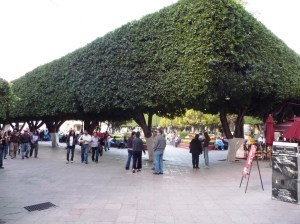
a-square-in-quretaro-mexicoFantastic ads by Corona, constant in-your-face late night infomercials for Girls Gone Wild videos and the rising toll due to drug violence on the border, fuel a common perception in the United States that Mexico is either too crazy or too unsafe to travel. If you follow a few basic rules and little bit of Spanish, Mexico is one of the most wonderful places to explore, enjoy and experience. Late last year, my wife and I decided to take a slightly less traveled road and took a trip to some historic and colonial towns north of Mexico City. Our destination was going to be the historic and beautiful city of Queretaro, a UNESCO heritage city about 160 miles north-west of Mexico City.
We took a hop at Dallas from Chicago on our way to Mexico City. (You can get to Queretaro from the Leon, Guanajuato Airport as well). Mexico City airport can be confusing for newcomers but things have improved significantly over the last 7-8 years. We took a luxury bus from the Mexico City Airport for Queretaro on the ETN line. The high end buses in Mexico are not very expensive, are very safe and provide top notch service. We paid just $ 23 per head for a 4 hour journey from Mexico City to Queretaro. A sandwich, a bottle of water and a fruit drink, along with extremely comfortable seats was included in the fare.

la Casa De La Marquesa

la Casa De La Marquesa

We had booked our stay at one of the best hotels in Mexico, La Casa de la Marquesa. La Casa was an 18th century gift from a Marquis to his wife Dona Josefa. The hotel is divided into two sections with exceptional rooms, a very nice restaurant serving local Mexican specialties and just a few minutes’ walk from the impressive Plaza de la Armas and other interesting squares and sites in the city.

Queretaro is one of the earlier cities established by the Conquistadores during the Spanish Conquest. The architecture is colonial, grand, beautiful and tends towards the religious. Queretaro is a city made for walking around. You go there to relax, spend a couple of hours in a square, eat some local food, have a beer and then move on to the next square. The people of the city take great pride in their heritage status and history and the city spends a lot of effort in keeping the city clean. The city is spotlessly clean with cleaning crews visible even at 11:00 PM in the night.

Queretaro was definitely the cleanest tourist destination I have seen anywhere in my life. The people in the city are extremely friendly and helpful. Very few people speak English, but a little bit of Spanish on your part will open up doors, bring out smiles and take you a long way. Most of the tourists are Mexicans and people from other Latin American countries as well. We spent a lot of time in the Plaza de la Armas, which is a beautiful square surrounded by restaurants, cafes and bars on three sides. We really enjoyed eating at El Meson de Chucho El Roto and the Restaurant 1810. (1810 is the year of the beginning of the Mexican war of Independence). Both restaurants serve a large selection of Mexican specialties including cactus (nopales), sea food, corn dishes and a very large variety of tequilas and margaritas. One should definitely try a dish served in a molcajete, which is a stone mortar.

If you are vegetarian, both these restaurants will accommodate you. The magic words to say are “sin carne, sin pescado (without meat, without fish or sea food).” Both restaurants have really good artists playing live music and if you are lucky to be there on the weekend, you can get to see and hear some Mariachi music as well. If you are slightly more adventurous, definitely try some Gorditas, made from corn flour in any of the squares. If you want a vegetarian option, the Gordita places are more than willing to do potato and cheese gorditas as well, which are to die for. We made it a point to spend at least half a day in each square, while doing lot of people-watching and engaging in some relaxed conversation. The leisurely hours spent can be great for couples to reconnect and bond and for friends to have a great time.

Queretaro is not just about great squares, good food and drink. There is lot of history to the city, with its museums and beautiful churches. It was also one of the early centers of the Mexican War of Independence and the treaty between Mexico and United States which gave California, New Mexico, Nevada and Utah to the United States was also signed in Queretaro.

Aqueduct - Queretaro

Aqueduct - Queretaro

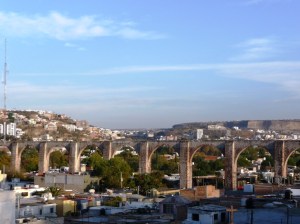
One of the landmarks towards the outskirts of the city is the magnificent Aqueduct with 74 gates. It was commissioned to bring fresh water to the city. The walk from the city to the Aqueduct is hardly 2 miles, but it took us almost half a day to get there. We started around 11:00 AM and kept stopping at different places to check out churches, do some shopping for silver trinkets, have lunch and some cerveza. The walk also takes you through the non-touristy residential part of town and it gives you an opportunity to watch the locals up close and personal. We finally reached the viewpoint for the aqueduct after a couple of hours and it is not only an engineering marvel but also a spectacular sight.

Another interesting site to visit is Cerras de la Campana. (Hill of Bells) This is the hill on which the death sentence on Archduke Maximillian was carried out and there is a very austere memorial to the Archduke still there. The hike up the hill is pretty easy and you can also marvel at the huge statue of President Benito Juarez towering over and keeping an eye on this beautiful city.

Queretaro also provides a great experience for shopping for silver. There are literally hundreds of stalls selling different silver items like beautiful earrings, rings, bangles, chains and what not. You could get a lot of good quality stuff without emptying your wallet, provided you do some tough bargaining.

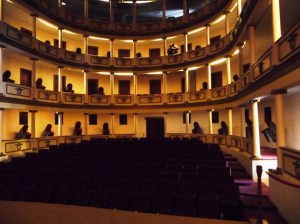
El Teatro De La Republica

El Teatro De La Republica

The city is clean, safe and tourist friendly. They even hand out blue sweaters with the city logos to beggars during winter months to keep them warm and looking clean. Queretaro is a great place to learn about Latin and Mexican culture, which is in many ways similar to Indian culture in terms of family values, importance of traditions, spirituality, and extremely friendly people who are fond of music, food and festivals and like to have a good time. We have been traveling to Mexico for almost 7-8 years now, but this was definitely one of the best trips to the country.

Rhishi Pethe works in supply chain management consulting and is currently pursuing a part time MBA at the University of Chicago. His interests outside of work are spending time with his wife, travel, reading, economics, jazz, good food and blogging.

Welcome to Thekkady

By Naren Pradhan

thekkady

I was so excited when the train started to come to a halt. I looked out the window, and what I saw was a vast wonderland thick with trees, bushes, and other greenery. When I  caught a glimpse of the land, I immediately knew that I was going to love my 3-day stay in Thekkady, Kerala.

I was on a holiday in India with my grandparents for my summer vacation, and on August 13, we took a train to Kottayam in the district of Thekkady, arriving the next day. My grandparents told me to expect a beautiful mountainous region in the clouds up in the Western Ghats range, a land full of sparkling turquoise waters, gigantic tropical trees, and plants bearing all sorts of spices, medicines, and fruits. And when I got there, I was surprised to see how right they were.

thekkady-waterfalls

At the Waterfall with Grandma

After our train arrived, we took a long (114 kms) car ride through the hills. It was a majestic sight, trees and greenery blanketing the hills with snow-white waterfalls streaming out like precious liquid pouring out of a mystical fountain of nature. A few times, we got out of the car to see some of the sights up close. Once we came to a small rubber plantation, where we saw the sap of the rubber tree slowly pouring out of long cuts into coconut containers, which would later be taken to a factory, where it would be refined. I even got to pull out some of the hardened rubber and stretch it in my hands!

After that, we stopped at one of the many waterfalls of the range. Around here, waterfalls come in all shapes and sizes, from small streams flowing down a smooth stone wall to raging rivers tumbling down a carefully but naturally carved hillside. This one was one of the latter. It was a wonderful pathway of sparkling white water flowing out of the forest above into a serene pool, looking as if god himself had taken time to clear a path for these falls. This car trip took four whole hours, but it was definitely worth it.

thekkady-elephants

A Bumpy Ride

Finally, we made it to our destination, the Aranya Nivas, a small but luxurious forest hotel. The special thing about this particular hotel is that Jawaharlal Nehru himself stayed here, so we were eager to come here. After we settled in our room we went downstairs and had a meal fit for a king. We were ready to go to our first activity.

My grandparents and I took a short car trip to the Elephant Junction, a farm and nature preserve containing lots of trees, spices, and over a score of elephants. The great thing about this particular trip is that we got to see all of it from the back of a massive elephant! After we mounted the magnificent grey beast, a man on the ground started to lead the elephant, and the ride began. It was a bumpy ride, but we got to see the forest from a high point while the elephant walked. I loved it of course, but I don’t think my grandparents will ever want to repeat the experience! After that, we got to feed the elephant and watch as it crunched up a small pumpkin and a whole cucumber.

thekkady-spices

Checking Out the Spices!

The next day, after a hearty breakfast, we got into the car again. This time we were going on a tour of the farmland in the hills. As we drove, I noticed the many bushes covering the hills we passed. It turns out those bushes contained tea leaves, one of the most valuable plants in the world. And that was just the beginning. Soon, the three of us came to a spice garden, where we got a complete tour of  spice, medicine, and fruit-bearing plants. There was tea, pepper, cardamom, cinnamon, coffee, cacao, jackfruits, bananas, papayas and much more. There was even a plant that is made into a medicine that can improve memory. I bought that of course! The land is full of riches in the form of plants, and if it were up to me, I would call this range the Rupaiya (Money) Mountains.

That wasn’t the end of our tour. We headed over to a forest museum. There, we saw the preserved remains of all sorts of animals, including snakes, rats, flying squirrels, and deer, even an elephant!  But perhaps the best part of all was when we came to the border of Kerala and Tamil Nadu. The border was a small unpaved path on a cliff bordering the Tamil Nadu Valley. There, the three of us climbed a tall watchtower, where we could see the entire valley while feeling the wind in our hair. It was a magical experience, one that I will treasure for a long time.

We were to leave in the evening the next day, so all of us had to savor our last excursion the most. This time, we were going on a boat ride from our hotel through the Periyar River to the Lake Palace Hotel. We boarded our boat in the early morning before we could have any breakfast, but it was worth it. As we drifted along the river, we saw that it wasn’t just a body of water, but a submerged forest, with the tops of gigantic dead trees poking out. Who knows what was below those turquoise waters! Throughout the trip, we saw several jungle animals, including turtles, cormorants, bison, and more elephants.

Naren with grandparents

Naren With Thatha and Patti

Finally, we came to the Lake Palace Hotel. This was a fitting name, for this hotel was once a forest palace of an Indian king who used to keep an eye on the forest and prevent over-hunting. And what a palace it was! There were high ceilings, expertly painted walls, ivory ornaments, and a balcony from which you can see a large part of the lake surrounding the island, and the forest beyond. I actually got to eat breakfast at the king’s table and sit on his bed! Some people were even staying here as guests. We didn’t, as there were only six rooms, and it was too far above our price range.

As we drifted back to our own hotel, I knew this would be the last part of our short vacation, so I savored every moment and took in all the beautiful landscape around me. When our boat got back, we ate a light lunch, packed up and said goodbye to our wonderful hotel and its marvelous employees. We got into our car, and as we drove along the hills once again, I took one last good look at those beautiful green hills. Finally, my grandparents and I boarded the train and headed back to their home in Chennai. We all were extremely sad to leave this undisturbed paradise. In my heart, I know that someday I will return.

Naren Pradhan is an 8th grader at Thornton Jr. High. His interests include piano, soccer and Runescape.

A Returning Indian Entrepreneur Reflects – Part 2

By Kashyap Deorah

Let’s just say that our move to India is done and we are now completely a part of the problem. It has been nearly 22 months since we moved back. Two Diwalis and two Holis later, Independence Day has now moved back from July 4 to August 15. The fascination of big weddings, auto-rickshaws, street food, fresh mithai, monsoon rains, cutting chai, tangdi kabab, patiala pegs, haggling street vendors, gymkhana memberships, high-school reunions, first-day first-shows, live cricket matches, festive crowds and high-honking lane cuts has now transformed to the little compulsions and compromises of life, sometimes trading off health with politeness, and sometimes freedom of choice with practicality.

After more than a year of parasitic living at our parents’ home, we are now on our own as a working couple managing a household with daily interactions with a maid, cook, driver, dhobi, nariyal-wala, milkman, newspaper boy, kachre-wala, watchman, car wash guy, and monthly interactions with the local cable goon, Internet provider, repair technician, plumber, carpenter, electrician, landlord, home delivery guys, and a barrage of brokers. I commute 10 minutes to work, while wife Shruti commutes 45-90 minutes depending on her traffic karma, to cover a distance similar to Mountain View to Palo Alto.

Besides moving from the US to India and from parents’ home to ours, some significant events in our life include a recession, starting up from scratch, Shruti’s career path change and seeing my sister’s daughter grow up. Actually, Zoya mirrors our life in India since our move happened during my sister’s third trimester. Our new life in India is as old as hers in this world. We have now started walking on our own and have started mumbling some sense, in between violent shrieks and tears when we are not well understood. Here is a sequel to part one written in March 2008.

Aspiration Vs Experience
A common theme across Indians, bar the extremely poor (about 35% of India) and the extremely rich (about 2% of India), is aspiration. Some aspire more than others, but we all aspire. Some aspirations are ambitions to jump many steps in the ladder at a time, but it remains perpetually apparent that we are all on a ladder. Each Indian seems to have a story of where they started in life, and where they are today. A story of struggle and a highly developed ego about how well-earned the cup of tea is this morning. Ironically, between steps in the ladder is a black-hole with infinite ability to suck energy. One can expend a lifetime without hopping a step, or one can swiftly curve right around and jump a few notches. On the other hand, the American’s story in the sports bar is about his experiences. The places he went, the women he was with, and the cigars he smoked. The American way of life focuses on being yourself and having unique experiences, no matter how much gas it guzzles. Of course, Indians keep finding their ways to be different while Americans participate in pissing contests to conform.

Survival Vs Progress
From the blue-collar working man to a small business to a corporation, the fair price of a product or service for the Indian market is based on the perceived cost and not the perceived value. Negotiations at all levels end up being cost justifications rather than value justifications. There are two reasons that together make this happen: competitive gaps are quickly filled by entrepreneurial energy in an over-competitive market, and the collective natural capacity of Indian customers to tolerate pain and out-wait you ensures that someone will blink on margins. The only way to de-couple pricing from cost seems to be exclusive rights to a scarce tangible resource. Think of all inorganic growth stories in India, and you would discover that it started with a certain license or right or exclusive ownership won early in the game, or persuasively prohibiting market entry for other players by force or tactic. For instance, real-estate in Mumbai is like stock options in the Bay Area. It is the most probable reason your high-school friend is driving a Porsche Cayenne. On the other hand, the American dream rewards the guy from the mid-West who sold the hot-dog machine that could produce thrice the number of hot-dogs a day and now has a star by his name while sipping Pina Colada in Lanai. The American market at large adopts small innovations at scale in the span of time before competition catches up, and original ideas can successfully be protected from being copied. Going back to the Sequoia and Banyan Tree comparison, the Indian ethos is optimized for continuous survival while the American ethos is optimized for continuous progress. India is growing, but only at a pace that is essential for survival of a billion people. Perhaps this is not an economically underdeveloped society, but an overdeveloped one.

Chaos Vs Order
Before moving to the US, my political views were right of centre. After coming back, they parked left. As an immigrant, your lifelong beliefs are questioned. The rules you were brought up with stop applying, and in order to build the next set of rules on your own, you must go back to first principles. Decisions based on first principles require more processing cycles per day compared to quick look-ups of a rules-based system. After moving back, you can live on first principles for a while and look beyond your preferences and embrace the environment with open arms.  Sooner or later you would start forming rules that help you live easier. In India, a better part of those rules would apply to people and would take the form of stereotypes – quickly judge people, then accept, reject or ignore. You would be one of a billion mutinies, with a certain set of impenetrable views, albeit unique and changing. In philosophical debates your conscious mind would argue on first principles, but in real life, your unconscious mind would be asserting these rigid rules. Indians end up with a fair degree of order in personal life, perhaps as a survival technique in a high chaos environment. Perhaps, this is not a socially underdeveloped society, but an overdeveloped one.

Man Vs Nature
Some of my most memorable experiences in the US were with nature. These were moments that made me feel closer to life than ever before, feeling every drop of blood in the body, aware of how insignificant we are in the face of nature, marvelling at how much the human race has achieved starting with a world of forests, mountains, deserts, oceans and volcanoes. Some of my most memorable experiences in India have been with humans. Moments that make you feel more alive than ever before, seeing the extremes of human resilience and adaptability, the fragility of human life, contrasts in the value of a human life, acts of selflessness and selfishness, kindness and cruelty, shallowness and depth, and the extremes of human ethics. You would be well advised to take a break from humans when in India and give yourself some mind space in what nature has to offer within Indian borders.

Immigrants are a cursed species. The merits of the place we live in are taken for granted, and the merits of the places we travel to or stay away from monopolize our thought. No matter where we live, the mind always wants the best of both worlds without accepting the merits and demerits of a place as two sides of the same coin. You cannot have one without the other. In general, those who move back to India after many years in the US choose to forego some obvious material comforts of life. There is a certain higher purpose that pulls one back home for fulfilling a human need closer to the soul. When moving back to India, I felt like the monk who sold his Ferrari (in this case, an Audi), only to realize that I am no monk. What seemed like a promotion to a higher plain of awareness is only the beginning of our pursuit of happiness. It would be a lie to say that we do not miss our life in the US. Life in India is much tougher, and as Calvin’s dad would say, it builds character.

At the same time, it is true that no matter what you choose to do here, you would be solving more fundamental problems and real needs compared to the US and making that much more impact on people’s lives; even if your expectations of being compensated or recognized commensurate with the impact might take a beating by US standards. Look at it as a journey towards self-realization and an opportunity to end up farther ahead as a world citizena after your life and experiences in India.

It's not easy being green – sidewalk edition

lundy-aveAs most of you know, I recently joined as editor of India Currents magazine. Apart from the usual perks of working in a friendly environment with adults to talk to (boy, I never realized how much I was missing that), it is a bonus to have the office located in a quiet and pleasant tree-lined street, even though it is a hop, skip and jump from the highway. My building even has a small man-made pond, courtesy of the Church of Scientology(!).

I’ve been dying to explore the area, and when a nearby plaza suddenly bucked the recession and opened up nearly half-a-dozen new shops catering to office goers, it seemed like an invitation to enjoy the fine Californian summer and check it out.

Alas, I quickly discovered that there was really no safe way to walk to the plaza, which is literally 3 minutes from my office. San Jose city planners, in their infinite wisdom, had created a multitude of grassy verges that lushly deplete the city’s water supplies, and had completely forgotten about pedestrian crossings, at least as far as my eyes could see.

Being a veteran of road crossings in Mumbai, I only hesitated for a moment before setting off along the rain gutters, occasionally moving to the grass if I was in danger of being mowed down by a bus. I blithely jaywalked across the tar, nimbly avoiding the meager traffic and arrived at my destination.

The coffee shop promised to open only the next day, which may have soured my mood, but in my new environmentally conscious persona, I was more than a little pissed at the architects of this sidewalk-less vision of the city, with each office worker neatly cubicled up in their little offices, driving their little boxes to spend their day in more little boxes, separated from their fellow human beings by not just wood, steel and glass, but the impossibility of random personal contact, even as they “walled” and “tweeted” their business to their virtual acquaintances. How much nicer it would have been if I could take a stroll down my pretty street and casually bump into fellow toilers and exchange some gossip away from the water cooler. We’d certainly feel a stronger sense of community, which has to be the first step in being involved in and influencing the decisions that impact our daily lives.

Anyhow, having got my activist mojo on during last year’s elections, I fired off an email to the customer service department of the City of San Jose, and gratifyingly, they have responded ( even if it’s with an automated reply!) promptly.

I certainly don’t expect bulldozers to start tearing up the pristine lawns on my street, but if my email makes city planners pause and consider “walkability” as an important criterion when planning the next development, I will have done what I can.

I’ll keep you updated on the reply from the city. If you would like to share your opinions with the city too, here is the email -customerservice at sanjoseca.gov. Make the usual corrections.

More than just kitchen scraps and lawn debris

landfillIt all began when a friend asked for worm composting tips. “My daughter has driven me into action as she disapprovingly saw me dump kitchen scraps in the regular garbage – she firmly suggested that I start a compost and save the earth!” she said.

Now we had been following the practice of kitchen scrap disposal for a while. A couple of years ago, the City of Fremont had distributed small kitchen pails. These were meant to be used to collect kitchen scraps and peelings to be disposed in the green bin, which takes all kinds of compostable material. The city then carts it away to a composting center and gives all the residents free compost every spring.

The kitchen pails were not a very practical idea, though. The opening was narrow, which meant invariably there was food stuck to the lid. The garbage started stinking very soon, and it was a pain to tip it over into the green bin when full.  There were so many people who gave up on the program that the city soon realized it was a colossal failure. They decided to have a contest to come up with ideas to get residents motivated to get rid of kitchen scraps and peelings appropriately.

In the meantime, my family had come up with a simple solution to the problem. We deputed one of our plastic bowls to be the receptacle and dumped all the kitchen scraps in it. At the end of the day we emptied it into the green bin. This still didn’t solve the problem of the green bin stinking but at least it was outside the house. Every once in a while, we rinse the bin out.

Along the way we realized that paper napkins were compostable and started lining the bin with a new napkin each day. Thus made the job even easier.We reduced our landfill pile to 2 bags a week and proudly wheeled out the nearly empty blue bin each Friday.

So when my friend asked for composting advice, I decided to look up the the appropriate web page of the county’s garbage disposal company. That’s when I discovered that there were some other unusual items which could also be composted, like milk and juice cartons. The rule of thumb is – if you can tear it, it will compost. Of course, your first preference for paper products would be to put them in the grey recycle bin but if they are food soiled they need to go in the green bin. And typically cartons are not marked with the triangular recycle sign, so if they do not have a foil lining, they can be composted.

Unfortunately, the soy milk cartons my family piles up have a foil lining, so I will have to search some more.

To get the complete list of items that can be composted, click here. And this site suggests winning ideas for making kitchen scrap disposal easier. Some of the more unusual items are –

– Waxed milk cartons ( no foil-lined ones please), juice and ice-cream cartons. Remove the plastic cap first.

– Pizza boxes

– Paper egg cartons

– Coffee filters and tea bags

– Paper plates and cups( no plastic coated ones, please)

CAVEAT: Each city has a different program for milk carton disposal, so call up your local waste disposal company to make sure it is ok with them.

Picture by D’arcy Norman


Death of the Brands: The Move from Brand Value to Intrinsic Value

By Ram Badrinathan

brandsThe Origin of Public Relations or Public Manipulation
The idea of manipulating public opinion using the sub consciousness was pioneered by Sigmund Freud’s nephew, Edward Bernays, who is also regarded as the father of public relations. In the 1920s, working for the American Tobacco Company, he sent a group of young models to march in the New York City parade. He then told the press that a group of women’s rights marchers would light “Torches of Freedom”. On his signal, the models lit Lucky Strike cigarettes in front of the eager photographers. The New York Times (April 1st, 1929) printed: “Group of Girls Puff at Cigarettes as a Gesture of ‘Freedom’”. This helped to break the taboo against women smoking in public (Source: Wikipedia).

Industrial Revolution and the Emergence of the Brand
The emergence of brands was a result of the Industrial Revolution, when centralization of manufacturing resulted in mass production. My initial professional experience was in advertising and, while working at JWT and Grey, account management had to generate creative briefs for ad campaigns. One of the questions that had to be tackled was “What was the functional discriminator?” or USP. But most products didn’t really have one, so then we had to generate an emotional discriminator, which was basically a psychological motivator we had to induce or manipulate to get consumers to purchase the product.

As products emerged in various categories which couldn’t compete on real discriminators, increasingly branding focused on human emotional drives. Fast moving consumer goods were masters in the game and categories like Tobacco, Soap, Beverages, Snacks invested heavily in advertising campaigns to build ‘brands’. In the offline world, the brands started having enormous value and Coca-Cola, the brand built on its mystique of the secret formula, acquired billions of dollars in brand value. Brand management was perpetuated by professionals focused on the brand rather than product and spurred on by mass manufacturing and the concentration of capital, resources and wealth. The notion of the intrinsic value of a product was never asked, it was about brand value.

What is Intrinsic Value
So what is intrinsic value? I don’t have an empirical definition, but in general, it is the argument that the value of a product is intrinsic within the product rather than dependent on the buyer’s perception. My personal opinion is that the intrinsic value of carbonated water, cigarettes and many other consumer products is far lower than what the buyer’s perception is. Brand value amplifies the value of products with low intrinsic value.
Internet Emerges as the Game Changer
How does the Internet change all this and what does the battle of brand value vs. intrinsic value have to do with e-commerce? The emergence of Internet and online travel companies like Amazon, Ebay, Expedia and Priceline actually changed the paradigm of how consumers search, shop and buy all products, services by making each step completely interactive, immersive and experiential. In the travel vertical which I cover, one might argue that Priceline’s advertising campaign with William Shatner is a great brand effort, but if the Priceline online experience, features, response time, product inventory depth, customer service, and usability were not behind it, the marketing campaign would be useless. Conversely, Marlboro can sell its cigarettes based on the Marlboro man myth for years without changing a thing, since it is primarily selling an image.

Coming back to online brands, no amount of brand marketing can offset the intensive consumer experience in which consumers interact with a travel product and its features. Competitors are just a click away. Big brands and mass media feed off each other but on the Internet, a level playing field has emerged due to Google. The concept of the “Long Tail” epitomizes that ideal; travel is a category that allows smaller players that provide consumer value to compete with larger brands.

On the Internet, there is only so much that a single brand can do as demand is getting increasingly fragmented across multiple points of influence and sale. The key is to control, aggregate and empower supply. In Expedia’s case, Hotels.com, Expedia.com and other white label businesses all compete aggressively for the same customer. In addition another group company, Tripadvisor, actually drives traffic to Expedia’s direct competitors (traditionally this would be seen as a brand disaster). It’s like Coca-Cola selling the same product under 10 different names, it would never happen in conventional marketing.

Yahoo faces the same problem. The centralized single brand portal is dead and content is all over the place, so there is little point in maintaining the walled-garden single brand approach to content, whether in travel or any other category.

Finally, Interbrand’s annual audit of most valuable brands in 2008 included in the 10th spot a company we all might know – Google.

The firm’s top 10 global brands are:
1. Coca-Cola
2. IBM
3. Microsoft
4. GE
5. Nokia
6. Toyota
7. Intel
8. McDonald’s
9. Disney
10. Google

How much does Google spend on brand building? Literally zero, because Google’s continued success will be dependent on delivering relevant search results, not image. The consumer is a click away in either direction – towards or away. Google realizes that advertising campaigns will do nothing if the product’s intrinsic value doesn’t hold up every second of the day. Negative word of mouth can spread globally in milliseconds. One of the key tenets of the long tail is: size of the reputation matters more than the size of the marketing budget.

Ram Badrinathan is the co-founder of Soulitudes. Soulitudes’ hope is bring together some of India’s finest creative minds in different fields ranging from visual arts, cinema, Indian classical music, folk music, photography, conscious travel, heritage conservation, Indology, spirituality, ecology and wildlife, theatre, literature, politics and social entrepreneurship.

Photograph by mleak under Creative Commons License.