By Isheeta Sanghi
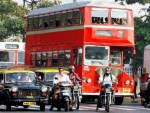
Picture by Antonio Milena - Wiki Commons
Staring – isn’t it something that we can all agree Indians know how to do best? When you’re a kid, you feel it and you think it’s weird, but you get along. When you become a young adult and you feel other people’s eyes on you, for no apparent reason, you get irritated and want to yell “What the heck are you staring at?” When you get to the point in life where you realize you simply cannot teach an old dog new tricks, you learn to try and meditate when people stare, or try to completely disregard the fact that they are even alive and looking at you.
I don’t stare at people, so when people stare at me, I find it highly offensive and my blood pressure reaches levels it probably shouldn’t reach. I hate when nosey in-laws (in particular) ask questions that I am uncomfortable answering, because I don’t ask those questions, not only because I don’t care, but also because I have no room for that information in my head. I’ve got enough going on in my own life for me to process and analyze what other people are doing or not doing or buying or not buying.
I hate when trash pickers go through my trash because I don’t go through anyone’s trash, and I feel that on some level it is an invasion of privacy. When you throw something in the trash in the US you know that it’ll end up in some recycling plant somewhere and that’ll be the end of it. But in India someone will go through your trash and if you have even a diminutive amount of cream in a bottle, they’ll take it and use it. And please don’t get me wrong, I wish there was less poverty in the world, and I wish I could help, but for the love of God, please don’t go through my stuff, even if it is my trash, it’s just plain creepy.
I also hate when Indian men (in particular) stare at me because I’m showing off about a quarter of my leg, because hey, let’s be honest unless John Abraham is walking down the “street”, Lord knows, I’m not looking at any Indian man. On top of that, I’m wearing more clothes in order to avoid being stared at as is, that I find it completely ridiculous that they stare, because you’re trying your hardest to cover up.
I recently noticed, however, that it’s not only this particular type of staring that exists in India.There’s a totally separate form of eye etiquette that people follow when they drive. A heavy stare from someone driving a “big” car, to a cab driver driving some bashed up yellow licence-plated vehicle can do magical things. When the stop sign isn’t working (and even when it is) eyes become a form of traffic policing.
People will look at each other and inch forward, and based on the type of stare you get back, you move, or, you don’t. Note also, that none of the staring is nice staring. In the US people usually acknowledge one another, and offer the other to go first, waving a friendly smile while they’re at it. Here, if you tried that, you’d be in the same place, probably forever, because friendliness in India, for the most part, is actually a form of vulnerability and when people think you are vulnerable, they will take you for a ride.
There are also those who don’t use their eyes, as a form of traffic policing. These are the people who simply will not look at you and will keep going, so that they have the right of way. This seems to be the latest trend with many drivers, and it’s a miracle that the number of potential accidents remains only potential.
It’s funny how things of India always seem to rest on that fine line between ridiculously insane, and absolutely hilarious. The driving gets to everyone, it gets to the newcomers, and it gets to people who have been here for years, and there are days when you can make light of things and laugh, but there are days where you just wish that with the flick of a wand you could organize all the cars in neat tidy lanes, have the trucks in one, motorcycles in one, autos in one, bullock carts, cows the occasional camel or elephant, and bicycles in another, and a separate lane for all the cars. But seeing as how the wand thing isn’t likely in this lifetime, I guess the best bet is to practice your best heavy stare, and hope to get safely to your end destination.

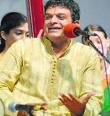 Margazhi Raagam, the “concert in cinema”, is many things packaged as a movie…It’s a kutcheri/ concert featuring two very popular artistes Bombay Jayashri and T. M. Krishna. It’s a film on digital steroids, with uncompressed six-track sound, audiographed by H. Sridhar, and captured on Red 4K cameras, cinematographed by P.C. Sreeram. It’s a dream of director Jayendra Panchapakesan come to life- of bringing an evocative, mass appeal to Carnatik music.
 The
The  Bay Area dance rasikas had a similar experience when four gurus of Kuchipudi and Bharatanatyam danced at the YuvaBharati concert at the Mission City Center in Santa Clara on Apr 12, 2009. Presented as a tribute in bells to Oothukkadu Venkata Subayyar and Maharaja Swathi Thirunal, it was a heady experience to see four stalwarts on stage together for the first piece: Himabindu Challa, artistic director Nrityananda (Kuchipudi), Jyothi Lakkaraju, artistic director of Natyalaya (Kuchipudi), Shreelata Suresh artistic director of Vishwa Shanthi (Bharatanatyam), and Vidhya Subramanian, artistic director of Lasya (Bharatanatyam).
 For her first solo presentation, Vidhya strung together 3 distinct pieces; Kaliya Nartana, Swagatham Krishna and Taye Yashoda. It would have been such a treat for Vidhya to have danced any one of these for the entire length of her solo. The pieces felt hurried, kind of like watching sunrays dimpled through the clouds, now here, now gone. Certainly, there were flashes of brilliance, both in the dancing (Kasturi tilakam, shame while complaining about Krishna’s kiss to Yashoda) and the vocals (the part in tandem by Asha Ramesh and Madhavi Cheruvu lent a dramatic effect for Kaliya Nartana), but one longed for a long stretch of warm light which Vidhya is otherwise so good at infusing.
 The conclusion at the end of the first half was: The similarities between Bharatanatyam and Kuchipudi are only in attire; the former seeks to electrify, the latter to enchant. If one were to comment on the style of love each dancer has for her art, Vidhya’s can be defined as a Veera Shringara, she approaches her dance as an equal, with respectful pride. Shreelatha’s is a lover’s shringara, she does not even need reciprocation, she’s enraptured, enamored. Jyothi’s is a mature and masterful Shringara, her path is sure, complete, and transcendental. Himabindu approaches her art with bhakti, willing to be led rather than make a statement.
 The finale with Dhanasri Thillana was good. It was thrilling to watch them share the stage, and one didn’t know who to look at. The choreography was balanced, but again, not path-breaking and the synchronization slipped in some places. However, one wants to give a long rope to the gurus, it must have been extremely difficult to juggle the schedules and approaches. Thanks though to all of them for seeing it through, the audience appreciates it!
 Akshaya Patra




 Water, No Ice