Category Archives: Parent Talk

Hindi Gym

lala the monkeyIt seems like the desi population in Silicon Valley has reached some sort of critical mass, if one can go by the explosion in Hindi classes in the area. Once the domain of religious groups, who combined language lessons with cultural and spiritual offerings, teaching Hindi has become the basis for at least two professional organizations that I know of in the area.

Then there are those who just want to disseminate the language for the love of it. The daycare provider at my daughter’s public school offers free classes to any child who is interested, and she has quickly built up a sizable student body (Free + Hindi? What’s not to like!).

Another such altruist is Aarti Chandnani, who is the founder of Hindi Gym, a website providing largely free resources for Hindi teachers.

“I began with wanting to teach my own kids Hindi,” say Aarti, who is a computer engineer by profession. “I began scouting for language materials in India, but found that they were quite outdated and my kids could not relate to it.” The India Community Center found out about her interest in the language and asked her to start classes in San Francisco, another reason for her to look for appropriate teaching materials.

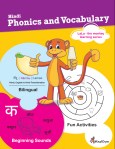
hindi gym workbookSo Aarti began designing Hindi worksheets on her own. “I tried to make them appealing to kids growing up here.” She created a monkey character called Lala who anchors the material.

The response to the worksheets was outstanding and Aarti was inspired to come up with an entire workbook. She contacted publishers in India but found there was little interest in publishing exclusively for the U.S. market. She found an illustrator in Chennai and a printer in Hong Kong and ended up self-publishing the books.

Amazingly, Aarti has managed to price her workbooks extremely reasonably, at 7.99 for an 80 page illustrated soft cover. “My idea was that parents shouldn’t have to think twice before picking up the book.” The workbooks have been picked up both by organizations and home teachers.

hindi gym board gameHowever, the worksheets are still free and there are plenty of them on the website for teachers and parents who just want a resource for their lessons. There are also wall posters and board games that can be printed out. Aarti constantly updates the material and adds new worksheets. A new addition is the free e-books that parents can download for use at home.

“The idea is not to make a ton of money,” insists Aarti. “It is about spreading the language. Mandarin and Spanish have become so mainstream, why not Hindi?” She adds, “I want Hindi Gym to be the one-stop shop for people wanting Hindi language resources. Parents wanting to teach their kids Hindi can just pick up stuff for free.”

Aarti also collaborates with ispeakhindi, a website which offers podcasts for conversational Hindi lessons. The podcasts reference Aarti’s worksheets and vice versa. In the works are also plans for new products like a Hindi mobile app and added sections on Hindi grammar and reading comprehension.

“I am not an educator,” says Aarti. “I was just inspired by my kids to start this. Now I find that it is something I am passionate about.” She invites members of the community to contribute their own ideas for teaching Hindi here.

Check out Hindi Gym. As a parent of child learning Hindi, I found the worksheets charming and accessible. The quality is as good, if not better, than some of the similar English language workbooks in the market, and Lala is just irresistible.

Swine Flu – Prevention Tips

swine-fluNow that President Obama has declared swine flu a national emergency, I thought it made sense to put up these simple tips to help protect you. These are courtesy a chain mail from a friend via India, not the best of sources, I know, but the advice seems to make a lot of common sense, so here goes –

In a global epidemic of this nature, it’s almost impossible to avoid coming into contact with H1N1 in spite of all precautions.

While you are still healthy and not showing any symptoms of H1N1 infection, in order to prevent proliferation, aggravation of symptoms and development of secondary infections, some very simple steps, not fully highlighted in most official communications, can be practiced (instead of focusing on how to stock N95 or Tamiflu):

1. Frequent hand-washing .

2. “Hands-off-the-face” approach. Resist all temptations to touch any part of face (unless you want to eat, bathe or slap).

3. Gargle twice a day with warm salt water (use Listerine if you don’t trust salt). H1N1 takes 2-3 days after initial infection in the throat/nasal cavity to proliferate and show characteristic symptoms. Simple gargling prevents proliferation. In a way, gargling with salt water has the same effect on a healthy individual that Tamiflu has on an infected one. Don’t underestimate this simple, inexpensive and powerful preventative method.

4. Similar to 3 above, clean your nostrils at least once every day with warm salt water. Not everybody may be good at Jala Neti or Sutra Neti (very good Yoga asanas to clean nasal cavities), but blowing the nose hard once a day and swabbing both nostrils with cotton buds dipped in warm salt water is very effective in bringing down viral population.

5. Boost your natural immunity with foods that are rich in Vitamin C (citrus fruits). If you have to supplement with Vitamin C tablets, make sure that it also has Zinc to boost absorption.

6. Drink as much of warm liquids (tea, coffee, etc) as you can. Drinking warm liquids has the same effect as gargling, but in the reverse direction. They wash off proliferating viruses from the throat into the stomach where they cannot survive, proliferate or do any harm.

And here’s the CDC page for more information: http://www.cdc.gov/H1N1FLU/

Picture courtesy Artifex via Creative Commons attribution license.

Desi Knowledge distributes Amar Chitra Kathas locally

mirabaiLike many others, Preeti Arora, a resident of Cordova, TN, is a mother of two and a fan of Amar Chitra Kathas (ACKs). Preeti says “The challenge for me as a mom is to constantly add new titles to my Amar Chitra Katha collection for my kids. Because of my busy schedule, I want these comics to be easily accessible and from a reliable source in the US itself.”

Most of us replenish our stock of ACKs on periodic visits to India, but it is one more thing on an already long list of to-dos to be crammed into short visits that include obligatory family outings and celebratory clothes shopping. Now local distributor Desi Knowledge partners with the ACK organization to distribute the beloved comics locally in the US and hyper-locally for those of us in the Bay Area.

Desi Knowledge now stocks all Amar Chitra Katha comics, as well as other ACK-Media titles such as Tinkle comics and Karadi Tales in their California warehouse. All these offerings can now be ordered directly from their website at www.DesiKnowledge.org for fast delivery to anywhere in North America.

The comics are priced at $2.25 each.

For me as a parent, the big advantage is not having to hunt for some of the more esoteric titles I remember from my childhood, like Indra and Shachi and Narada. Beware: if your memory is a bit hazy, you might have to try a few iterations of the spelling to find the title.

About ACK-Media
ACK Media is India’s leading entertainment and education company for young audiences. Some of India’s most-loved brands including Amar Chitra Katha, Tinkle, Karadi Tales and well-known proprietary characters like Suppandi are part of ACK Media. We develop products for multiple platforms including print, home video, broadcast television, films, mobile and online services. ACK Media is headquartered in Mumbai, has a design studio in Bengaluru and a subsidiary in Chennai.

About Desi Knowledge
Desi Knowledge is a nonprofit organization based in California.  Their mission is to connect children from around the world to India and its culture. Desi Knowledge has a webstore at http://www.DesiKnowledge.org where parents can get the latest children’s books and media from top publishers in India and abroad. Today, Desi Knowledge also partners with other organizations with similar vision to create and sponsor children’s programs that help further its mission of connecting kids to India.

It's Mother's Day – How about a home spa?

By Piya Mitra

mothers-day-home-spaMother’s Day is around the corner and I for one am certainly looking forward to celebrating it. I look forward to my two little girls giving me hugs and kisses throughout the day, telling me how much they love me. I am also looking forward to the little toy wrapped in paper from the printer with a flower stuck to it or the rocks wrapped in newspaper and my all time –  favorite ants from the garden offered as pets!!

Yes I do love those gifts because it’s the thought and effort put in by my five year old that matters. I would rather get a rock as a present than something picked out from the mall. I hope this recession teaches us that gifts don’t make us happy, it’s the person giving the gift and the thought behind it that we ultimately care  about.

Having said that I will add that all moms need to be pampered. Most of the days it’s the moms doing all the pampering and one day of R&R is certainly well deserved . A Spa Day is certainly a good gift for any mom but can be quite expensive and in these tough economic times may be hard to afford. So how about a Home Spa?

It can be easier on the pocket and if you make it a family affair it can be a fun way to spend quality time together. By using all natural ingredients you can keep it Earth friendly, so you end up pampering your mom and doing good for Mother Earth too!

The Home Spa

This will require some planning. You need to decide what services your spa offers Mom. Lets say a Manicure, Pedicure and a facial. You will need specific items for each treatment so make sure you have all of them.

The next step is to set up the spa area and give it a spa ambience and calming atmosphere.

spa-ambienceSetting the Spa atmosphere

Begin with cleaning up the area, dim the lights and set up scented candles, fresh flowers, calming music. You can also offer mom some cucumber water and chocolate dipped strawberries to snack on while she’s being pampered.

Pedicure/Manicure

For a simple home manicure you need

  • Warm water
  • Hand soap
  • Hydrogen peroxide
  • Hand cream
  • Hand towels
  • Nail polish remover
  • Nail polish

spa-ambience2Remove any old nail polish .Soak hand in warm water with few drops of hydrogen peroxide & soap. Soak each hand for few minutes. Dry hands with towel. Massage
each hand for five minutes. Dry hands with towel and apply fresh nail polish.

Some  tips for natural face masks and scrubs

Banana-Avacado Mask

Ingredients

  • 1/2 over-ripe banana
  • 1/2 over-ripe avacado
  • 2 Tbsp unflavored full-fat yogurt
  • 1 tsp olive oil

Instructions

Mash banana and avocado, combine with other ingredients, and mix well. Apply liberally to face and neck. Leave on for 20 to 30 minutes, then rinse with warm water.

Besan & Yogurt Mask

Ingredients

  • 2 tbsp besan (gram flour)
  • 1 tbsp plain yogurt
  • 1tsp honey
  • 1tsp rose water

Intstructions

Apply the batter to the face. With the tips of your fingers work the batter around and apply evenly to face. Leave on for 20 to 30 minutes, then rinse with warm water.

Oatmeal Exfoliating Scrub

Ingredients

  • 2 heaped tsp fine oatmeal
  • 1 tsp baking soda

Instructions

Mix oatmeal and baking soda, add enough water to make a thick paste. Rub over face, rinse, pat dry.

spa-ambience4If you are a Mom this is certainly a fun activity to do with your kid. Dads this will be a very nice way for your family to show your appreciation for mom

To all my fellow hard-working mothers out there – Happy Mothers Day!

Piya Mitra is a Bay Area event organizer. She can be reached at emailpiya@gmail.com or through her website Elegant Eventz . She also blogs her favorite recipes and party ideas at http://celebratingeveryday.blogspot.com/ Check out her blog for more massage tips.

How To Teach Children Self-Confidence and Self-Worth

By Rennu Dhillon

Self-confidence, self-esteem and self-worth are probably one of the hardest things to teach children, but the most important life skill.

tanay-on-mikeThe reason why it is so hard to teach self confidence to young children is because as they are growing up epically between the ages of 18 months to age 5, children get scolded or corrected for a zillion things. We tend to spend most of the early learning years using the word “No, don’t do that” all the time when in actual fact, we should extend the statement to telling them why they should not do it and try and spend time using and enforcing positive statements.

Not correcting a child  at all  and the mode of free will can result in a spoilt child that will not listen and they become increasingly more difficult to discipline when they get older. Too much restriction and scolding can result in over kill and affecting the self –confidence. So what does one do? It is important to create a balance between the two areas.

Here are some important guidelines and steps to help build self-confidence in your child.

1.    Teach kids to think for themselves – children need to learn to develop their own critical thinking skills so encourage your child to figure out answers. If the child is taking longer than you expect them to answer a question, it is okay. As parents we get frustrated and give the answer to them. This does not help. Encourage them to think and come up with an answer of their own. If the answer is correct or even partially correct, applaud and praise them, If the answer is incorrect, explain to them why it is incorrect and praise them for trying to participate. Children learn by the action of doing.
2.    Teach kids the importance of practical knowledge – being street smart is as important as being book smart. If children learn how to do things by themselves with actual practical experience, they will become more confident in their abilities. Example:  Coloring – many kids like to scribble on their homework and it is easier for the parent to finish off the coloring page and move on to something else. Have your child take pride in their work and praise them when they complete the task properly.
3.    Share as many stories as possible – children love to hear stories and sharing your experiences with them, will help them relate better to you. Effective open communication is the key to a healthy relationship between parents and children.  Children feel more comfortable when they can believe that their parents have had similar experiences to themselves epically in challenging situations such as being bullied at school.
4.    If you first don’t succeed, try again – an important belief to instill in every child. Everyone faces failure at some time or another in their life and some things take longer to grasp than others. Teach your child to accept their failures as an experience and a reason to try again and become better. In school competitions and events, teach the spirit of participation rather than winning. Children should be taught that not everyone can win or come first but everyone can participate and try to win.
5.    Develop the strengths – when growing up children are under immense pressure of excelling in all subjects at school. It is important to teach kids to do their best in all the subjects but to maximize themselves in the areas they excel in. In this way children will develop confidence-becoming experts in certain areas instilling confidence in their abilities.
6.    Etiquette and Manners – instilling etiquette and manners from a young age and teaching children how to behave in a social gathering interacting with other people is very important. Ensure that your child plays with different groups of children and help them learn to make friends by encouraging play dates at your home.

Instilling self-confidence in a child will impact their entire life. People who are self-confident will have better relationships with family, friends and work associates. They are able to set attainable goals and make better decisions in their personal and professional life.

Rennu Dhillon is the founder of Genius Kids and Toto Station.

Kids and art – canvases filled with light

Speed Racer -Artist Helen Lew Cole and child Erick Maury

Speed Racer -Artist Helen Lew Cole and child Erick Maury

“Is it something I did?” “Is it something I ate during the pregnancy?” “How did this happen?” When your child receives a horrific diagnosis from his pediatrician, your first instinct is to figure out what you did wrong and what you could have done to prevent it. When we become parents, we take full responsibility for the health and happiness of our children, not realizing that there are many aspects of their life which are outside of our control.

Purvi Shah got the dreaded news that son Amaey had leukemia over 3 years ago, when he was 3. After fruitlessly searching for causes for his condition, she decided to take the upcoming battle in stride. She joined Team in Training, The Leukemia and Lymphoma Society’s sports program that trains participants for half and full marathons. Runners take on the responsibility of raising a specific amount of money for the society that goes towards research in these disorders.

Colors of my sky - Artist Tiffany Birch and child Amaey Shah

Colors of my sky - Artist Tiffany Birch and child Amaey Shah

“Amaey was sick a lot the first year of treatment and could not attend regular preschool,” recalls Purvi. “He spent a lot of time at the hospital, using his waiting time at the children’s center there where he would happily create art and play.” Perhaps Amaey got his interest and talent from mom Purvi, who is a graphic designer by training.

“I felt I was powerless when it came to my son’s leukemia,” says Purvi. “He was the one going through the pain and the treatment and the side effects.” At this time Purvi was raising funds as part of Team in Training and she had the idea to pair up Amaey and other kids in the oncology ward with well-known local artists to create pieces of art which could then be auctioned.  This would give the children an opportunity to help towards the research of a condition over which they had no control. She put up fliers for an art event along those lines at the hospital and was flooded with requests.

She looked around for a location to host this painting event and found a generous benefactor in Pixar, which agreed to let the children and artists use one of their studios. “The parents dropped off the children for a few hours and the children and the artists worked together to create art. We provided a lot of food, since kids undergoing treatment can sometimes be ravenously hungry,” recalls Purvi.

Painting - Artist Harley Jessup and chold Anna Chou

Painting - Artist Harley Jessup and chold Anna Chou

Many other artists and cancer patients asked to join and since the last quarter of 2008, Purvi and friends Helen McNamara and Jeanne Cox have organized several such art events at various locations under the banner of the non-profit they created, called “Kids and Art”.

This May, the pieces created by the children go up for auction at Bonhams and Butterfields, a San Francisco auction house, with proceeds going to the Leukemia and Lymphoma society. There is a silent auction for the pieces created by the children and a live auction for the 15 or so paintings donated by the artists. The art is vibrant and colorful and cheerful and all the more special for having been created by children facing uncertain prognoses in the treatment of their conditions.

Kids and Art

When: Saturday, May 2, 4:00 – 7:00pm

Where: Bonhams & Butterfields
220 San Bruno Avenue
San Francisco, CA 94103

Tickets: Single tickets: $50/ Couples tickets $85 Purchase here.

Polar bears - Artists Jylian Gustlin and child Arjun Shah

Polar bears - Artists Jylian Gustlin and child Arjun Shah

Amaey and Purvi and their family continue their battle with leukemia. Amaey suffered a relapse this March and the family has made adjustments to spend as much time as possible helping him fight and keep a positive outlook. Purvi’s husband Apurva  has cut his working hours so Purvi can fulfil her dream. The art events continue to be organized with the help of friends, kids-and-art team members and volunteers. More information can be found at http://www.kidsandart.org/

Sponsorship packages are also available at the website.

Cupcake Crazy!

By Piya Mitra

cupcake-bouquetWho doesn’t love cake? But most of us try to avoid it. All those calories! For those of us with a sweet tooth  having to refuse that slice of cake causes a lot of heartbreak and inner turmoil and the few times that we do give in (few!! who am I kidding ? I give in almost every time) we are full of guilt.

Cupcakes give you the joy of eating cake without the guilt and it is no wonder they have become so popular in the past few years. The craze started in New York and LA. There was even a “Sex in The City” episode which featured Magnolia Bakery with Carrie and Miranda devouring cupcakes. Then there is Sprinkles Cupcakes in LA a favorite of most Hollywood stars. They opened a store at the Stanford Mall…lucky us!

Baking cupcakes is such a easy and affordable option that once you get the hang of it you’ll probably never order a cake again.( see the end of the article for a sample recipe) The trick to wowing everyone with your cupcakes is decorating them and there are many books , websites and YouTube videos available for you to get ideas from.

obama-cupcakesOne of the easiest ways to decorate is with cupcake picks. You can pick up readymade picks from party stores or make them at home. Print two copies each of any design example tiaras or animals etc. Take a tooth pick and stick the printout on both sides of the tooth pick, ice your cupcake any color you like and stick in your picks. I recently made special Obama cupcakes for my daughter’s class on the Presidents inauguration day.
They were really easy to put together and the pride in my daughters eyes as she shared
them with her class was certainly worth the effort.

For birthday parties baking cupcakes are especially effective, most kids don’t eat much cake, but it is a essential part of the celebrations that can’t be done away with, so how about mini cupcakes? I use a mini muffin pan, they are just the right size and kids usually go for seconds. The trick to serving home made cupcakes is the presentation, choose a theme and research the decoration ideas. Last year my 8 yr old daughter had a High School Musical party and here is the cupcake tree I made for her.

Once you get the hang of baking cupcakes you can start having fun with them. For Valentines this year I made these really cute cupcake bouquets.

cupcakes-for-charityLast but certainly not the least I was able to use my hobby as a means to teach my children a lesson in charity. Last year my daughters sold cupcakes at the Induz  volunteer
picnic and donated $50 to the organization.

Simplicity is the beauty of a cupcake, bake once and soon you’ll be Cupcake Crazy too!!

More details on cupcakes and other entertaining ideas at my blog.

Some useful resources for Cupcake bakers.
http://www.wilton.com/cupcakes/
http://cupcakestakethecake.blogspot.com/
http://www.joyofbaking.com

Local Cupcake shops
http://www.sprinklescupcakes.com

Kara’s Cupcakes


http://www.loveatfirstbitebakery.com/

Cupcake recipe

Red Velvet Cupcakes with Cream Cheese Frosting Recipe
Ingredients

* 3 ? cups cake flour (not self-rising)
* ¾ cup (1 ½ sticks) unsalted butter, softened
* 2 ¼ cups sugar
* 3 large eggs, at room temperature
* 6 tablespoons red food coloring
* 3 tablespoons unsweetened cocoa
* 1 ½ teaspoons vanilla extract
* 1 ½ teaspoons salt
* 1 ½ cups buttermilk
* 1 ½ teaspoons cider vinegar
* 1 ½ teaspoons baking soda

Frosting ingredients

* Frosting: 1 pound (two 8-ounce packages) cream cheese, softened and cut into small pieces
* 6 tablespoons unsalted butter, softened and cut into small pieces
* 1 ½ teaspoons vanilla extract
* 5 cups sifted confectioners’ sugar

Directions

1. Preheat oven to 350 degrees.
2.  Place cupcake papers in the tins.
3.  In a small bowl, sift the cake flour and set aside. In a large bowl, on the medium speed of an electric mixer, cream the butter and sugar until very light and fluffy, about 5 minutes. Add the eggs, one at a time, beating well after each addition.
4. In a small bowl, whisk together the red food coloring, cocoa, and vanilla. Add to the batter and beat well.
5. In a measuring cup, stir the salt into the buttermilk. Add to the batter in three parts, alternating with the flour. With each addition, beat until the ingredients are incorporated, but do not overheat.
6. In a small bowl, stir together the cider vinegar and baking soda. Add to the batter and mix well, making sure the ingredients are well blended and the batter is smooth.
7.  Bake  for 20 minutes, or until a cake tester inserted in the center of the cake comes out clean.
8. CREAM CHEESE FROSTING
9. Frosting: In a large bowl, on the medium speed of an electric mixer, beat the cream cheese and butter until smooth, about 3 minutes.
10. Add the vanilla and beat well.
11. Gradually add the sugar, 1 cup at a time, beating continuously until smooth and creamy.
12. Cover and refrigerate icing for 2 to 3 hours, but no longer.
13. When the cupcakes have  cooled, spread the frosting liberally on the cupcakes.
14. Makes 36 cupcakes.


A Recessionista mom's guide to Birthday Parties

By Piya Mitra

birthday-cakeI don’t need to tell you that there is a recession underway. Headlines scream “The worst recession since the great depression”. These are uncertain times and everyone is tightening their belts. While cutting down expenses is the need of the hour some things can not be cut out completely, like the occasional get-togethers and parties, specially birthday parties for children.

So if you are on a budget and still want to throw a fun party the thing to remember is that more money spent doesn’t necessarily equal more fun.

Here are some fun and budget-friendly ideas:

A Hiking Party

This one can be tons of fun for older kids 9 yrs and over.

Venue: Park with Trails. Choose a short hiking trail and let the group enjoy a picnic at the end.

Food: Bring simple picnic foods. Hot Dogs/sandwiches, salads, corn on the cob, Gatorade, fruits etc. Here’s a link for picnic food ideas.

Activity: Choose a short hike so all kids can keep up.

Favors: You can give each child a drawstring backpack with a water bottle, Trail mix or Granola Bars and visors to protect from the sun. Oriental Trading has some good deals on these items.

A Cooking Party

This one is for older kids too, over 6 yrs.

Venue: Home-Kitchen

pizzaFood:Pizza: Buy some Pizza dough from the grocery store and a bunch of toppings. Pizza topping ideas: Spaghetti sauce, mozzarella cheese, shredded pepperoni slices, ham slices or Canadian bacon, pineapple chunks, pepper slices, sliced mushrooms, sliced olives etc.you will need 8” Disposable aluminum foil pie tins (Mark each child’s name on it with a sharpie), a few rolling pins. Roll out the pizza dough into small rounds and put it in the pie tins and let the kids put toppings on them.

Cupcakes: Bake cupcakes and let the kids put icing on them and decorate them with the toppings of their choice.

Ice cream sandwiches: Make Ice cream sandwiches using two chocolate chip cookies and ice-cream let the children choose the flavor of ice-cream they want from two or three different flavors or they could add all the flavors you provide. See how proud they feel eating the meal they prepared!

Party favors: As for party favors aprons and chefs hats, check your local craft store or good old Oriental trading has them by the dozen.

Another alternative “Cookie Mix In A Jar” with the recipe attached to it.

Nestle has recipes on their site.

Art Craft Party

Venue: Home-Garage

Choose some art projects for kids to do .Two or three different projects so they don’t loose interest in one. Crafts must be age appropriate for the kids to enjoy. Here are some craft ideas for preschoolers.

Or how about one big masterpiece?  Get a roll of art paper available online or in educational supply stores, lots of crayons/water color. Spread out a drop cloth in the garage, lay out the paper roll on top, give the kids some idea as to what you want them to paint say animals in a zoo or “under the sea” (you might even want to make an out line. Let each child sign an autograph on one corner and this could be a keepsake for the birthday child. Be sure to ask parents to send their kids in washable clothes in case of any color spilling onto clothes.

Talent Night./American Idol/Indian Idol

idolVenue: Home (economical) or Restaurant

Invite: Send out invites asking parents to help prepare a 2 min special act for each child to perform. Song, dance, comedy routine anything they  want to do. Here is a free printable invite.

Invite all the parents to join you 1/12 hrs after they drop off the children. Let them do a dress rehearsal for the show. Choose a MC(You’ll always have  a few kids too shy to perform). Once the parents come in let the show begin.

Favors: Give each child a small trophy after the show. You will find  many American Idol themed party favors at Party stores.

All these ideas can be budget friendly as long as you make a budget and stick to it. It is very easy to go overboard when planning a party. Just remember all kids need to have fun is the company of some good friends.

Piya Mitra or is an event planner whose company Elegant Eventz organizes events throughout the Bay Area. Her blog can be found here.

The Great Mathematics Experiment: The Other Side of the Coin

By Enakshi Choudhuri

An oft used idiom, ‘there are two sides to every coin’ seems an appropriate way to start my current and last post on the integrated math curriculum in K-12 schools. It is obvious that a large number of teachers and school officials are in favor of integrated math as it has been approved in over 200,000 classrooms across the country despite protests by parent groups.

In my search for the positive aspects of integrated math, I approached a number of current and former school officials or teachers. Surprisingly, many of my requests for comments were turned down. Those who agreed to talk to me requested absolute anonymity. Consequently in writing this column, I have utilized material from my own independent research and drawn on some very general points that came up in conversations with various people. I have not quoted anyone directly.

The most striking aspect of integrated math appears to be its focus on helping students learn multiple methods and concepts simultaneously or in a spiraling fashion as well as being able to integrate or pull these all together to solve problems. As many proponents have observed, math in the future is not going to be about computation or memorization of basic facts to be used to solve standard problems. In the future, math will be used primarily as a conceptual tool to aid in analyzing, estimating and formulating solutions to practical problems.

To that end, students must be aware of, and be familiar with, a vast array of methods and concepts and be able to weave together disparate topics to come up with a plausible solution, the computational aspect of which will be performed by computers or other machines.  This is the main argument that drives the use of calculators even in first grade and the focus on students being able to construct their own solutions to problems. The integrated approach to mathematics enables students to develop highly creative approaches to problem solving.

Another point that was stressed over and over again is that the integrated math curriculum actually teaches math the way kids think. For many children standard algorithms such as carry over addition or long division are abstract meaningless concepts. The alternative methods endorsed by the integrated curricula, however cumbersome, provide a clearer picture of the math concepts underlying the process.

For example, some children find it difficult to comprehend that 2 in the tens place is actually 20 or that 5 in the hundreds place is actually 500. So when they are adding 526 + 210 using the standard ‘carry over’ algorithm, they add 6+0 = 6 in the units place; 2+1 = 3 in tens place; and 5+2 = 7 in the hundreds place. Using the standard algorithm, they are basically adding in terms of ‘units’.  The Everyday Math partial sums method on the other hand clearly shows them that they are adding 500 + 200 in hundreds place, 20 + 10 in tens place and 6+0 in the units place to arrive at 700 +30 + 6 = 736. This is what a partial sums solution looks like:

526
+210
Add hundreds – 500 + 200         700
Add tens – 20 + 10                      30
Add units –  6 + 0                          6
Final sum                                     736
The math process is simplified in a way that students find it easy to comprehend and learn, even though it may take a little longer to arrive at the solution. So students really ‘get the math’ and do not have to rely on rote memorization of abstract concepts.

Integrated math also emphasizes the application of math to the real world. Many of the problems are context-rich and students are constantly being asked to connect the math concept to a situation that they may have encountered in their day to day lives. For example, a student may be given an open-ended objective to construct a subtraction problem using bananas as a unit. The student constructs a number story about buying a crate full of 50 bananas in the grocery store, eating 6 bananas for lunch and being left with 44 bananas to share with his friends in school. In addition to math skills, the student also needs to use language skills to build this story problem and the real world context is evident in the story line. Each student constructs his or her own story problem with the only commonality being ‘subtraction’ and ‘bananas’. So in a class of 20 students, the teacher gets 20 different story problems of varying levels of complexity. This method engenders creative problem solving balanced by a real world context that does not occur in traditional math curricula.

These are some of the positive aspects of integrated math curricula that I have not dwelt upon in my previous posts. I would like to point out that while many proponents of integrated math emphasized the advantages of this system, they also acknowledge that such curricula are weaker in promoting mastery of basic facts and skills. The spiraling method also seems to interfere with retention of concepts over time. However, if you were to ask them, the favorable aspects of integrated math far outweigh the slight imperfections that exist. So, while I can perceive the beneficial aspects of integrated math, and even as curriculum developers are ironing out the creases in this system, I still continue to believe that we as parents have the responsibility to help our children by supplementing their math curriculum at home to compensate for the existing deficiencies in the system.

Before I conclude, I would like to discuss the state of Minnesota’s efforts to address math and science proficiency in the K-12 educational system. In the 2007 Trends in International Mathematics and Science Study (TIMSS) the state of Minnesota opted to be treated like a ‘mini nation’ so it could be ranked among all the other 60 participating nations from around the world.  Minnesota in the last twelve years has established rigorous state wide standards for math and science that school districts have to abide by regardless of the curriculum they may have chosen to be implemented in their schools. These standards have resulted in increased classroom time for math and science in all schools, especially at the elementary level, and stringent graduation requirements in both math and science.

As a case in point, three years ago, Carver County elementary schools in Minnesota had the worst performance among schools with similar demographics on math achievement tests (http://www.startribune.com/local/east/37480764.html?page=1&c=y). With small changes such as increased math instruction (up to 75 minutes a day), specialized teacher training in math and the addition of a math specialist, they now rank 15th among the 52 schools in the same category. Their decision to increase daily math instruction time using an integrated math curriculum and more content based training for teachers seems to have resulted in big gains.

To get back to the TIMS Study, in 1995 Minnesota’s performance in grades 4 and 8 was not significantly different from the overall US performance. However, in the 2007 TIMSS, Minnesota’s scores at both 4th and 8th grade level were significantly higher that that of the US (i.e. the rest of the 48 states as Massachusetts also opted to be treated like a ‘mini nation’).  At 4th grade level, Minnesota’s rank in mathematics (2007) was 5th after Hong Kong, Singapore, Taipei and Japan whereas the overall US rank was 12th. At the 8th grade level, Minnesota was ranked 6th in comparison to the US at 10th place.

The overall gains by Minnesota students point to the fact that despite the variations in individual school district math curricula, students succeeded at an international level primarily because Minnesota chose to implement strict state-wide yardsticks that are comparable to some of the nation-wide math standards set by top performing countries such as Singapore, Hong Kong, China and Japan. In addition, Minnesota developed accountability assessments that would reduce the variation from one school to another in terms of what teachers teach and emphasize and instead focus on what students actually learn. Thus, the winning mantra for Minnesota schools seems to be an increased focus on math, more time spent daily on math instruction, additional teacher training in math and science and the use of rigorous state-wide standards to establish tangible objectives regarding a child’s progress in learning various math concepts and skills.

Minnesota’s gains in the TIMS Study makes a significant case for state-wide or nation-wide benchmarks in key subject areas such as math and science. Such standards will ensure that every child is expected to reach certain benchmarks at different age levels and at that point curriculum and methodology will become secondary to the actual content and focus of math instruction. For example, if the standards require every child to have mastered multiplication by third grade, then it is immaterial which curriculum the school follows or what methods are used to teach multiplication. The more important issue becomes that of mastery of that specific concept by the requisite grade level. Maybe this is what different states and the nation as a whole should focus on in developing K-12 proficiency in math and science so that eventually our children will be able compete effortlessly on an international platform.

Who says today's kids don't read?

Lately it’s been a lament among my friends that our kids don’t read. For pleasure, that is; there’s plenty of assigned reading from school to go around – forced reading, that pretty quickly takes the joy out of the exercise. Imagine reading “Lord of the flies” with a mandate to find a useful quote from each section read and apply it to your own life. It’s not surprising that my 12-year old rebels when he is offered a book.

There’s also the irresistible lure of the video game, the computer and the hand-held electronic device – with so much instant visual and auditory gratification, why on earth would a child spend time on something that takes much longer to scan and which doesn’t have images or sound to supplement the experience? I was very afraid that a whole generation was growing up that did not enjoy the simple pleasure of reading a book.

Till I read this interesting article in the New Yorker titled “I ? novels”. In Japan, a new genre of books has emerged – the cell-phone novel.

Mone was depressed. It was the winter of 2006, and she was twenty-one, a onetime beauty-school student and a college dropout…. she went to stay with her mother, in the country town where she had grown up. Back in her old bedroom, she nursed her malaise, and for weeks she barely left the house…One day, at the end of March, she pulled out all her old photo albums and diaries, and decided to write a novel about her life. She curled up on her side in bed and began typing on her mobile phone. Mone started posting her novel straight from her phone to a media-sharing site called Maho i-Land.

By the third day of posting, she started receiving reader comments and responses. She typed out thousands of words a day on that tiny screen and eventually, bolstered by positive comments, finished her novel in nineteen days. The book was picked up by a publisher and converted into a hardback version. Inspired by Mone, other writers started writing on their cell phones and at the end of 2007, four out of the five top selling hardcover titles in Japan were “cell-phone” novels.

I guess there will always be a demand for stories – it is just the medium that has changed. Just as we could not read Dickens without grimacing, kids today cannot cope with our way of reading. They will figure out their own medium and their own language and hopefully the love of reading will simply find a generationally appropriate outlet. Life lessons may be learnt from comic books and who knows, the classic of this century may be penned all in SMS!