Winds of Change: 5 states in India go to the polls tomorrow

Hi Vidya,
Here is another piece. I have pasted it below. Yes, I can use the computer already!
Love, Mom.
Winds of change?
The excitement is palpable. Election results in the five states that went to polls are to be announced tomorrow – Friday the thirteenth. These elections, though in just five states out of the 29, were remarkable for many reasons.
In Dr. Qureshi, the country has a Chief Election Commissioner who believes in the rule of law – specially election rules of law. Like the grinning assassin, he smilingly went about supporting state chief electoral officers after demanding from them the strictest adherence to rules of conducting elections. What followed was nothing short of thorough education – for both the politicos and the public – on how elections should be conducted. The “model code of conduct” unfolded and was implemented, leaving us speechless. No wall graffiti, the State Chief Electoral Officer said, and white-washed those that got painted in the night. No street meetings blocking traffic, he said and sent the police to stop them. No buntings, no billboards, no convoys of politicians choking the roads, he said. The only avenue left to campaign was on a single vehicle and by going door-to-door, the old-fashioned way.
Flying squads could be called when party “functionaries” were caught distributing cash or kind. Distribution did not get stopped altogether, but news of capture of cash and freebies got splashed in the press, bad press! In one raid, Rs.5 crore was detected and deposited with the I-T department. In another, a book with names of the recipients neatly ticked off was taken away.
“People are not being allowed to do legitimate business,” said the ruling party. “Show documents for the cash and take it back,” said the electoral officer. “The district magistrates are harassing people,” said the ruling party. “They are strictly following our orders,” said the EO. “The government cannot carry on its business,” said the CM. “During elections, the government should remain suspended,” retorted the EO. “There is no colour, no conviviality this election,” said a union minister. “Elections are serious business,” said the EO. A union minister and a local bigwig assaulted a videographer and the revenue officer accompanying him (appointed to shoot pictures of cash transfers) and the revenue official promptly filed a case. The RO’s driver was murdered and the poor RO withdrew his FIR giving a different version of the scuffle. The case should be dismissed, said the union minister. “No,” said the court. “We are dealing with the first case. You can appeal again for the second case separately.” Ha.
The results will be announced tomorrow. History could be made if
[1] Mamata Banerjee wins West Bengal breaking the 33-year reign of a democratically elected communist government. This could leave the communist party with minimum presence in Indian governance.
[2] Jayalalitha comes back to power in Tamil Nadu. A lot of the underhand dealings of the last five years will come to light. The factions within the first family will be exposed. The equation between the Congress and the DMK will change. It will also put an end to freebie politics. Hopefully, sand/granite mining and land-grabbing will ebb. About the progress of the 2G spectrum case, can it be stopped now?
[3] If the left front comes back in Kerala. This state has always gone in for a change – that chain will be broken and the present chief minister’s credibility will be proven beyond doubt.
The winds of change are blowing elsewhere as well.
In J&K, for the first time in many decades a Kashmiri Pandit woman has been elected Sarpanch in a Muslim dominated area. Is this a beginning of integration?
In Andhra Pradesh, tribal women chased the MLA away (they threw mud on him) for not supporting them in their efforts to stop clay quarrying by private operators.
At the Tata Institute of Fundamental Research, Mumbai, students refused to take the degree certificates (they stood and protested) when Union Minister for Environment came to deliver the convocation address. They didn’t want him to clear the Jaitapur nuclear project.
In Chennai, a small group of activists stopped sand quarrying at the Adyar estuary by quoting the rules and High Court judgments to the officials. The river was dug up in the night by a private operator with a bulldozer, but the officials have promised to restore the river.
The action will soon shift to the banning of Endosulfan nationwide. The Kerala chief minister has been actively campaigning for the ban. The infamous union minister for environment has made a statement that Endosulfan is not all that dangerous (he actually said it, guess he hasn’t seen the photographs of what it did at Kasargod in Kerala!) but the protests loom ahead.
Compare all this with Newt Gingrich’s announcement of his candidacy for next Presidential race and his ha-ha reason why he strayed from marriage. Dishwater!

By Geeta Padmanabhan

webOnly_IndiaElectionsThe excitement is palpable. Election results in the five states that went to polls are to be announced tomorrow – Friday the thirteenth. These elections, though in just five states out of the 29, were remarkable for many reasons.

In Dr. Qureshi, the country has a Chief Election Commissioner who believes in the rule of law – specially election rules of law. Like the grinning assassin, he smilingly went about supporting state chief electoral officers after demanding from them the strictest adherence to rules of conducting elections. What followed was nothing short of thorough education – for both the politicos and the public – on how elections should be conducted. The “model code of conduct” unfolded and was implemented, leaving us speechless. No wall graffiti, the State Chief Electoral Officer said, and white-washed those that got painted in the night. No street meetings blocking traffic, he said and sent the police to stop them. No buntings, no billboards, no convoys of politicians choking the roads, he said. The only avenue left to campaign was on a single vehicle and by going door-to-door, the old-fashioned way.

Flying squads could be called when party “functionaries” were caught distributing cash or kind. Distribution did not get stopped altogether, but news of capture of cash and freebies got splashed in the press, bad press! In one raid, Rs.5 crore was detected and deposited with the I-T department. In another, a book with names of the recipients neatly ticked off was taken away.

“People are not being allowed to do legitimate business,” said the ruling party. “Show documents for the cash and take it back,” said the electoral officer. “The district magistrates are harassing people,” said the ruling party. “They are strictly following our orders,” said the EO. “The government cannot carry on its business,” said the CM. “During elections, the government should remain suspended,” retorted the EO. “There is no colour, no conviviality this election,” said a union minister. “Elections are serious business,” said the EO. A union minister and a local bigwig assaulted a videographer and the revenue officer accompanying him (appointed to shoot pictures of cash transfers) and the revenue official promptly filed a case. The RO’s driver was murdered and the poor RO withdrew his FIR giving a different version of the scuffle. The case should be dismissed, said the union minister. “No,” said the court. “We are dealing with the first case. You can appeal again for the second case separately.” Ha.

The results will be announced tomorrow. History could be made if

[1] Mamata Banerjee wins West Bengal breaking the 33-year reign of a democratically elected communist government. This could leave the communist party with minimum presence in Indian governance.

[2] Jayalalitha comes back to power in Tamil Nadu. A lot of the underhand dealings of the last five years will come to light. The factions within the first family will be exposed. The equation between the Congress and the DMK will change. It will also put an end to freebie politics. Hopefully, sand/granite mining and land-grabbing will ebb. About the progress of the 2G spectrum case, can it be stopped now?

[3] If the left front comes back in Kerala. This state has always gone in for a change – that chain will be broken and the present chief minister’s credibility will be proven beyond doubt.

The winds of change are blowing elsewhere as well.

In J&K, for the first time in many decades a Kashmiri Pandit woman has been elected Sarpanch in a Muslim dominated area. Is this a beginning of integration?

In Andhra Pradesh, tribal women chased the MLA away (they threw mud on him) for not supporting them in their efforts to stop clay quarrying by private operators.

At the Tata Institute of Fundamental Research, Mumbai, students refused to take the degree certificates (they stood and protested) when Union Minister for Environment came to deliver the convocation address. They didn’t want him to clear the Jaitapur nuclear project.

In Chennai, a small group of activists stopped sand quarrying at the Adyar estuary by quoting the rules and High Court judgments to the officials. The river was dug up in the night by a private operator with a bulldozer, but the officials have promised to restore the river.

The action will soon shift to the banning of Endosulfan nationwide. The Kerala chief minister has been actively campaigning for the ban. The infamous union minister for environment has made a statement that Endosulfan is not all that dangerous (he actually said it, guess he hasn’t seen the photographs of what it did at Kasargod in Kerala!) but the protests loom ahead.

Compare all this with Newt Gingrich’s announcement of his candidacy for next Presidential race and his ha-ha reason why he strayed from marriage. Dishwater!
India-themed Summer Camps

Well, it’s that time of the year again as we scramble to find suitable and enriching camps for our kids. Here is  a list of Summer Camps in the San Francisco Bay Area which give the kids a chance to connect with their Indian heritage.

Camp Jano India
(650) 493-1566
Santa Clara & Mountain View (Enroll for 1-6 weeks at each site)
June 13 – Aug 5
9:30am – 4pm
Ages 5 – 14 ( pre-care and post-care available)
Celebrate Indian culture, languages, arts, festivals, literature, cuisine, and leaders. Weekly themes are brought to life through related arts, dance, games, projects, stories and theatre in a very unique, exciting, creative, interactive, and structured style.
Sponsored by US Hindi Association (USHA), an educational 501c(3) non profit.

Camp Jano India

(650) 493-1566

Santa Clara & Mountain View (Enroll for 1-6 weeks at each site)

June 13 – Aug 5

9:30am – 4pm

Ages 5 – 14 ( pre-care and post-care available)

Celebrate Indian culture, languages, arts, festivals, literature, cuisine, and leaders. Weekly themes are brought to life through related arts, dance, games, projects, stories and theatre in a very unique, exciting, creative, interactive, and structured style.

Sponsored by US Hindi Association (USHA), an educational 501c(3) non profit.

Madhu Bhasha Kendra: Madhu Bhasha Kendra’s supplementary education program is accredited by WASC

Summer 2011 – 7 Week Hindi Immersion Program for age 6-11 in Palo Alto

Summer 2011 –  7 Week Hindi for Credit Program for Middle & High School Students

India Community Center

Cultural Immersion Camp:  Full of dance, music, yoga, cricket and eco-friendly activities

– Folk Dances of India Camp:  “Folk Dances of India” will take its campers on a tour of India’s Dance Map exposing them to folk dances from different states of India.

Tales of India Camp: Tales of India Camp explores India’s History through its fables and mythology

Bollywood Dance Camp: Dance to musical hits from popular Bollywood movies while learning new and original dance steps. Our amazing teachers and choreographers have created special dances just for this camp.

Hindi Camp:  sign your kids up for a hands on, activity based Hindi language camp. Kids will learn Hindi conversational Hindi, the alphabet and rudimentary writing as well. Language will be introduced via songs, stories, role play and various other child-friendly activities.

Crafts of India Camp: India has a rich craft heritage and art and craft is a part of everyday life in India. Have your children learn about some amazing crafts like Warli Art, Block printing, Batik, Henna designs, Bandhej (tie-die), Rangoli (the art of painting with colored powder, lentils or flowers), vegetable dies, Kantha embroidery and many more.

BollyHop Camp: This new energetic dance style combines dance moves from Bollywood with Hip Hop

Gandhi Camp( Overnight Camp): Celebrating its 24rd year of service, the Gandhi Youth camp has given an opportunity to hundreds of our youth to learn Gandhian principles of truthfulness, tolerance and self-help. Daily Activities include: community service projects, Sports, Cultural activities, Discussions, and Friendship-building group games. This overnight camp emphasizes teamwork, leadership and unity.

– Vedic Camp: Imagine a math class of ancient times, where knowledge was passed on as an oral tradition, and the teacher quickly calls or drills out certain numbers to add, subtract, multiply or divide and the children instantly reply with the correct intuitive answers!

Treasures of the Taj Camp

Information and registration can be found here.

Sanskrit Camps: Samskrita Bharati, San Jose is conducting several summer camps for children and families. The details are given below-

1. Kaveri.
An immersive 3-day residential spoken-Samskritam camp for children and families. NO prior knowledge of Samskritam or Devanagari is required. Learn Samskritam in a fun-filled and interactive way. To register, visit  Samskritabharati.org. Early bird discounts available. Venue: Point Bonita, Sausalito, CA

Contact Samskrita Bharati/Vidhya Seshadri: 650-391-5553/Kaarthik Sivakumar: 408-515-6286 for details.

2. Prajna Summer camp for Kids [ Grade 3 to Grade 7].
For teenager 12-17. NO prior knowledge of Samskritam or Devanagari is required. Children will be engaged in various activities like learning yoga, Samskritam , craft , arts etc. Venue: Ortega Park, Sunnyvale, CA

Registration : www.samskritabharati.org. Early bird registrations available.

Chhandam Children’s Summer Camp

All levels from ages 5 to 12 (Open to New and Current students)

A phenomenal opportunity for children to be immersed in Kathak and the prestigious holistic teachings of Pandit Chitresh Das, founder of one of the world’s largest Indian classical dance institutions.

Curriculum includes:

* Kathak Dance Technique – movement, compositions & story-telling

* North Indian Classical Music – taal/rhythm, notation & songs

* Cultural Context – ettiquette, history, philosophy

* Arts & Crafts

On July 22nd, South Asian American teenagers from across the San Francisco Bay Area will convene for a life-changing experience. The youth will be attending the first ever Bay Area Solidarity Summer (BASS), a four-day leadership camp for youth of South Asian heritage seeking to learn about progressive issues, gain organizing skills, connect with other South Asian activists, and develop themselves into leaders. The all-inclusive camp will provide space for young people to learn skills on how to be a social activist, as well as learn about issues affecting the South Asian community both locally and globally.

Bay Area Solidarity Summer

BASS has been developed by a highly skilled volunteer collective of South Asian American organizers and activists looking to give back to the community by supporting the growth of young leaders. A quick look at BASS’ website at http://www.SolidaritySummer.org shows the breadth of experience of the organizing team, with doctors and lawyers joining political organizers and theatre producers. BASS is a project of the Alliance of South Asians Taking Action (ASATA), an all volunteer organization working to educate, organize, and empower Bay Area South Asians.

BASS is open to youth of South Asian heritage ranging in age from 14 to 19 years old. The camp costs only $50, which covers all housing and food expenses for four days and three nights. Held in the beautiful Center for Third World Organizing Training and Retreat Center (often described as the “CTWO Mansion”), the intense camp will cover a wide range of issues such as Creative Arts and Action,  Racial Profiling, Hip Hop Revolutionaries, and Environmental Justice. An important component of the curriculum will be a look back at the 100 years of history of South Asian Bay Area student activism.

Are you interested in being a part of BASS, either as a participant or a volunteer? Contact them at bass@asata.org!
If I’ve missed any camps let me know via the feedback form and I will add them. You can also add them in the comments.

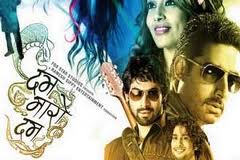
Dum Maaro Dum – Hindi films go Hollywood

DUM MAARO DUM. Director: Rohan Sippy. Players: Abhishek Bachchan, Prateik Babbar, Rana Daggubati, Aditya Panscholi. Music: Pritam. Background score: Midival Punditz. Writer: Shridhar Raghavan. Dialogue: Purva Naresh.

I saw Dum Maaro Dum at my local Cineplex last night and, for a change, the Hindi film felt right at home among the early summer releases that the Friday night crowds had thronged to.

Slick, glamorous, and frenetically paced, DMD has all the hallmarks of a summer blockbuster – a terrific plot, great music, and the non-stop action that doesn’t leave the viewer any time to ponder the script’s absurdities or inconsistencies.

dum maaro dumWhen local student Lorry (Babbar) receives admission into a U.S. college but without financial aid, the Goan drug cartel sees an opportunity for a mule. After much persuasion Lorry consents, and lands at the international airport with his cocaine-laden bags. The next sequence introduces us to the “heroes” of the movie, and is worth the price of admission. Each character is battling demons, from newly- reformed ACP Vishnu Kamath (Bachchan) to the susegaad Joki (Daggubati), the networked but powerless singer.

Lorry becomes a hapless lever used by Kamath to shake up the Goan mafia in search of the elusive Michael Barbossa, a shadowy entity that appears to exercise control over the various international drug factions that have divided up Goa.

Crackling dialogue and crisp direction move the story along. The one-liners and cheeky references to Amitabh films (Mere paas maal hai!) elevate the film from a by-the-numbers underworld movie and provide comic relief to the grim proceedings. Sippy captures the sex, drugs, and rock and roll atmosphere of Goa perfectly without forcing it on the viewer; the playground of the world is beautiful, sinister, and charming at once. One scene, shot in only the ambient light of a starry night, is a testament to the world class cinematography of modern Bollywood.

Unfortunately, the ensemble cast is picked with an eye to mainstream audiences, exposing the shallowness of Bollywood talent. But Babbar’s turn as the beleaguered Lorry is memorable; he manages to erase the memory of the humble Munna from Dhobi Ghat and the insouciant Amit from Jaane Tu with a sterling performance as the misguided teenager. Daggubati is eye candy and has the most sympathetic role of the lot; the actor from the South makes an impressive debut. Bachchan is competent, but he seems to playing variations of the same role –the suave crime-stopper- in every movie. If he has any plans of salvaging his career, he needs to step away from Bollywood and search out the offbeat indie directors who can give him a new lease on life.

As a gangster flick, comparisons to Vishal Bharadwaj’s Kaminey or Ram Gopal Verma’s Company are inevitable but unfair. DMD has a visual and story-telling style of its own, and makes no bones about being nothing more than a commercial, paisa vasool, time-pass entertainer. It lacks the mad genius of Bharadwaj or the gritty realism of Verma, but it is an unpretentious, highly entertaining piece of work on its own.

As with Kaminey, the director is unable to resist providing a quasi-happy ending for his characters-are Indian audiences not ready for the messy realities of life?

People Power

If you are in India and spend your retiree hours watching day&night TV news channels, chances are you have stopped watching feature films. In the last year alone, the skeletons that the channels have discovered in government and private cupboards and have instantly sensationalised on air are meat enough for a dozen thrillers in Anywood.
It is not that we haven’t had scams – public and private – in the past 60 years. You may be unaware of the Mundra affair that cost Finance Minister TT Krishnamachari his position in the cabinet in the early years after Independence, but you couldn’t have forgotten the Tehelka expose of bribing in a national party. Then there was the Bhopal gas tragedy soon after which Union Carbide’s Warren Anderson was carefully put on a plane under government escort and sent home. Union Minister Sukhram was caught surrounded by sacks of home-stashed cash. The Bofors scam followed. Rajiv Gandhi and the Congress pleaded innocence, but were voted out of power. After Telgi’s stamp scam, Kargil coffin scam, and Lalu Prasad’s fodder scam, we were getting immune to scam news.
That is because we had underestimated the political classes’ capacity to plunder. In the last year and a half we saw an unprecedented burst of scams – each larger than the previous one in scale, scope and brazen-ness. The “mother of all scams” the 2G Spectrum allocation fiasco, no doubt, was unearthed by a journalist using the old investigate-chase-talk-corroborate method, but it could not have reached such a wide audience in India and abroad without the “breaking-news” journalism of the TV and the Internet.
In what looked like a domino effect, we saw the CWG tamasha, the Adarsh housing tragedy and the Antrix-sponsored S-Spectrum deal that got stopped at the last moment. It was a one-a-week expose by the print and e-media – quick, graphic, and relentless. A few weeks ago, The Hindu published excerpts from the Wikileaks cables dealing with the cash-for-votes scam connected to the Nuclear Liability Bill. Within hours the news was splashed on at least a five major English TV news channels. Scenes of chaos in the parliament during the vote got glorious re-runs all day, participants in the sting operation were called for a panel discussion, anchors waved papers pertaining to them at our noses, and every channel called it “Breaking News”. Hasan Ali and his $9 bn wealth in foreign banks is the latest in the series.
Ironically, the Tamil Nadu CM’s free colour-TV sets scheme brought a lot of these stories into the viewers’ living room without their asking for it.
Twenty-four-hour news channels foraging for news-bites in every government file is only a part of the story. A lot of the credit for our saturation scam-news must be placed at the door of personal technology. Inboxes once filled with sob stories, you-have-won-a-prize con stories and chain mails with god stories – promising a place in hell if you didn’t pass them on to five people – have been upgraded. The sagas that spring from your mail-box are about politicians of all hues, bureaucrats of all shades of loyalty and corporates neck-deep in crony capitalism. The stories are real and can be verified. With each of us belonging to several interest groups, how long before they are forwarded to a million e-addresses? That each one of us is an armchair pol-analyst only helps in the punch-key dissemination of news.
And ah, the power of social net-working. Internet news is participative. Within an hour of the latest political shenanigan breaking out, you could write a blog, leave comments on a news website, write on a Facebook wall and join tweeple airing views on the subject. It is impossible not to know the “latest” one way or the other. It is your response time that is in question.
All these trends came to a head making a huge success of Anna Hazare’s fast for a Joint Committee to discuss the Jan Lokpal Bill. A little known senior came out of an even lesser known hamlet called Ralegaon Siddhi in Maharashtra, landed at Jantar Mantar, spread his gaddi and declared a fast unto death. He was flanked by a Magsaysay Award winner credited with the RTI Bill and an extremely popular ex-supercop. The timing was strategically perfect – between World Cup cricket and the IPL, when eyeball score was low. TV channels had a newsbite and they made a major event of it. The story ran 24×7 for the four days the fast lasted. Anna and his mission got written about, SMS-ed on, Facebooked and tweeted around endlessly. The usually apathetic middle class, hit by corruption, and the young population hit by idealism (both users of technology) saw a messiah in the elderly man who wore a Gandhi cap. They called friends and congregated in many towns to show solidarity to the cause.
Finding the pertinent rules and making copies of laws, court cases and judgements is done in a jiffy, and sent off in even less time. We are better informed, better prepared to take sides.
Another trend in the success of such campaigns is the slow shedding of inhibition of the tweeting class. People generally of a “withdrawing” temperament, now face the TV and other handicams readily, publicly, repeatedly. “Public Opinion” is now voiced by well-dressed, well-informed, articulate men and women. Movie and sports stars lend their faces and voices to the programs getting publicity for themselves and their current productions.
“Technology to fight crime” can no longer be taken in the narrow sense of cops fighting with computer-aided armoury. Technology today informs people like you and me of criminal acts, supplementing it with laws, arguments and plans of action. You need not jump into street-action to fight it. Forwarding it with a few clicks on your Blackberry makes you an indispensable participant, a finger-and-thumb activist!
Just got mail that sand is being mined at the Adyar river estuary in my city. Off to the police station to join other campaigners to register a complaint. Wish us luck!

By Geeta Padmanabhan

INDIA-CORRUPTION/

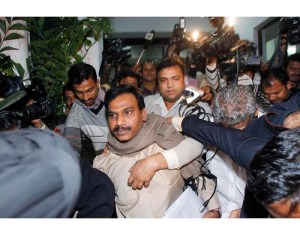
Telecom Minister Raja

If you are a retiree in India and spend your hours watching day&night TV news channels, chances are you have stopped watching feature films. In the last year alone, the skeletons that the channels have discovered in government and private cupboards and have instantly sensationalised on air are meat enough for a dozen thrillers in Anywood.

It is not that we haven’t had scams – public and private – in the past 60 years. You may be unaware of the Mundra affair that cost Finance Minister TT Krishnamachari his position in the cabinet in the early years after Independence, but you couldn’t have forgotten the Tehelka expose of bribing in a national party. Then there was the Bhopal gas tragedy soon after which Union Carbide’s Warren Anderson was carefully put on a plane under government escort and sent home. Union Minister Sukhram was caught surrounded by sacks of home-stashed cash. The Bofors scam followed. Rajiv Gandhi and the Congress pleaded innocence, but were voted out of power. After Telgi’s stamp scam, Kargil coffin scam, and Lalu Prasad’s fodder scam, we were getting immune to scam news.

That is because we had underestimated the political classes’ capacity to plunder. In the last year and a half we saw an unprecedented burst of scams – each larger than the previous one in scale, scope and brazen-ness. The “mother of all scams” the 2G Spectrum allocation fiasco, no doubt, was unearthed by a journalist using the old investigate-chase-talk-corroborate method, but it could not have reached such a wide audience in India and abroad without the “breaking-news” journalism of the TV and the Internet.

In what looked like a domino effect, we saw the CWG tamasha, the Adarsh housing tragedy and the Antrix-sponsored S-Spectrum deal that got stopped at the last moment. It was a one-a-week expose by the print and e-media – quick, graphic, and relentless. A few weeks ago, The Hindu published excerpts from the Wikileaks cables dealing with the cash-for-votes scam connected to the Nuclear Liability Bill. Within hours the news was splashed on at least a five major English TV news channels. Scenes of chaos in the parliament during the vote got glorious re-runs all day, participants in the sting operation were called for a panel discussion, anchors waved papers pertaining to them at our noses, and every channel called it “Breaking News”. Hasan Ali and his $9 bn wealth in foreign banks is the latest in the series.

Ironically, the Tamil Nadu CM’s free colour-TV sets scheme brought a lot of these stories into the viewers’ living room without their asking for it.

Twenty-four-hour news channels foraging for news-bites in every government file is only a part of the story. A lot of the credit for our saturation scam-news must be placed at the door of personal technology. Inboxes once filled with sob stories, you-have-won-a-prize con stories and chain mails with god stories – promising a place in hell if you didn’t pass them on to five people – have been upgraded. The sagas that spring from your mail-box are about politicians of all hues, bureaucrats of all shades of loyalty and corporates neck-deep in crony capitalism. The stories are real and can be verified. With each of us belonging to several interest groups, how long before they are forwarded to a million e-addresses? That each one of us is an armchair pol-analyst only helps in the punch-key dissemination of news.

And ah, the power of social net-working. Internet news is participative. Within an hour of the latest political shenanigan breaking out, you could write a blog, leave comments on a news website, write on a Facebook wall and join tweeple airing views on the subject. It is impossible not to know the “latest” one way or the other. It is your response time that is in question.

All these trends came to a head making a huge success of Anna Hazare’s fast for a Joint Committee to discuss the Jan Lokpal Bill. A little known senior came out of an even lesser known hamlet called Ralegaon Siddhi in Maharashtra, landed at Jantar Mantar, spread his gaddi and declared a fast unto death. He was flanked by a Magsaysay Award winner credited with the RTI Bill and an extremely popular ex-supercop. The timing was strategically perfect – between World Cup cricket and the IPL, when eyeball score was low. TV channels had a newsbite and they made a major event of it. The story ran 24×7 for the four days the fast lasted. Anna and his mission got written about, SMS-ed on, Facebooked and tweeted around endlessly. The usually apathetic middle class, hit by corruption, and the young population hit by idealism (both users of technology) saw a messiah in the elderly man who wore a Gandhi cap. They called friends and congregated in many towns to show solidarity to the cause.

Finding the pertinent rules and making copies of laws, court cases and judgements is done in a jiffy, and sent off in even less time. We are better informed, better prepared to take sides.

Another trend in the success of such campaigns is the slow shedding of inhibition of the tweeting class. People generally of a “withdrawing” temperament, now face the TV and other handicams readily, publicly, repeatedly. “Public Opinion” is now voiced by well-dressed, well-informed, articulate men and women. Movie and sports stars lend their faces and voices to the programs getting publicity for themselves and their current productions.

“Technology to fight crime” can no longer be taken in the narrow sense of cops fighting with computer-aided armoury. Technology today informs people like you and me of criminal acts, supplementing it with laws, arguments and plans of action. You need not jump into street-action to fight it. Forwarding it with a few clicks on your Blackberry makes you an indispensable participant, a finger-and-thumb activist!

Just got mail that sand is being mined at the Adyar river estuary in my city. Off to the police station to join other campaigners to register a complaint. Wish us luck!

Picture by spectrumscandal courtesy Creative Commons.

No Gifts!

Sonia_noGifts

By Sonia Sweet Kumar

Incessant talk of birthdays and aging is standard in our household, where conversations are dominated by our three kids.  My two older children love to discuss what they will do as they get even older (“Mama, when I’m nine …!”) and how they will mark their birthdays each year.  Lately, six year old Rajkumar has been talking about melding his current dinosaur obsession into his seventh birthday celebration in September.  And Simran, who is turning five this weekend, is excited about all things involved with her birthday – receiving the first slice of cake, a new outfit to wear that day, having a say in what to buy her two brothers as favors, and, of course, the gifts.

However, beginning with Rajkumar’s first birthday, I have almost always requested “no gifts” when I send out invitations.  Our friends who attend our birthday parties do one of three things:  1) ignore our request and bring a gift, 2) bring something homemade, or 3) bring nothing.

Is my request noble?  Am I trying to teach my children about selflessness and the value of giving rather than receiving?  Does it stem from my Indian hospitality gene?  Is it because I am incapable of being a gracious recipient?

None of the above.  I attribute it entirely to my endless pursuit of eliminating clutter.  There are three adults in our home – me, my husband, and my mother – and three kids.  Our space can get crowded, primarily with kid stuff:  impulse buys when I was a new parent, hand-me-downs that I am incapable of declining, and…gifts.  It can be overwhelming.

The reasons behind my “no gifts” policy beg the questions, “Am I selfish?  Shouldn’t I just allow my children to receive?”

At times, I think that my request for no gifts is selfish, trumping my kids’ desire to receive a large bounty.  I like to think, though, that my intention is based in the overall interest of the household and the longer term well being of my kids.  More toys around means more haphazard playing and more clean-up, which in turn, means a cranky Mama.  Fewer toys means searching for more ways to play creatively, more outdoor play, and more interactive play with each other.  It means more time spent reading, a more serene environment, and a tidier house.

Moreover, we are in the stage, along with most of our friends, where it is a chore to shop.  I am typically bewildered about what to choose for a birthday party one of my kids is attending:  How do I choose something unique that enhances creativity, boosts IQ, and makes parents happy?  And as an anxiety-topper when shopping,  two-year-old Avinash will remind me what he is capable of if I indicate that I am not willing to let him out of the cart to examine every toy in every aisle.

It is hard to keep expectations tempered.  Children attend so many birthday parties and witness other children receiving gifts and naturally covet the same.  As adults, we have the same inclination – we enjoy the anticipation involved with a beautifully wrapped gift and the attention that accompanies receiving it.  So, while I write “no gifts” on our invitations, I still give gifts – although not many – to our birthday boy or girl when it is just family members around.  Dozens of presents from classmates, neighbors, and our whole friend circle are unnecessary.  The value of each present is diluted.  Full disclosure – I do not highlight to my kids that I’ve requested no gifts.  A casual mention, coupled with a reminder that we have more than what we need and each other is sufficient.  Oh, the distress and visions of a completely gift-less birthday if I try to discuss it with either Rajkumar or Simran.

Miss Manners, Judith Martin, says that requesting no gifts deprives children of the chance to learn to give something that they may rather keep for themselves and teaching children to express their gratitude for something that they may not appreciate or like.  However, after watching too many frenzied kids tearing through their presents and seeing the gift I gave as indistinguishable from all the others, I wonder what the point was anyways.  My husband says – cake, a party, presents from parents and grandparents, the kids know they’re loved … what more do they need?

Picture by Shorts and Longs courtesy Creative Commons.

Tanu Weds Manu – Not bad

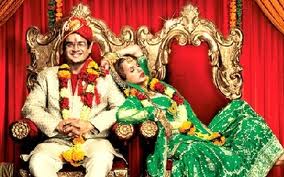
tanu weds manuIt is a tribute to “India Shining” that the latest popular “away” location for the Hindi film industry is not Switzerland or Mauritius, but the semi-urban environs of North India, where the regional patois offers as much authenticity as the Mumbaiyya Hindi dialect. There’s been a rash of movies based in the North recently, like Dev D., Delhi 6, and of course, Band Baja Baraat, which made stars of two very ordinary looking people by focusing on a tight script, clean editing, and the colorful North Indian wedding ethos.


TWM attempts to cash in on BBB’s success by hewing to the same formula. The script is crisp, the language salty, and the plot heavily depends on the raucous chaos of an Indian wedding.

Despite the tradition it seeks to exploit, TWM’s wedding celebrations are more Monsoon Wedding than Hum Aapke Hain Kaun. In a clever nod to the changing times, we have Tanu (Kangana Ranaut), a foul-mouthed, cigarette-smoking Kanpur girl who sole raison d’etre is to rebel, but who is, nevertheless, adored by her hapless parents. Her antics only endear her to Manu (Madhavan), a London doctor in town to get married by his parents.

Much plot-twisting happens before the two get together in classic filmy ishtyle at the end.

Indian filmmakers (at least some of them) seem to have woken up to the fact that a good script and screenplay can achieve decent box office returns and have the advantage of being able to keep costs down by reducing the need for star power. TWM chugs along briskly, with excellent turns by the accompanying ensemble cast. There are a couple of holes in the logic, but the pace keeps you from pondering them too long. But if the movie is representative of the social mores in India today, boy, have things changed. Tanu is obviously sexually experienced, but this fact appears to be a mere footnote in the proceedings, daunting neither her parents nor her suitors. Kya baat hai! If it wasn’t for the fact that there are still incidences of honor killings of caste-crossed lovers in India, I could almost believe the premise.

Where the movie stumbles is in the casting of Ranaut as the feisty, trash-talking Tanu. Ranaut has a chameleon-like ability to blend into her movies physically, so that her look here is a 180-degree turn from the drug addicted model in Fashion, but her voice modulation is just awful. And, let’s face it, she cannot do “chulbuli.” Her talents are much better suited to the dramatic roles that have been her forte so far. One can see why she would seek out a role that would stretch her as an actress, but she is just not right for this role. Kareena Kapoor’s turn as the irrepressible Geet in Jab We Met somewhat approximates the Tanuja Trivedi character, and while that performance was not exactly award-worthy, Ranaut as Tanu falls far below even this standard, and drags the movie down. Madhavan, on his part, is endearing as the lovelorn Manu, and his lack of charisma doesn’t affect the movie much.

Another plot weakness is the denouement. Without spoiling it for the reader, let me say that Tanu’s volte face in the final moments is quite unbelievable and I wouldn’t give the new relationship a snowball’s chance in hell of succeeding. The rapid turn of events in the climax leave a slightly sour taste in what should have been a fairy-tale ending.

Still, TWM is a pleasant watch for the most part. Director Aanand Rai puts in some clever touches, like the sangeet performed to the oldie “Kajra Mohabbat Wala,” and the supporting cast, led by Swara Bhaskar as Tanu’s clear-headed friend Payal, is excellent. Krsna’s music is pleasant, with touches of the Hindustani semi-classical tradition. Watch TWM on a good, legal print on DVD when you’re in the mood for a nice Bollywood film.

ILPFest 2011

ILPFest 2011 is a musical event showcasing both Indian classical music and the glorious decades of Indian film music for a great cause – Literacy.

Organized by the India Literacy Project, the show starts with a Jugalbandhi with Srikanth Chary (Veena), Prasad Jogalekar (Sitar), Shriram Brahmanandam (Mrudangam) and Ravi Gutala (Tabala).

Jigary, one of the finest bands in the SF Bay Area will render the best Bollywood songs of every decade until the present.

India Literacy Project (ILP) is dedicated to the cause of 100% literacy in India and is one of the most respected non-profit organizations outside India. Attending the fest is a great way to support a deserving cause and have a terrific musical experience at the same time.

Date and Venue: March 5, 2011: 6 – 9 pm;  Smithwick Theatre, FootHill College, Los Altos Hills, CA

Facebook: https://www.facebook.com/event.php?eid=183759808316403&index=1

Show Flyer: http://www.ilpnet.org/ilpfest/

Show tickets: http://www.ilpnet.org/ilpfest/PurchaseTickets

Raffles: Ziio Tablet; D200 bluetooth speaker, Vado HD pocket video camera from Creative Labs

Auction at the show: Willow TV (cricket) subscriptions

And many other attractions ….

ILP poster

Ta Tai Thrill! Multi-Disciplinary Classical Dance Event Promises To Enthrall

Vidhya Subramanian

Vidhya Subramanian

Every year, a quiet gathering of classical dancers in the Bay Area takes place on Maha Shivaratri- Shiva is after all, the Lord of Dance. The forum, besides being an offering to Shiva, is an excellent venue for dancers and rasikas to mingle, share ideas, present, and get feedback from fellow-dancers and arts-enthusiasts on their performances and choreographies. Anuradha Prabhashanker, a Bharatanatyam dancer, is the principal organizer. She, in partnership with few other volunteer artists, puts together a theme every December and invites item-submissions from classical dancers based in or visiting the Bay Area.

The theme this year is “Tandava, Temples, and Tales,” and has a superlative line-up of performers who are gurus, a sure treat for the audience. “Temples” is an artistic offering by 30+ dancers from across various schools, and is poised to steal the show. The piece, Shiva Panchakshara Stuti, was originally presented by 1000 dancers at the Brihadeeswara temple in Tamil Nadu as the “Rajarajeswaram 1000,” part of the celebratory events marking the completion of 1000 years of the temple. Choreographed by the renowned Padma Subrahmanyam, it was an extraordinary event that re-established the connection between divinity and dance for the dancers and audience alike.

Radhika Shankar, disciple of Guru Subrahmanyam and a well-known Bay Area name will lead the others in this Stuti.

Nirupama

Nirupama

The evening’s program will commence with bhajans and is front loaded with Odissi performances interspersed with a talk by Dr. Tulasi Ramachandra, artistic director of Nritalaya Trust (Mysore), on the Ancient Dance Forms of South India. Odissi will be represented by artistic director of Srjan, Ratikant Mohapatra (one hopes to hear Mohapatra’s “hypnotic” playing of the Mardala as well as see him perform in a style known to be evocative of his father, the legendary Kelucharan Mohapatra), artistic director of Guru Shradha, Niharika Mohanty, and artistic director of Jyoti Kala Mandir, Jyoti Rout.

An interesting ensemble in Kathak will be presented by artistic directors Dipanwita Sengupta (California Nupur), Sangita Nandy (Kathak Kala Vihar), and Pragya Dasgupta (Tarana).

Jyoti Rout

Jyoti Rout

Stellar Bharatanatyam performers have been sprinkled throughout the program, including artistic directors such as Nirupama Vaidhyanathan (Sankalpa), Priya Chandrasekar (Natya), Vidhya Subramanian (Lasya), Gargi Panchangam (Samarpana), Deepa Mahadevan (Thiruchitrambalam), and Shirni Kanth (Mythri Natyalaya). Individual artists, namely Sindhu Ravuri (Kuchipudi) and Kavita Thirumalai (Bharatanatyam) will also be performing.

When: Wednesday, March 2, 6:15-9pm

Where: Unitarian Universalist Church, Main Hall, 505 East Charleston Road, Palo Alto, CA 94306

Admission: FREE (RSVP required via email, limited seating- Donations welcome)

Contact: 408-252-6046, anuradhap@sbcglobal.net

Reclaim Chennai Beaches – A Youth Inititave

chennai beachMore than 185 people from 7 countries and 16 cities fasted for a day in Chennai’s Besant Nagar beach to protest against the elevated expressways proposed in Chennai, including the Beach Expressway that is to run through all four of the city’s four famed beaches. The pre-dominantly middle-class gathering, with many first-time activists and a large number of youngsters, said that the hunger strike was organised to show that the fisherfolk were not alone in their fight against the elevated expressway. Last July, more than 3000 fisherfolk voiced their protest against the elevated beach expressway by organising a massive human chain on the beach. The highway will displace more than 10,000 fisherfolk, pave over the nesting grounds of the endangered Olive Ridley sea turtle, and ruin Chennai’s most treasured public space.

The Coastal Regulation Zone Notification, 1991, prohibited the construction of roads on beaches. All three Elevated Highways – the Beach Expressway, the Port-Maduravoyal Expressway and the High Speed Corridor over the Adyar River – would not have been permissible under that notification. So the law was changed by the Ministry of Environment & Forests. CRZ 2011 permits the construction of roads-on-stilts anywhere along India’s coastline.

Roads-on-stilts were included as a permissible activity despite strident opposition to the blanket exemption by fisherfolk and environmentalists. In meetings with representatives of the National Fishworkers Forum, Environment Minister Mr. Jairam Ramesh had agreed to delete the reference to roads-on-stilts. Justifying his failure to honour his word, Mr. Ramesh in a letter to the National Fishworkers Forum explained that: “Road on stilts [were] retained keeping in view the congestion of the urban sectors in the populated areas of the coast. The road on stilts is primarily to be laid on the mangrove areas which will not affect the tidal inflow and cause minimum destruction to the mangrove area. The road on stilts cannot be equated with projects like express highway etc.”

At another point within the letter, Ramesh comments that “Such roads will be exceptional where clear demonstrable public interest is there such as for defence, security considerations, emergency evacuation, relieving congestion where there are no alternatives etc.”

However, with these details securely locked away inside Mr. Ramesh’s head, the exemption is likely to be used by the Government to bulldoze coastal areas for road-laying.

Reclaim Our Beaches and Save Chennai Beaches Campaign said they wholeheartedly supported the struggle of Chennai’s fisherfolk, and committed their continued solidarity to the campaign to defeat the elevated expressway.

For more information, contact:

Siddharth Hande (Reclaim Our Beaches):9840295081

Nityanand Jayaraman (Save Chennai Beaches Campaign): 9444082401

H31/39, Ashtalakshmi Gardens, Besant Nagar, Chennai 600090

To view list of online registrants, visit: http://letsrob.org/SaveChennaiBeaches/signup.html

Picture courtesy Moo Buddy via Creative Commons

Pushpuck – adding to Hindu mythology

pushpuck1Hindu mythology is big these days; a source of inspiration to graphic artists, animated movies, and film plots. Virgin Comics (now Liquid Comics) made the biggest splash with their Ramayana 3393, Devi, and Sadhu series, bringing a touch of Eastern exotic to manga-style action and adventure.

Graphic designer Umesh Shukla turns this model upside down. His Pushpuck comic series aims to provide that touch of Western style and professionalism to readers of Indian mythology in India.

Shukla, a graduate from NID, moved into computer graphics after a brief stint in advertising. After earning his chops in Singapore and Sydney, Shukla moved to the United States, where he spent a grueling stint working for James Cameron’s Titanic. “That was an incredibly difficult, but amazing experience,” he recalls. “Everything afterwards was a bit of a letdown!” He moved to Disney and became a visual supervisor for a wildlife film which was later canned due to story issues. Inspired by the experience, and wanting to showcase a novel approach to animation, he started Auryn, a company specializing in bringing print graphics like watercolor and other art to life in the most authentic way possible.

The idea for Pushpuck came about during trips to India, when he realized that animation was at a turning point in the media environment there.  “I don’t think there really is a kids segment as such in Indian animation,” he says. “Roadside Romeo was touted as a kids’ film, but it was not something kids in India could relate to. Just having a dog as the central character, when we know what connotations calling someone a ‘dog’ has, should tell you something about the disconnect with its audience.”

However, with the success of the animated movie Hanuman, artists and film producers had found a potential market and soon a bunch of other look-alikes like Ganesha and Krishna started flooding the  market.  “The quality has been quite average so far, “ says Shukla, “but all the attempts have been reasonably successful so far.” This led him to believe there was truly a market for good quality children’s animation in the country.

The uniqueness of the Pushpuck comic series is that Shukla does not retell popular stories. Instead, he uses them pushpuck2as a launching pad for child characters he creates, who live in those times and whose lives intersect with the famous heroes of Hindu mythology. It is a daring attempt, but the reverential tone and sweet characters give the comics a sanctity of their own. In Anant, the title character meets Krishna during the episode of Mount Gowardhan. In Tarak, a young boy joins the celebrations following Rama’s return from Lanka.

The comics are also steeped in the principles and traditions of Indian culture, a culture that is perhaps under siege as Indian metropolises rapidly westernize. A voracious reader of Hindu scriptures like the Puranas and the Upanishads, Shukla is keen to preserve and disseminate the best of ancient teachings. There are subtle messages to respect elders, care for the land, while not sacrificing the adventure that draws kids to the books.

The comics are currently available only in digital form, though a transition to print seems like a breeze to accomplish, since the comics follow the format of an e-book. While the drawings are done by non-Indian artists, Shukla maintains close supervision to get the details right. “The biggest challenges are with the clothing,” laughs Shukla. “It’s hard for non-Indians to figure out the drape of a sari or a dhoti.” He also does the final colorizations himself. “People outside Indian cannot imagine the vibrant color combinations that are possible; some are unique to India.”

Check out the comics at http://pushpuck.com. The comics need to be enlarged slightly to be read, which make the exercise unnecessarily cumbersome, but Shukla is working on a fix. For now, it is a slight price to pay for the novel experience of seeing new mythology being created; indeed, in tone and in spirit, that is exactly what’s happening. The series is titled “Forgotten tales,” and with very little effort, one could imagine these tender stories being discovered by future generations as additions to the anthologies. One critic even calls Shukla a modern-day Valmiki. “I get so many letters thanking me for keeping our culture alive,” says Shukla. “Let’s hope they keep liking what I do.”