The "R" word

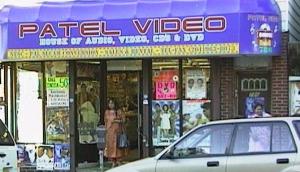
little indiaThere’s something strange going on with the portrayal of Indians in American media.

First there was the crazy Metro PCS ad, featuring “Ranjit” and “Chad,” two buffoonish characters who evoke the most ridiculous desi stereotypes you can think of.

I laughed that one off.

Then there was the AP article that wondered of politicians like Nikki Haley and Bobby Jindal were disowning their heritage by anglicizing their names and changing their religions.

I didn’t think it was a big deal.

Now comes an offensive article by Joel Stein in Time magazine about the changing face of Edison NJ. An excerpt –

..my townsfolk started calling the new Edisonians “dot heads.” One kid I knew in high school drove down an Indian-dense street yelling for its residents to “go home to India.” In retrospect, I question just how good our schools were if “dot heads” was the best racist insult we could come up with for a group of people whose gods have multiple arms and an elephant nose.

I’d like to vent my spleen on the author, but I’m just going to link to Sandip Roy’s excellent piece in the new America Media’s Ethnoblog entitled “Joel Stein and the Curry Problem.”

..this American anxiety about its browning will not change. A recent study said white birthrates in California were declining faster than expected. Expect the backlash to rise. There’ll be no chai served at this Tea Party.

I’m not laughing anymore.

Now, that is not funny.

Raavan: Richly Atmospheric

raavanBefore Tulsidas’ retelling turned him into an infallible God, Rama was designed to be the first self-aware, doubt-ridden, painfully human avatar of Vishnu. In Valmiki’s epic, he makes many questionable moral choices, like the killing of Vali and the banishment of Sita. By contrast, Ravana, the king of Lanka, is a renowned scholar, lover and patron of the arts, and a great king, a civilized demi-god whose power blinds him to good advice at crucial moments.

The idea was to create a complex fable of good and evil; how they both can lurk in the same human being, and how circumstances can bring out surprising elements of our personalities, to our shame or pride.

Mani Ratnam takes that basic idea and weaves it into Raavan, a lush, atmospheric epic that plays similarly with the moral grayness that is the central trait of humankind. Beera (Abhishek Bachchan) is the jungle lord who rules his domain with a firm but just hand. After his sister Jamuniya (a lovely and husky-toned Priyamani) is assaulted by a group of policeman under the command of SP Dev (Vikram), he decides to take revenge by kidnapping and killing Dev’s wife Ragini (Aishwarya Rai Bachchan). Other elements from the epic are randomly sprinkled. There is the forest guard, Sanjeevani Kumar (Govinda) who bounces from tree to tree, Jamuniya is obviously Surpanakha, but there is no cohesion or chronology to these allusions; they are placed at the will of the director, not Valmiki.
I won’t give away any more of the plot, but suffice to say that Beera is not the inhuman monster that he has the reputation of being, and Dev is not as morally pure as his name and position suggest. Only Ragini is created as a paragon-brave, fearless, and compassionate, with a luminous beauty that can drive men mad.

Abhishek hams it to the hilt as Beera; manic eyes invoke the rakshasa, and schizophrenic mumblings suggest the ten heads. Vikram as Dev is perfectly cast; there is a credible moral ambiguity in the typical cop get-up – aviator glasses, tucked in shirt suggesting the beginnings of a paunch. Aishwarya does quite well; she is not a great actress, but here she is the personification of Sita, a delicate vine with a core of steel.

But the real hero is the atmospherics, richly shot by master cinematographer Santosh Sivan (V. Manikandan began the movie, but left early on). The opening scene, where Beera’s large craft bores down on the Ragini’s fragile vessel, is stunning, and the visual gifts keep coming. The scenes in the jungle are a rain-sodden gray green, and set up a terrific contrast to the bright colors of the flashbacks to happier times. Spectacularly shot on location in parts of Kerala, Karnataka, and Maharashtra, the cinematography is a revelation of the many unexplored places in India that are still unspoilt and gorgeous.

Indian critics have been divided on the movie, but if there’s one thing Mani Ratnam can do, it is tell a story with style and panache. Raavan is a feast for the senses, and I highly recommend you watch it in the theater, where you can best experience the oppressive power and the thrumming beat of the jungle. Rahman’s music does not stand out on its own, but it sets a good percussive mood towards the inexorable cliff-top conclusion.

Every element of the movie is beautiful, but it is not an insubstantial beauty. This is a strong tale, well told.

My rating: 3.5 stars out of 5

Raajneeti

Raajneeti-storyIt is often said that every story ever to have been told is in the Mahabharata. It is no wonder that the sweeping epic has been the inspiration for books and movies like Shashi Tharoor’s The Great Indian Novel and Shyam Benegal’s Kalyug.

Director Prakash Jha uses contemporary Indian politics as a setting for Raajneeti, his version of the Mahabharata, and it makes perfect sense. Despite the focus on the climactic 18-day war, the epic is more about the politics of kingship and the toll the quest for power takes on families and relationships. In this case we have the political family of the Prataps, two brothers who control the politics of a central Indian state. When the older brother gets disabled by a stroke, the delicate power equilibrium gets disrupted, leading to an all out war between the younger generation of cousins. Elements of the Gandhi dynastic rule are also woven in, with a foreign-returned brother being co-opted into the family business.

Many themes from the Mahabharata can be quickly identified; Raajneeti is not the most subtle of adaptations. Ajay Devgn’s character, playing Karna, is left as a baby in a basket on the river. He also wears the trademark kundalas (earrings), and has a riverside showdown with the mother who abandoned him.

Raajneeti is bolstered by a large celebrity cast, with some unlikely faces like Ranbir Kapoor and Katrina Kaif obviously signed on to give a touch of glamour to the project. They are supported by a commendable ensemble cast. Nana Patekar plays the wily Krishna and Manoj Bajpai is dependable as ever as the perpetually frustrated Duryodhana. Every actor has the opportunity to emote, given the drama inherent in this story of family rivalries, and they all do a good job. The one sour note is Arjun Rampal as Bhim (or Sanjay Gandhi, depending on which epic you’re referring to at the moment) whose Hindi accent is even worse than Kaif’s at times.

Where the movie stumbles is in its predictability. I could foresee nearly every plot twist before it occurred, and assassinations are telegraphed seconds ahead by ominous music and obvious setups. When Ranbir’s character, Samar, returns a cell phone to a traitor with the instruction to always pick up his call, you know that the device is going to be used to blow the guy up pretty soon.

Despite the strong and complex plot, courtesy Ved Vyasa (who, I think, should certainly have been given screen credit) Raajneeti ends up being more ho-hum that hoo-haa. The movie will leave you with nothing more than a faint regret of having spent 3 hours in the theater (yes, it is that long) and a slight trepidation when you unlock your car in the parking lot and put your hand on the door handle to open it.

If you have a hankering for a reworked epic, wait for Mani Ratnam’s Ravana, out on June 18.

Update: I wanted to mention that this movie gives you a frightening picture of law and order in central India. Desis planning to return should watch this movie and reconsider! ( though I believe the situation has improved tremendously these days. Or so I hear.)

Update 2: I hear there are several elements from the Godfather movie too. Not having watched the movie recently, I wasn’t able to catch the references.

Update 3: Watch the previews for upcoming Bollywood releases. Then notice how the odd one out is the mainstream, Dharma Productions rom-com I Hate Luv Stories with the big production numbers and the good-looking leads. It is a testimony to the maturing of the Hindi movie industry.

My Rating: 2.5 out of 5 stars

Kid advisory: Not suitable for kids under 13 years.

Primer for the California Primaries: June 8

vote

Results Update: Money power prevailed on Tuesday as the candidates deep pockets won. But Prop 16, which had an early lead, ended up being defeated. Scroll down for results.

It is a measure of our relative levels of peace and prosperity that we are so apathetic about voting, especially in primaries. That, and California’s horrendous habit of putting everything up to public referenda, abdicating the legislature’s responsibility to the voters. No wonder voters typically close their eyes (and minds) and blindly vote no on everything. Or stay home.

The trouble is, if you, as an informed voter, choose to stay out of the election process, then you hand over an enormous amount of power to the crazies on the fringe (one reason why the Tea Party is such a potent threat is that THEY VOTE!!!)

So go vote on Tuesday and here’s a quick primer to help you make up your mind on the various propositions and candidates up on the ballot.


PROPOSITIONS

Summary

Proposition 13 – Vote YES. Result: YES
Proposition 14 – Vote YES  Result: YES
Proposition 15 – Vote YES  Result: NO
Proposition 16 – Vote NO    Result: NO
Proposition 17 – Vote NO   Result: NO

Proposition 13- Voting Yes makes it easier for builders, developers, and property owners to make earthquake retrofits to their property without worrying that the retrofits will raise the value of the property and therefore, property tax.

Voting No preserves the status quo.

VOTE YES.

See, that was an easy one. You do want buildings in California to be safer, right?
Back to top

Proposition 14 – Voting Yes changes the primary process for a bunch of state positions, including Governor, and national positions, including Senators and Congress representatives. Basically, all voters would have all candidates on the ballot, and instead of the Democratic Party winner duking it out with the Republican Party winner in November, it would be the top two vote getters. In theory, you could have 2 Democratic candidates or 2 Republican candidates squaring off the in the general elections.

In theory this sounds rather nice, because we have seen how primaries can make even reasonable candidates tack hard left or hard right as they try to appeal to their base in the primaries. This way, you’d probably have candidates try to stay centrist in their positions in order to attract as many voters of either party.

In practice, the party affiliations would still show up on the ballot, so registered members of each party are probably going to vote along party lines anyway. And the successful candidates are usually the ones with the most money.

Still, I like the prospect of having candidates trying to appeal to a wider audience than the extreme elements of their base, even if it means that in today’s gerrymandered districts one party could get completely shut out of the general election. (Yes, you could have Carly Fiorina and Chuck DeVore vying for Senator and then you can stay home!). Third party candidates have been complaining that they will be shut out of the ballot process in November, but when did they have a chance anyway.

I am inclined to VOTE YES.
Back to top

Proposition 15 – Voting Yes on this proposition lifts the ban on public funding for political campaigns. It also establishes a public funding system for the Secretary of State position. You might call this a trial balloon for future public funding for other legislative races. Here’s how it will hopefully play out:

Once this proposition goes through, a system of public funding will be established for the Secretary of State position. Funds for this system will not come from taxpayers; rather, a higher fee on lobbyists and voluntary contributions will create the capital fund. Candidates eligible for public funding will have to prove they are serious contenders by collecting a certain number of signatures. They also prohibited from spending any more money than they are allotted.

If this works out, other legislative races have the option of going for public funding, since the ban has been lifted by this proposition.

This measure also expires in 2019, so we will have time to see how it works in 2014 and 2018.

Absolutely VOTE YES. Any step that moves us towards public campaign finance is a welcome step.
Back to top

Proposition 16- Have you seen any ad urging you to “Vote No” for this proposition? No? Didn’t think so. This proposition has been bankrolled and shamelessly promoted by PG&E, whose massive ad budget has simply drowned out the opposition.

Voting Yes on this proposition means that local governments would need approval from two-thirds of the voters before they can use alternative means of providing electricity services to their constituents. Since PG&E pretty much has a monopoly on electricity services at this time, and getting a two-thirds vote on anything is pretty much impossible, this is nothing but a blatant attempt to preserve the monopoly.

PG&E has been putting up really misleading ads that this is about our “Right to Vote,” but requiring an absolute majority is a subversion of the democratic process, and leads to minority rule, as can be seen from the gridlock in the U.S. Senate over the last year with filibuster threats by the Republicans for every little initiative.
Also, many townships with independent electricity contracts, like Palo Alto, currently have much lower electricity rates and this measure would make it much more expensive for them to expand service to new homeowners.

This is a bad proposition put up by a greedy power company. Opponents have not had any money to put up a spirited campaign so it up to us to educate ourselves and defeat it.

VOTE NO!!!
Back to top

Proposition 17 – Voting Yes changes insurance law to allow companies to penalize or reward drivers based on whether they have had continuous insurance coverage or now, regardless of which company they had coverage with. Supposedly, a surcharge to switch coverage is eliminated, and discounts can be offered by insurance companies if the driver maintains continuous coverage.

However, currently drivers in California do not pay a surcharge to switch companies. So this proposition’s claim to remove the surcharge is redundant. However, this proposition does add penalties for coverage lapse. If there was any period of time of 91 days or more in the last five years where you did not pay an insurance premium, you could be hit with heavy penalties, even if your driving record is blemish free or even if you never had a car.
Prop 17 is almost completely funded by Mercury insurance. Enough said.

VOTE NO.

CANDIDATES:

Governor

Republican: Steve Poizner. Supports gay rights, abortion rights. Fiscal conservative. Hard-working insurance commissioner. Result: Meg Whitman blew Poizner out of the water.
Democratic: Jerry Brown. Result: Jerry Brown comfortably.

US Senator

Republican: Tom Campbell. Supports gay rights, gun control and abortion rights. Fiscal conservative. Result: Carly Fiorina won by a big margin.
Democrat: Barbara Boxer. Result: Boxer.

Attorney General

Democrat: Kamala Harris. Smart, competent, female. What’s not to like? Result: Harris
Republican: Steve Cooley, Harris’ counterpart in Southern California. Result: Cooley

Mercifully, Orly Taitz, who, unbelievably, was contesting for Secretary of State, lost. For full results see here.

Picture courtesy Theresa Thomson via Creative Commons.
Kites – a flight of fancy

kitesCritics in India panned it; critics in the US have gushed with praise. What’s a desi to do? Should one assume that Kites has certain Western sensibilities that backwater hicks in the homeland can’t appreciate and fork over the 11 dollars in the theater? Or trust in the instincts of a billion people and go for the two-buck pirated version at the Indian grocery store?


Well, here goes – I hope this helps.

Kites is mostly a paean to beauty; the sculpted, six-packed fabulousness of Hrithik Roshan and the olive-skinned exoticism of Barbara Mori. To my Indian eyes she wasn’t a patch of any of our desi kudis, but I am willing to concede that this may be a cultural bias and that she may be, in fact, drop-dead gorgeous to any red-blooded male west of Mumbai.

The film therefore spends most of its time leisurely panning over the two lovebirds as they gaze soulfully at each other. Well, Hrithik does the soulful bit mostly; Mori just looks (again, could be cultural bias; I had a real problem with the Close-Up smile that didn’t quite reach the eyes). There is a story around this hazardous romance between English/Hindi speaking boy and Spanish speaking girl, but that story is just a vehicle to display the awesomeness of the two. Every scene moves at glacial speed as we contemplate the sheer physical perfection of the lead pair; they are displayed in the rain, on a train, in the desert, at the casino, in the pool, in the sea, each at various stages of undress. Even the chase scene, where the lovers are in immediate peril, feels like a weekend outing to the country, as a soft ballad plays in the background.

Director Anurag Basu has been a staple of the Vishesh Films/Bhatt family stable, churning out decent movies like Life in a Metro and Gangster and Murder. His forte is style, and Kites is a very stylish and stylized movie. What is lacks is pacing and drama. Perhaps that was intentional, but I think having a producer like Mahesh Bhatt would have made Basu haul up his socks and fix the problem double quick. Instead he has Papa Roshan, who probably has no problem with the many, many minutes devoted to the admiration of his gorgeous son.

Ultimately, cross-cultural romances work if there is a sizzling chemistry between the lead pair. Hrithik and Mori do look good together, but I didn’t get it (CB? Maybe?) The last one I remember was Ek Duuje Ke Liye with Kamalahasan and Rati Agnihotri, which worked because there was a charming awkwardness between the lead pair and you could believe that, as teenagers, they would do stupid and grand mistakes. But here both Hrithik and Mori are just too well put together. They are just not credible as down-on- their-luck deadbeats. Seriously, can anyone think of the six-foot, green-eyed Hrithik as a struggler?

There is a silver lining, though. As I mentioned, the key problem with the movie is pace. Now this Friday the English version of the movie, directed by Rush Hour director Brett Ratner, released. It is 40 minutes shorter than the Hindi version, which means a lot of the pacing problems may have been taken care of. It still won’t be a terrific movie, but it may be passable. If you are a fan of Hrithik, it might be worth checking out. Plus, the pirated DVD has awful subtitles! (And unless you know Spanish, you’ll need them.)

32nd Annual San Francisco Ethnic Dance Festival

ethnic dance festival

DANCE EVENT
32nd Annual San Francisco Ethnic Dance Festival in June 2010

36 of the Bay Area’s most accomplished dance companies representing diverse dance traditions from more than 20 cultures take the stage every weekend in June at San Francisco’s Palace of Fine Arts.

From the palaces of Bali to the village squares of Mexico and the mountains of the Andes, the 32nd Annual San Francisco Ethnic Dance Festival promises to whisk audiences away on a first class journey around the world. As The New York Times dance critic Alastair Macaulay noted in 2009, “What other city in the world has anything like the San Francisco Ethnic Dance Festival? … I heartily envy the Bay Area residents… the range of dance sociology was remarkable… An extraordinarily happy program.”

Every weekend in June, San Francisco’s Palace of Fine Arts comes to vivid life as thirty six companies representing dance traditions from more than 20 cultures including Bolivia, China, Haiti, Hawaii, India, Japan, Mexico, Peru, Spain, the U.S. and many more take the stage. The Festival is the largest and most prestigious gathering of its kind in the country, with four weekends of performances and a different line up of performers each week. This year, the Festival will present several special commissions, including one honoring the Mexican bicentennial. Audience members have been known to come once, twice or even four times in order to fully enjoy this thrilling (and somewhat addictive) Bay Area celebration of our global artistic heritage.

Full festival line-up here.

WHAT: 32nd Annual San Francisco Ethnic Dance Festival – 36 Northern California companies
representing dance traditions from 20 cultures perform over four weekends in June

DATE: Every Saturday and Sunday from June 5 through June 27, 2010
(June 5&6, 12&13, 19&20 and 26&27)
Plus Special Benefit Gala on Friday, June 11, 2010

TIME: Saturdays at 2 & 8pm; Sundays at 2pm
Benefit Gala festivities begin at 6:30pm on Friday, June 11

WHERE: Palace of Fine Arts Theatre, 3301 Lyon (at Bay), San Francisco

COST: $22-$46 with specially priced family matinees
Weekend passes and group discounts are available

TICKETS: Call 415.392.4400 or visit  http://www.cityboxoffice.com

INFO: Visit  http://www.worldartswest.org or call (415) 474-3914

The Blue Mug

Blue-mugPrologue: Even in laid back Silicon Valley, the arrival of The Blue Mug was big news. Breathless emails were exchanged about the date, rueful regrets were broadcast about not being able to score tickets, and in general, a frisson of excitement rippled through the area, thanks to the amazing cast: Konkona Sen Sharma, Ranvir Shorey, Vinay Pathak, among others – the new wave of “actors” in an otherwise scorned Bollywwood pantheon.

So the lobby outside Malavalli Hall (India Community Center, Milpitas) on Saturday was packed to stifling, and I mean that literally. Asked to arrive at 7:30 for the show opening at 8, even typically tardy desis showed up punctually, only to wait..and wait..and wait. There was a crush at the ticket redemption tables, the sides of the already small lobby were lined with tables for vendors and non-profit organizations, and the doors to the venue stubbornly stayed shut. The good-humored crowd slowly became restless, and progressively uncomfortable.

As it turns out, the delay was probably because some good-for-nothing promoters were placing pamphlets of upcoming events and ads on the chairs. When the doors finally opened at a quarter to 9, the crowd’s boiling point had just about been reached, and the mood did not improve when we saw how closely the folding chairs were packed together. Worse than an airplane setup, our knees squeezed together, and butts cuddled, and necks craned in uncomfortable positions to find a vantage point to see the stage.

Let’s face it, Malavalli Hall is not meant for plays. ICC, stop hiring it out for events like these – it is a disservice to both the actors and the audience. Not having a slope means that any activities below eye level are invisible to all except the first few rows.

Despite the delay, the organizers decided to continue with the scheduled program, an opening act by Project Pulse. An idiotic decision, given the angry sentiments of the crowd at this point; the dancers almost got booed off the stage (sorry guys, but your performance was not up to par either, not that I can blame you). When the emcee came up to make more announcements, one could almost sense the vibration of pitchforks; my husband and I cast nervous eyes around for the nearest exit, in case of a riot.

Eventually the play began, and things settled down, even after the disclosure that Konkona was ill and could not be a part of the show.

The Play: The Blue Mug is an experimental sort of play. It does not have a story, being a series of monologual vignettes about remembering and forgetting. The existential question it asks is, “Are we a sum of our memories?” Actors take turns to reminisce, weaving in and out of the stage to tell their unique stories. There are enough autobiographical touches thrown in to seamlessly blend truth and fiction, till it feels that you have been invited into their lives. I found that their recalled memories fired up my own synapses, throwing up moments from my past, as I listened to the players.

It works beautifully, though for it to make the maximum impact the viewer has to be Hindi/English bilingual and have a distinctly north Indian background. Having grown up in Kanpur, I could instantly identify with the stories, though I am not sure how those south of the Vindhyas reacted to it.

Above all, The Blue Mug is a master class in acting. Though Rajat Kapoor, Shorey, and Pathak are the star names, the other actors do as fine a job. Each performance is pitch perfect and completely engrossing. The play is only about 75 minutes long, but every minute is a theater lover’s treat. This is a great touring play, since there are no props involved, and I believe there are more shows scheduled throughout the United States.

If yours is one of the lucky cities to stage it, be sure to check it out. And here’s hoping the organizers have a little more respect for their audience this time.

The play’s schedule can be found here.

Gifts for Moms, Smiles for Children

mother and childThe Akshaya Patra Foundation has launched Gifts For Moms, Smiles For Children, a Mother’s Day campaign that pays tribute to Mothers worldwide while helping to feed and educate children throughout India. Akshaya Patra is an organization with the vision that no child shall be deprived of education because of hunger. The campaign is a way for people to celebrate their Mother, Grandmother, Sister or Aunt by giving them a gift for Mother’s Day that actually gives back.
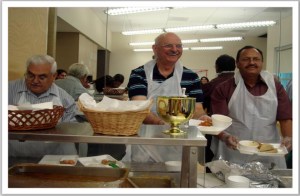
“The unfaltering love that a Mother invests into raising her children enhances a person’s life in a myriad of ways. The Gifts for Moms, Smiles for Children campaign is a great way for people to honor those Moms that have made an impact in their lives, by giving a gift with a real impact,” said Madhu Sridhar, President and CEO of Akshaya Patra. “Akshaya Patra’s mission of eradicating hunger and promoting education is based on the vision shared by all Mothers worldwide. $28 is a wonderful gift on behalf of a mother that a donor wishes to honor. A child somewhere will smile.”

Donors to the campaign contribute $28 to Akshaya Patra for each Mother they wish to honor.  Once someone has donated, they can either choose for Akshaya Patra to send an email about their gift to the Mother they are honoring, or they can print out a Mother’s Day letter from Akshaya Patra to place in a card. Akshaya Patra’s midday meal program feeds 1.2 million underserved children daily in 7,000 schools in eight states in India. It costs $28 to feed a child daily for the entire school year.  With an average government subsidy of 50 percent, $28 feeds two children.

For those who wish to purchase a different gift for their Mom while still giving back, they can do so by shopping through CafeGive, a website that brings together hundreds of online stores that donate part of their proceeds to charity. When someone makes a purchase through CafeGive, up to 20 percent of the purchase price is donated to Akshaya Patra by the vendor, at no cost to the consumer. Some of their vendors include Macys, Best Buy, 1-800-Flowers and See’s Candies.

To donate to Gifts for Moms, Smiles for Children, learn more about the One World Cuisine partnership or to shop through CafeGive, please visit http://www.foodforeducation.org.

Celebrating Mother’s Day with ICC seniors

icc mother's day copy

ICC Milpitas Seniors Celebrate Mother’s Day on May 12th
Seniors — Come and Enjoy The Day

Seniors:  80+ will be honored with special gifts. 90+ Super Special Gift
Lucky Draw: Diamond Earrings & many more. Who will be the Lucky Mother?
Every one gets a gift.

Register by 11th May, 2010
Email:   gopi@indiacc.org  or  sushmavchopra@hotmail.com
Registration is a must. Registration Fee: Seniors $5   –  Non-Seniors $8
Time:  10:30-1:20pm. Lunch will be served at 1:20pm.

Upakar Student Scholarships

Upakar was founded in 1997 and was created to assist Indian Americans who require financial assistance to pursue an undergraduate degree at a U.S. based college or university. It is further dedicated to the promotion and recognition of excellence through the support of the Indian community.  Upakar is proud to award 25 scholarships this year and hopes to grow that number with community support.

In the past, 75 scholarships have been awarded in 18 states for students to attend a variety of private and public colleges and universities.  In past scholarship cycle, we received over 100 applications for 7 new scholarships.  Applications are generally available in February; the application deadline is the end of April with the awards being announced by the end of July.  To qualify for a scholarship, the applicant must be a U.S. citizen or U.S. permanent resident (Green card holder) and be the descendant of Indian immigrants.  In 2005, the scholarships were increased to $3,000 per year, for each qualifying year spent on an undergraduate degree. Scholarship renewals are dependent on meeting the GPA requirements established by the board.

The 2010 Upakar Application Form is now available! The deadline is April 30th, so hurry.

More information can be found at www.upakar.org