It's not easy being green – sidewalk edition

lundy-aveAs most of you know, I recently joined as editor of India Currents magazine. Apart from the usual perks of working in a friendly environment with adults to talk to (boy, I never realized how much I was missing that), it is a bonus to have the office located in a quiet and pleasant tree-lined street, even though it is a hop, skip and jump from the highway. My building even has a small man-made pond, courtesy of the Church of Scientology(!).

I’ve been dying to explore the area, and when a nearby plaza suddenly bucked the recession and opened up nearly half-a-dozen new shops catering to office goers, it seemed like an invitation to enjoy the fine Californian summer and check it out.

Alas, I quickly discovered that there was really no safe way to walk to the plaza, which is literally 3 minutes from my office. San Jose city planners, in their infinite wisdom, had created a multitude of grassy verges that lushly deplete the city’s water supplies, and had completely forgotten about pedestrian crossings, at least as far as my eyes could see.

Being a veteran of road crossings in Mumbai, I only hesitated for a moment before setting off along the rain gutters, occasionally moving to the grass if I was in danger of being mowed down by a bus. I blithely jaywalked across the tar, nimbly avoiding the meager traffic and arrived at my destination.

The coffee shop promised to open only the next day, which may have soured my mood, but in my new environmentally conscious persona, I was more than a little pissed at the architects of this sidewalk-less vision of the city, with each office worker neatly cubicled up in their little offices, driving their little boxes to spend their day in more little boxes, separated from their fellow human beings by not just wood, steel and glass, but the impossibility of random personal contact, even as they “walled” and “tweeted” their business to their virtual acquaintances. How much nicer it would have been if I could take a stroll down my pretty street and casually bump into fellow toilers and exchange some gossip away from the water cooler. We’d certainly feel a stronger sense of community, which has to be the first step in being involved in and influencing the decisions that impact our daily lives.

Anyhow, having got my activist mojo on during last year’s elections, I fired off an email to the customer service department of the City of San Jose, and gratifyingly, they have responded ( even if it’s with an automated reply!) promptly.

I certainly don’t expect bulldozers to start tearing up the pristine lawns on my street, but if my email makes city planners pause and consider “walkability” as an important criterion when planning the next development, I will have done what I can.

I’ll keep you updated on the reply from the city. If you would like to share your opinions with the city too, here is the email -customerservice at sanjoseca.gov. Make the usual corrections.

Why 'birthers" are doing us a favor

ODD-US-BIRTH-oddLet’s see; the economy is in the tank, rising health care costs are pushing Americans out of the system at the rate of a couple of million a year, greenhouse emissions are stranding polar bears and causing hurricanes and several crazy dictators over the world are itching to get their fingers close to a nuclear red button, and the most pressing issue of the day is?

You guessed it – it’s whether the President of the United States is a citizen of the country or not. Rabid protesters are taking to the streets in fly-over states, loony senators are submitting resolutions solely designed to keep the issue alive, and the media is salivating over a topic that needs no preparation and makes for easy ratings.

Is there any merit to the grievances of the wingnut margin? No, but there isn’t supposed to be any. If you think that this is about a piece of paper,  then think again. This is pure racism, now given the legitimacy of a non-racial excuse. The movement in the grassroots( dried up though the grass may be) is of people who just can’t believe that a black family inhabits the White House and all the pent up anger and frustration is being directed in a, crazy as it sounds, politically correct fashion.

That is why, despite the Hawaiian government’s repeated assertion ( the governor is a Republican, by the way) that the President was born when and where he says he did, the conspiracy theorists refuse to give up. If all it took was proof to satisfy them, this issue would have died out a long time ago. But no, the staying power of this meme is a testament to the underlying race issues that have not surprisingly, been brought to the fore by the unexpected election of an African American( and boy, is he African) president.

In a sense, these birthers( now with the meta name of “birfers” ) are doing us a favor. The latent racism that pervaded American society has been given a safe outlet. These racists will not disappear, but at least we know who they are now. And for those people sitting on the fence, the whole birth certificate issue gives them a chance to analyze their feelings. Are they on the side of the birthers? if not, maybe they are a step towards believing in the equality of races, towards tolerance and acceptance. Maybe there’s still some hope for them, while the lunatic fringe, ably assisted by media pimps, hurtle towards a future that is only filled with a multicultural tapestry of disappointment.

UPDATE(just for giggles): Courtesy Balloon Juice commenters, some explanations as to why bithers are going ballistic over Barack.

Just Some Fuckhead

Duh, have you ever seen a thin and athletic Hawaiian?

Scruffy McSnufflepuss

He claims he’s from Hawaii, a “state” whose existence I have every reason to doubt. I’ve never been there. The photographs supposedly taken there make it look like Heaven, another place whose existence there is no reason to believe in. Photographs are easily doctored. And yes, many people say they’ve been to Hawaii, and my brother claims he lives there; but many people are liars, especially my brother.

Until I’ve seen Hawaii with my own eyes, I see no reason why I should accept that there is such a place. In fact, having never seen Obama with my own eyes, why should I believe in his existence, either? “Obama,” like the fictional archipelago of Hawaii, is- very likely- a plot by Muslim extremists to destroy America. In fact, the evidence of that is a lot stronger than the evidence for Obama and this fantasy Hawaii/Heaven place.

More than just kitchen scraps and lawn debris

landfillIt all began when a friend asked for worm composting tips. “My daughter has driven me into action as she disapprovingly saw me dump kitchen scraps in the regular garbage – she firmly suggested that I start a compost and save the earth!” she said.

Now we had been following the practice of kitchen scrap disposal for a while. A couple of years ago, the City of Fremont had distributed small kitchen pails. These were meant to be used to collect kitchen scraps and peelings to be disposed in the green bin, which takes all kinds of compostable material. The city then carts it away to a composting center and gives all the residents free compost every spring.

The kitchen pails were not a very practical idea, though. The opening was narrow, which meant invariably there was food stuck to the lid. The garbage started stinking very soon, and it was a pain to tip it over into the green bin when full.  There were so many people who gave up on the program that the city soon realized it was a colossal failure. They decided to have a contest to come up with ideas to get residents motivated to get rid of kitchen scraps and peelings appropriately.

In the meantime, my family had come up with a simple solution to the problem. We deputed one of our plastic bowls to be the receptacle and dumped all the kitchen scraps in it. At the end of the day we emptied it into the green bin. This still didn’t solve the problem of the green bin stinking but at least it was outside the house. Every once in a while, we rinse the bin out.

Along the way we realized that paper napkins were compostable and started lining the bin with a new napkin each day. Thus made the job even easier.We reduced our landfill pile to 2 bags a week and proudly wheeled out the nearly empty blue bin each Friday.

So when my friend asked for composting advice, I decided to look up the the appropriate web page of the county’s garbage disposal company. That’s when I discovered that there were some other unusual items which could also be composted, like milk and juice cartons. The rule of thumb is – if you can tear it, it will compost. Of course, your first preference for paper products would be to put them in the grey recycle bin but if they are food soiled they need to go in the green bin. And typically cartons are not marked with the triangular recycle sign, so if they do not have a foil lining, they can be composted.

Unfortunately, the soy milk cartons my family piles up have a foil lining, so I will have to search some more.

To get the complete list of items that can be composted, click here. And this site suggests winning ideas for making kitchen scrap disposal easier. Some of the more unusual items are –

– Waxed milk cartons ( no foil-lined ones please), juice and ice-cream cartons. Remove the plastic cap first.

– Pizza boxes

– Paper egg cartons

– Coffee filters and tea bags

– Paper plates and cups( no plastic coated ones, please)

CAVEAT: Each city has a different program for milk carton disposal, so call up your local waste disposal company to make sure it is ok with them.

Picture by D’arcy Norman


Death of the Brands: The Move from Brand Value to Intrinsic Value

By Ram Badrinathan

brandsThe Origin of Public Relations or Public Manipulation
The idea of manipulating public opinion using the sub consciousness was pioneered by Sigmund Freud’s nephew, Edward Bernays, who is also regarded as the father of public relations. In the 1920s, working for the American Tobacco Company, he sent a group of young models to march in the New York City parade. He then told the press that a group of women’s rights marchers would light “Torches of Freedom”. On his signal, the models lit Lucky Strike cigarettes in front of the eager photographers. The New York Times (April 1st, 1929) printed: “Group of Girls Puff at Cigarettes as a Gesture of ‘Freedom’”. This helped to break the taboo against women smoking in public (Source: Wikipedia).

Industrial Revolution and the Emergence of the Brand
The emergence of brands was a result of the Industrial Revolution, when centralization of manufacturing resulted in mass production. My initial professional experience was in advertising and, while working at JWT and Grey, account management had to generate creative briefs for ad campaigns. One of the questions that had to be tackled was “What was the functional discriminator?” or USP. But most products didn’t really have one, so then we had to generate an emotional discriminator, which was basically a psychological motivator we had to induce or manipulate to get consumers to purchase the product.

As products emerged in various categories which couldn’t compete on real discriminators, increasingly branding focused on human emotional drives. Fast moving consumer goods were masters in the game and categories like Tobacco, Soap, Beverages, Snacks invested heavily in advertising campaigns to build ‘brands’. In the offline world, the brands started having enormous value and Coca-Cola, the brand built on its mystique of the secret formula, acquired billions of dollars in brand value. Brand management was perpetuated by professionals focused on the brand rather than product and spurred on by mass manufacturing and the concentration of capital, resources and wealth. The notion of the intrinsic value of a product was never asked, it was about brand value.

What is Intrinsic Value
So what is intrinsic value? I don’t have an empirical definition, but in general, it is the argument that the value of a product is intrinsic within the product rather than dependent on the buyer’s perception. My personal opinion is that the intrinsic value of carbonated water, cigarettes and many other consumer products is far lower than what the buyer’s perception is. Brand value amplifies the value of products with low intrinsic value.
Internet Emerges as the Game Changer
How does the Internet change all this and what does the battle of brand value vs. intrinsic value have to do with e-commerce? The emergence of Internet and online travel companies like Amazon, Ebay, Expedia and Priceline actually changed the paradigm of how consumers search, shop and buy all products, services by making each step completely interactive, immersive and experiential. In the travel vertical which I cover, one might argue that Priceline’s advertising campaign with William Shatner is a great brand effort, but if the Priceline online experience, features, response time, product inventory depth, customer service, and usability were not behind it, the marketing campaign would be useless. Conversely, Marlboro can sell its cigarettes based on the Marlboro man myth for years without changing a thing, since it is primarily selling an image.

Coming back to online brands, no amount of brand marketing can offset the intensive consumer experience in which consumers interact with a travel product and its features. Competitors are just a click away. Big brands and mass media feed off each other but on the Internet, a level playing field has emerged due to Google. The concept of the “Long Tail” epitomizes that ideal; travel is a category that allows smaller players that provide consumer value to compete with larger brands.

On the Internet, there is only so much that a single brand can do as demand is getting increasingly fragmented across multiple points of influence and sale. The key is to control, aggregate and empower supply. In Expedia’s case, Hotels.com, Expedia.com and other white label businesses all compete aggressively for the same customer. In addition another group company, Tripadvisor, actually drives traffic to Expedia’s direct competitors (traditionally this would be seen as a brand disaster). It’s like Coca-Cola selling the same product under 10 different names, it would never happen in conventional marketing.

Yahoo faces the same problem. The centralized single brand portal is dead and content is all over the place, so there is little point in maintaining the walled-garden single brand approach to content, whether in travel or any other category.

Finally, Interbrand’s annual audit of most valuable brands in 2008 included in the 10th spot a company we all might know – Google.

The firm’s top 10 global brands are:
1. Coca-Cola
2. IBM
3. Microsoft
4. GE
5. Nokia
6. Toyota
7. Intel
8. McDonald’s
9. Disney
10. Google

How much does Google spend on brand building? Literally zero, because Google’s continued success will be dependent on delivering relevant search results, not image. The consumer is a click away in either direction – towards or away. Google realizes that advertising campaigns will do nothing if the product’s intrinsic value doesn’t hold up every second of the day. Negative word of mouth can spread globally in milliseconds. One of the key tenets of the long tail is: size of the reputation matters more than the size of the marketing budget.

Ram Badrinathan is the co-founder of Soulitudes. Soulitudes’ hope is bring together some of India’s finest creative minds in different fields ranging from visual arts, cinema, Indian classical music, folk music, photography, conscious travel, heritage conservation, Indology, spirituality, ecology and wildlife, theatre, literature, politics and social entrepreneurship.

Photograph by mleak under Creative Commons License.

It's not easy being green

bartLast week the family visited the California Academy of Sciences. Charged with a pious sense of environmentalism, we decided to take public transit. We drove to the nearest train station at Union City and purchased tickets to the city. It being Sunday, trains were not frequent and there were no direct trains to our destination, so we hung around on the platform for a while before the BART train rolled in. We changed trains at Bayfair and eventually reached Glenn Park station. At Glenn Park, we waited a while for the bus to the Golden Gate Park and reached our destination 2 hours and 15 minutes from the time we started from home. A few hours later, we did the journey in reverse. Total travel time: 4 hours, 30 minutes. Total cost: $50( train and bus tickets).


Yesterday, we visited the city again, opting for the King Tut exhibit at the De Young Museum, which is located right across the Cal. Academy of Sciences. This time we took the car, printing out directions to the complex maze that is the Golden Gate Park. We left at almost exactly the same time as last week and arrived at our destination in 45 minutes, despite one wrong turn inside the park. It was early enough to find parking right  below the museum. In the afternoon we drove back, losing our way one more time, and reached home in about an hour and 15 minutes. Total travel time: 2 hours. Total cost: $ 20 ( parking and gas).

You might argue that there is a hidden environmental cost in the second option, in terms of pollution and use of scarce resources, and not factoring that in is unfairly tilting the balance in its favor. But to the average user, the obvious advantages are what count. The impact on the pocketbook and one’s time is real and immediate, while the environmental damage is in the abstract, so it is not surprising when consumers make unfriendly choices. Even an informed consumer will hesitate to work against his immediate self-interest; I know taking the train will not be the first choice for me when I plan trips to the city during non-peak travel times.

In the Bay Area, public transit is simply not convenient enough. Even if we were willing to pay more so that we may preserve the environment, the cost in time is simply unacceptable. Our lives are busier and more scheduled than ever, and no parent will consciously choose to drag impatient kids around a  minute longer than he/she has to. So there are obvious improvements to be made here.

The other is to assign a cost of the environmental impact to the driving option. Low gas prices drive our choices in the wrong direction. They deter innovation and investment in mass transit and do not reflect the destructive consequences of fossil fuel use. Had gas been at 6 dollars a gallon, the cost of driving to the city would have jumped to 37 dollars, a bit closer to the cost of mass transit. Additionally, some of that gas revenue could have been used to make improvements in public transit, perhaps bringing costs and travel time down.

The point is that it is unreasonable to expect people to make good choices about the environment when it is so hard to be green. Make the decisions more realistic and practical and the message of conservation is more likely to get embedded in the public consciousness.

Picture by Saikofish.

The health care fight just entered pop culture

medicine

Via Balloon Juice

Boyfriend with Health Benefits

I see you checkin’ me
Out on the dance floor
I know you want me boy, but you got something I want more
See, these are troubled times
A bad economy
I got some health issues, and medicine, well it ain’t free

I don’t care about your diamond rings
I don’t need none of those fancy things
If you really wanna be my man
Boy, you gotta put me on your health care plan!

Let’s start a family
And you can be the boss
Just prove to me that you’ve got Aetna, Kaiser, or Blue Cross
I can’t afford a doctor
I need you can’t you see
When I get sick all I can do is go to WebMD
Well you don’t gotta kiss me
And I don’t need no hugs
Just gotta get a discount when I need to get prescription drugs!
I need a flu shot baby
I got a tricky knee
And I ain’t seen a dentist since September of two-thousand-three

I don’t care about your diamond rings
I don’t need none of those fancy things
If you really wanna be my man
Just let me get all up in your health-care plan

Wanna be my dependent, girl? / What you got? / I’m gonna break it down…

I hear you say you love me
I wanna know fo’ sho’
You gotta prove it ‘fore I put you on my PPO
‘Cuz my co-pays are modest
And girl you know that’s true
My pre-existing condition is I’m in love wit’ you
My coverage is extensive
They pin my policy
You want some Lasik, baby, I got full optometry
Shi-at-su massage—all day for you’n’me
Don’t sweat the payments, girl, it’s covered ‘cuz it’s therapy

Aaa-oooh! How much is your deductible / How much is your deductible / How much…
Want some acupuncture baby? How ‘bout podiatry? I’ll get you braces, girl…

2 reasons I like the Kindle( and 2 reasons I don't)

After a whole year of virtuous denouncement, I fell for my husband’s Kindle barely 2 weeks after gifting it to him for his birthday. I had admired a friend’s older version for its clarity and cool looks, but just didn’t see the value in a 300-dollar book when I could get one for free at the local library.

But then I got the brilliant idea of taking it to the gym with me and I was hooked. I had been assiduously working towards financing some chiropractor or orthopedic surgeon’s new boat, holding one hand on the spine of my book while working out on the elliptical trainer. The awkward posture would only be relieved at the very center of the book, when the even balance made the page stay still, and that too only in a hardcover version. Paperbacks were a real pain, both literally and figuratively, as I teetered on the machine while turning the pages.

The other unexpected benefit I found was that at a slightly bigger than normal font, I could only see about a third to a half of a normal page at one time, which meant that the likelihood of my reading the entire page became much higher. Like many bookworms, I have a bad speedreading habit and can finish thrillers in mere hours by the simple expedient of skipping all the descriptive stuff. Not only was I doing a disservice to the fine writers( yes, thriller writers are humans too) but as a writer and editor myself, I was missing out on structure and characterization in a race to get to the bottom of the mystery. Now I find myself more appreciative of the finer nuances in a good book and more selective of what I chose to spend my $9.99 on.

Which brings me to my biggest crib with the elegant Kindle..it does not allow for rentals. My average library checkout list numbers in the late 20s, so there is no way the Kindle can be my sole source of reading material. What it panders to is impulse purchasing instincts, but the free public library can rest assured of my support and late fees for the foreseeable future, unless Amazon mends its ways and allows for rentals at a nominal fee.

And there is the price, of course. One Kindle itself was a shock to the recession-battered wallet( honey, you don’t know just how much you mean to me), 2 are unthinkable.

Green guilt: Feeling good about feeling guilty

fireworks-dc-johnWatched the fireworks in San Francisco bay with friends. Our vantage point could not have been better – the Ghirardelli building, now partly converted into co-owned apartments. But even as I watched the spectacular display, a thought niggled; it is a testament to the environmental consciousness of the average Californian that there was an element of dismay in my joy at the smoke and pollution caused by the mini explosions.

“Green energy”, “clean tech” and “carbon footprint” are the buzzwords of this millenium. Pretty soon we will not have to wonder how much our presence and our actions are harming the earth – we will know, down to the last millical of energy and microgram of carbon. Labels on foodstuffs at the supermarket will tell us how much energy we are consuming and how our purchase is impacting global energy usage. At home, sensors will tell us how our temperature and lighting choices stack up in the race to conserve. And that vague feeling of guilt we carry around today will harden to real, measurable chagrin.

But the truth is that all our efforts to “Switch off appliances when not in use” and “Water lawn in the evenings” are not going to make any significant dents in global energy use.  The drops we save from fixing leaks are about the same drops in the vast ocean of energy consumption, propelled by developing countries who are indignant about sudden energy piety on the part of erstwhile guzzlers like the U.S.

So what the whole point? Well, speaking for myself, I find that when I have to set the thermostat to 75 degrees in summer and 68 in winter and be uncomfortable throughout the year, I am much more vigilant about who is representing me in the global discussion on energy conservation. If I’m suffering, then the rest of the world jolly well suffer too. If I have to painstakingly install drip irrigation on my plants to conserve water, then the people in Sacramento and Washington had better share my values and my angst about my under-watered plants.

My guilt about personal energy profligacy translates to strong values about local and national energy practices. I educate myself on the environmental credentials of the people I vote for and never pass up an opportunity to pressure them to pass laws that affect the issue.  I vote for new initiatives based on their impact on the earth. And that, I find, is the silver lining in the cloud of green guilt that shadows me.

As for the fireworks, I read that perchlorate-free ones that cause less pollution are on the way. I’ll be the first in line next year.

Picture by dcjohn under Creative Commons license

Akshay Patra is recognized in Washington

By Kathleen Cosgrove

akhsay-patraThe Congressional Hunger Center (CHC), a nonprofit anti-hunger training organization located in Washington, D.C., launched an exhibit last week featuring photographs of the Akshaya Patra Foundation, as well as other midday meal programs in Mali and Chile.  The exhibit is designed to help inform members of Congress, policy makers and other key opinion leaders on the success, magnitude and worth of school feeding programs around the world.
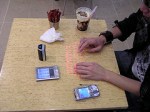
The photographs were taken along with in-depth interviews and site visits to Akshaya Patra kitchens and schools. The exhibit is part of a larger initiative to increase support for school feeding. According to the CHC, school feeding programs have been proven to not only alleviate childhood hunger, but also to promote educational opportunities for children, especially young girls. This photography exhibit is part of an effort to bring the voices of people who implement or are impacted by school feeding programs to those who are making program and policy decisions. The exhibit will travel to different venues and events throughout the country over the next year.
“It is an honor to be recognized by the Congressional Hunger Center for Akshaya Patra’s innovative solution to eradicating hunger while promoting access to education,” said Madhu Sridhar, Akshaya Patra USA’s President and CEO. “Akshaya Patra is a great example of what can be accomplished when the public sector, private sector and civic society collaborate– a cost effective, scalable solution with high quality service delivery. The program is a true global model of efficiency and ingenuity, built and designed to be easily replicated in other parts of the world.”

“The photo exhibit was extraordinarily powerful,” said Rep. Jim McGovern, (D-MA), co-chair of the Congressional Hunger Center.  “I’m proud that the House Hunger Caucus continues to educate members and staff about not only the reality of childhood hunger in the world, but also the incredible people and programs that are tackling the problem.”

The Generation Gap

multitaskingHave been neglectful of Water, No Ice lately. It’s not surprising if you take into account the fact that I’ve started my new job as Editor of India Currents. But it is not the lack of time. I suspect that a little bit of efficiency in my workday would probably free up time for this community blog.

No, the distressing conclusion I’ve reached is that I just don’t have the mental space to handle two competing responsibilities at the same time. Call it bandwidth, if you like, though I detest the word. Both are creative pursuits and both are satisfying, so it’s a bit of a disappointment to realize that I can’t do it all, or at least do it all well.

And I suspect, therein lies the generation gap. Unlike the youngsters of today, who are at ease listening to music while chatting with their friends over the phone while tweeting, I get distracted even listening to  NPR while driving-to the point that I become a road hazard, only saved by overtime effort on the part of my guardian angels  or those of my near-victims. I cannot write if music I like is being played, since my attention gets diverted and I start humming along. I cannot read a book if the TV is on, one ear cocks to the sound.

I wonder if technology and the ease of its use has wrought evolutionary changes in the span of just one generation.  How else to explain the utter nonchalance of the multitasking teenager, whose earphones have evolved from listening devices to fashion accessories to body part in the blink of an eye? Kids today also appear to be born with a symbiotic relationship to their electronics, intuiting their use without instruction. I have seen 3-year-olds master a Nintendo handheld without any help from their (clueless) parents.

Dinosaurs of my generation will probably become extinct due to our sheer inefficiency,  as hiring managers start asking prospective employees not how many things they know but how many gadgets they can juggle at one time.  While we’re blundering around trying to decipher the arcana of those twinkling lights and dazzling screens, the next generation will have out-transacted and  out-networked us, all while conducting multiple conversations and receiving multiple stimuli.

Meanwhile, this dinosaur has an unexpected free day tomorrow which shall be used excusively for WNI. I’m not giving up the fight so easily.:)

Pic by Thom Cochrane under Creative Commons license.