By Vidya Pradhan Senator McCain’s pick of Governor Sarah Palin as his running mate on Friday did exactly what it was supposed to do – take the attention away from the high of the Democratic convention and create a media buzz that still has the wires humming on Sunday. Frank Rich opines in today’s New York Times, “The main reason McCain knuckled under to the religious right by picking Palin is that he actually believes there’s a large army of embittered Hillary loyalists who will vote for a hard-line conservative simply because she’s a woman.” Only time will show if that belief holds water, but there is no doubt that Senator Clinton’s candidacy empowered millions of women voters and made their voices heard. Women, who have always been more reliable voters (they make up 54 percent of the population, 55 percent of registered voters and 60 percent of the electorate), are only now waking up to the power they have as a voting bloc. Will they exercise their power to put one of their gender in the White House next year? Or will they take a closer look at each of the candidates’ voting records and position on women’s issues? We lay them out –

By Piya Mitra Piya Mitra is an event planner. Under the banner of her company “Elegant Eventz” she has organized theme and birthday parties for both kids and adults. If I ask you about your plans for this weekend most of you are going to say you have a birthday party to attend. Most of those parties will either be held at restaurants/banquet halls or crowded children’s birthday party places. Birthday parties in the South Asian community are used as opportunities for socializing and networking for adults. The parties fall into two broad categories - Restaurant/Banquet hall/Home - Food is the big factor here. A magic show thrown in for entertainment or a bouncy house. The rest of the time the children just run around the tables & chairs while the parents are busy chatting about work or catching up with each other. At the end of the party the kids get a favor bag full of candy and little toys that are thrown away or lost in a day.
By Geeta Padmanabhan Call it the Matilda syndrome. A bright child, far ahead in reading, writing and in thinking compared to kids of her age. Not a prodigy, just very bright. Hold that “wow” for a second. It’s hard to believe, but she/he can be a “problem” kid in the classroom. Ask any teacher. This is why in the B Ed. syllabus in India there is a complete unit on “How to handle the exceptionally bright in the classroom”. On July 25, 2008, S Chandrasekar, 17 became the youngest postgraduate from IIT-Madras when he received his degree at the convocation. The teenager topped his class. Born on September 25, 1990, Chandrasekar was dubbed a “precocious” child. "His teachers used to complain that he would finish his work quickly and disturb other children, so we asked them to give him some books to read," said his father.

The state of the US economy is always a politically charged issue but never more than this year as the dreaded d(epression) and r(ecession) words are freely used by both economists and talking heads on TV. This is what Fed Chairman Ben Bernanke had to say in his February 17th state of the economy speech – “…the outlook for the economy has worsened in recent months, and the downside risks to growth have increased. …The softer labor market, together with factors including higher energy prices, lower equity prices, and declining home values, seem likely to weigh on consumer spending in the near term." No surprise then, that the presidential candidates have made restoring economic luster a significant plank of their stump speeches. Even John McCain, who once said( in an unguarded moment that he probably now regrets) “The issue of economics is something that I've really never understood as well as I should” is talking the talk now on balancing the budget and bringing the burgeoning trade deficit under control. To make the two candidates positions on improving the state of the US economy a little less opaque, we have decided to separately discuss three aspects of this issue – taxation, job growth & economic relief and balancing the budget. Today’s article covers the candidates’ tax policies. In an environment where the federal budget deficit is huge and Social Security payments are expected to increase substantially, taxation as a revenue source becomes crucial. Nearly all of the tax cuts established since 2001 are set to expire by 2010.

Note to the curious – Barack Obama has the perfect politician’s handshake – soft, warm and dry. This broke blogger found out for herself thanks to a friend who couldn’t make it to the South Asian and Pacific Islander fundraiser at the Fairmont on Sunday( thanks, Madie!) Leaving the kids with a babysitter, I set off with some trepidation towards San Francisco. I just hate those steep streets and sure enough on Pine I was gripping the steering wheel really hard and praying that I wouldn't roll backwards into the Bay before I met Obama. At 3 p.m. there were already a bunch of Obama supporters outside, cordoned off across the street by the police. They carried mostly Obama '08 posters, though there were some on impeachment and some home made ones (O yes, O yes, O yes, O bama).
By Vidya Pradhan “Books like these,” huffed a friend, “expose the vacuum in entertaining Indian literature.” He was referring to One night @ the call centre, Chetan Bhagat’s second book, and it was in response to an assertion by the New York Times on the blurb that the author was ‘the biggest-selling English-language novelist in India's history'. After a sensational debut with Five Point Someone, a lighthearted look at life at the Indian Institutes of Technology, Chetan Bhagat became an overnight celebrity with the Indian reading public (the book completed 190 weeks on the India Today bestseller list in January 2008). The first print of One Night.. , published in 2005, was snapped up in less than 3 days. But critics lambasted this offering. I remember thinking it was a rather maudlin and sentimental effort, with undesirably heavy doses of spirituality weighing down what could have been a satirical look at call centers and what the sudden push to prosperity has done for the Indian middle class. Still, a movie based on the book (tentatively called “Hello”) is in the works. The 3 mistakes of my life, his third book, is equally mawkish.

By Vidya Pradhan Last night, as I watched Dara Torres furiously anchor the 400 meters medley relay, I could hear my heart pounding. I’m pretty sure I forgot to breathe that last lap. The last time my heart announced its presence that loudly was a couple of months ago, when my 40-year old body was suspended at a 60-degree angle on the sides of Half Dome, my hands holding a death grip on the steel cables. 41-year old Dara seemed to outswim her competitor Libby Trickett in that particular lap, but the Australian lead before the freestyle was just too hard for even this spunky competitor to overcome. Earlier yesterday, Dara again won silver in the “Splash and Dash”, the 50 meters freestyle, losing by a fingertip. What a phenomenal achievement, as Ms. Torres became the oldest woman to ever medal in Olympic swimming! Even if veteran reporters like Ann Killion doubt her achievement (shame on you Ann, for casting aspersions without evidence), I would like to believe that Dara Torres’ win was a function of substance rather than substances. Because, as my own experiences have shown me, that is little that a 40 year old woman cannot do, if she just chooses to.

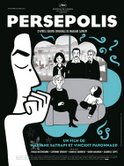
By Shreyasi Deb On a moist work evening in Mumbai, on my way home I decided to drop by at the mall next door without any great purpose. I walked to the multiplex area and while I was wondering how ‘The Vagina Monologues’ would feel in Hindi (our emotions have language?) I hit upon the wonderful poster for ‘Persepolis’ almost hiding apologetically behind its blatantly colorful cousins which spoke of movies I’d turn in my grave to watch. “I must do this” I said and soon I went in (my stomach sorted with a quick sub and a quicker coffee) expecting a ‘private viewing’ of the movie on a weekday late evening show. The theater didn’t have a single soul (although a dozen odd co-viewers did walk in after a while) and what began is a great show about life. Persepolis is based on a graphic novel( or comic as we call them). An autobiographical account of author Marjane Satrapi's childhood, the comic is inked in black and white and tells of her coming of age in the turbulent times of the Iranian revolution. The movie, animated to resemble the book, is co-directed by the author.

Bay Area residents are quite familiar with Ray Mitra – if not personally then through the terrific Bollywood parties and cultural events his non-profit organization Induz organizes. Induz's mission has always been to use events to generate funds for deserving non-profits within the community and back in India. A significant ...

By Vidya Pradhan Health care has always been the domain of the Democrats, in particular, Senator Hillary Clinton, who got herself in political hot water after her abortive attempts at health care reform during the Clinton presidency. Democrats have always attempted to craft a health care plan that makes it possible for every individual to be covered by offering access to a variety of plans. By contrast, Republicans build their health care plans based on individual choice and personal responsibility. GOP conservatives have traditionally opposed legislation expanding government funded health care on the principle of smaller government. In 1965, when Medicare and Medicaid were signed into law by President Johnson, it was a bitter loss to the Republican fight against a nationalized health care system. Today there is general consensus that the American health care system is in serious need for reform – on one hand, 47 million Americans do not have any medical insurance; on the other, crippling health care costs are making American industry uncompetitive. The path to reform is where the candidates diverge sharply. While Senator Obama talks about expanding coverage to include most Americans by way of a national health plan, Senator McCain emphasizes Health Savings Accounts, accounts to which families and individuals contribute to save towards medical expenses. The idea is that the burden should be lifted from employers and transferred to the individual, who would take control of his or her own health plan. UPDATE: An article from the NYT about the McCain Health Care Plan. UPDATE II: The conservative Wall Street Journal (!) comes out with an article entitled "Why Obama's Health Care Plan is better" An excerpt - Sen. Obama's proposal will modernize our current system of employer- and government-provided health care, keeping what works well, and making the investments now that will lead to a more efficient medical system. The McCain plan is a big tax increase on employers and workers. With the economy in recession, that's the last thing America's businesses need. ...Mr. McCain does nothing to bend the curve of rising health-care costs downward. He does not fund investments in learning, rewarding and preventing. Eliminating state coverage requirements will slash preventive service availability. Here is a chart from the Urban/BrookingsTax Policy Center that breaks down the impact each candidates' plans would have on the uninsured.( H/T to Yglesias at Think Progress)