By Lehkikaa
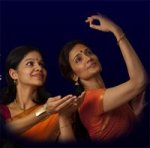 Savitha Sastry, guru of Sadhana Dance Academy in San Jose, CA and Navia Natarajan, an independent luminary to watch out for; both students of A. Lakshman of Channai, sparked the beginnings of the underground movement in Bharatanatyam on Saturday June 13, 2009 at the Leigh High School in San Jose. I say “underground” as an achievement we all should laud. A debut underground performance is characterized by superlative talent, an experimental approach, limited audience due to lack of publicity, and lack of sponsors. This recital had all these.
It was a pleasure to see these sinewy, evenly matched dancers on stage; they seemed to calibrate the stage into ethereal latitudes and longitudes. The first two pieces were traditional, the Mallari and Shankara Sri Giri; superbly executed, some or all of it had to be original choreography. Such flawless dancing induces one to fully immerse oneself into the pieces, the very many nuances were brought to life. Savitha and Navia broke through the pressure of symmetry sometimes, (I’m hoping intentionally,)- they would juxtapose instead of mirror-imaging their poses, making for an interesting effect. The other neat thing they tried was staggering their nritta, like syncopation in music.
The music for the third piece was cleverly edited, the pieces themselves were intelligently chosen. It was a study in contrast, not just because of the subject matter; but also because Savitha and Navia have contrasting styles. Savitha is a minimalist, she likes to say as little as possible while using the bharatanatyam vocabulary in a frugal manner. She’s like the mystery woman and one would like to see a less austere/ reserved side of her. Navia, on the other hand, is an expressionist and ventures to the far-reaches of the same vocabulary. Savitha’s virahotkhandita nayika showed very little, but it brought out the other woman “tease” very well. Navia’s khandita nayika felt deeply, showed effusively and brought out the man’s “debauchery” well.
The performance unraveled in the first piece after the break–“Sanjana’s love for the Sun God” had a lot of potential, the piece though, was muddled by either bad story-boarding, or mis-paced voiceover. A strong beginning showing the lovers and subsequent separation was sorely missed. The timeline for Sanjana’s yearning, and dance with the Sun God was confusing–the dance in tandem between Savitha and Navia was interesting, but again seemed out of line with the voice-over; we were supposed to be seeing Chaya, Sanjana’s living shadow at some point. The tandem dancing would’ve made for great real vs. shadow depiction, but was it the lovers, after the supposed separation? Chinmayi, Savitha’s student formed an unexplained middle-woman at the start, and 5 minutes into the item made a strange run from stage left to right… was she the wind? What was her role? The bar was raised so high in the first half, one could almost hear it crashing down here. What happened in this piece will remain a mystery. And the whole thing with the white cloth needed more context, why was it shown in the beginning? (The voice-over explained after a time-lag that it was Sanjana, wandering about as a mythical beast.)
Next came Chinmayi, who held her own when dancing in the line-up as the other two accomplished dancers. Though, it seemed like her piece was a hasty addition to the program, especially since there was no mention of her on the flyer. Her “Glimpses of Krishna” needed some reigning in at points; like with Putana’s pain/confusion when she realizes Krishna’s latched on to kill–it was overdone. It was not also in keeping with the spirit of the program. The MC had explained that there was no requirement for us to be knowledgeable rasikas for the second half, but then there was this traditional piece!
The recital redeemed itself in the last piece; which was experimental, novel in its story, and arresting in its portrayal. The two ordinary women played by Savitha and Navia, discovering that they are not alone in their wish for deliverance albeit for a temporary period of time was portrayed well. The non bharatanatyam vocabulary suited the story well, the two lithe dancers executed the free-flow rhythms well. Watching this made the memory of Sanjana’s story even more of a mystery- The choreographers paid so much attention to detail for this piece and not the other one?
What they should’ve done was create the entire second half around the Sanjana story but with this stylistically different approach. The red salwar khameezes, free-format dancing, white cloth indicative of the lost love–all of it would’ve fit very well in the experimental format. They could’ve dispensed with the filler traditional piece, and the second half would’ve been as enrapturing as the first one.
All in all though, one wishes Chinmayi well, and to see Savitha and Navia, together and as soloists again and again. However, a note to any further attempts at experimentation–do do a private peer level/ ordinary folk comprising friends/ family preview first! The simple feedback one receives at such informal previews goes a long way in tightening any performance. Also, a printed program lineup at the door is a must; even in place of the refreshments (it was a nice touch, but unnecessary). Without a program in hand, the audience doesn’t know what to expect, the MC’s script was no help at times. There should also be an announcement before the last piece that it is the culminating item–the event ended quite abruptly on Saturday.
In any case, one hopes that this is a more affirmative start to BharataNatyam Underground–more mature dancers and gurus taking on more experimentation.
Lehkikaa is a Bay Area dance and drama critic.
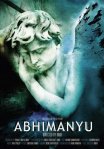 Financing for Bollywood movies has always been a murky, subterranean business. Not long ago, the funds came from dubious overseas investors, reportedly with ties to the mafia in the Middle East. Threats and coercions to stars were common and directors often modified their casting and their scripts to pander to the investor’s whims.
 India has a long history of entrepreneurship. Traditionally, entrepreneurship in India has fallen under one of the following categories: (a) family-owned businesses who pass along established businesses to the next generation of entrepreneurs to grow and diversify (b) forced entrepreneurs who do not get as many lucrative job opportunities as they get opportunities to make a decent personal income without significant investment (c) self-made businessmen with the nose for big opportunities and the acumen to bring together the right stakeholders and provide them with good share of profits in return for their power, resources, expertise or moneys. These three set of entrepreneurs still contribute to a bulk of the innovation and new business in Indian markets.
 When mainstream news channels like CNN and BBC, previously the authoritative voices on international events, dropped the ball on the coverage of the Iranian elections, it was picked up by thousands of voices “tweeting” across the globe. For the last several hours,
 The collapse of the California budget did not come as a surprise to anyone living here. We’ve been seeing the “STOP!,” “ABYSS AHEAD,” and “WATCH OUT, BIG HOLE IN THE GROUND COMING UP” signs for a long time but like Wylie Coyote, chosen to ignore it and hope some magical anti-gravity device will pop up just in time. (For all those who chose to vote “No” or stay home during the recent special elections, a big BOO!!)
 The
The 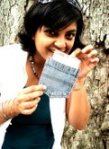 “You went to school too?” “You were little once?” “You told a lie?” When we become parents, we reflexively continue the grand oral tradition of storytelling, often dredging up memories of our own childhood to illustrate a point or demonstrate a moral.
 “I made my first few books and showed them to my friends, who loved the idea. At my children’s school, I started conducting workshops to help kids come up with their own creations,” says Sushmita. Children learn about the Chinese method of books on scrolls and the Arabic tradition of writing from left to right. She also conducts workshops in museums and libraries.
 One client suggested miniature books. The result was “Homework” , a book in the form of tiny flashcards that fit into a matchbox! For the recent presidential inauguration, Sushmita designed books in the shape of amulets, based on the concept of prayer wheels from Ladakh. The owners of the amulet would put in their dreams and aspirations in the amulets, which are small enough to be worn.


 It felt funny to be on the other side of the table.
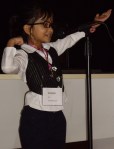
 But it is to Miss Rennu’s credit that even the youngest and tiniest participants bounded up to the stage with confidence, eager to deliver their lines( most of the kid were Genius Kids students or alumni.) Yes, those lines were often forgotten and mummy or daddy had to stay on the sidelines, prompting their children with audible whispers, but not once did I see a child show fear or nervousness. Many showed creativity (or, at least, their parents’ creativity!) by dressing up in costumes and using props to deliver their message.
 The topics were restricted to about a dozen, and a few like “What I want to be when I grow up” and “Eating healthy” were popular, though judging by the responses we are going to have a preponderance of healthy doctors and basketball players in the next generation! Two participants spoke on the importance of dance, illustrating the topic beautifully with hand gestures, or mudras. One decided to give a speech on the pros and cons of cell phone use, using a banana as a substitute.
 Water, No Ice