DUM MAARO DUM. Director: Rohan Sippy. Players: Abhishek Bachchan, Prateik Babbar, Rana Daggubati, Aditya Panscholi. Music: Pritam. Background score: Midival Punditz. Writer: Shridhar Raghavan. Dialogue: Purva Naresh.
I saw Dum Maaro Dum at my local Cineplex last night and, for a change, the Hindi film felt right at home among the early summer releases that the Friday night crowds had thronged to.
Slick, glamorous, and frenetically paced, DMD has all the hallmarks of a summer blockbuster – a terrific plot, great music, and the non-stop action that doesn’t leave the viewer any time to ponder the script’s absurdities or inconsistencies.
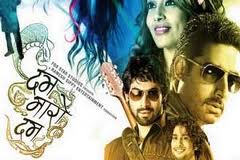 When local student Lorry (Babbar) receives admission into a U.S. college but without financial aid, the Goan drug cartel sees an opportunity for a mule. After much persuasion Lorry consents, and lands at the international airport with his cocaine-laden bags. The next sequence introduces us to the “heroes” of the movie, and is worth the price of admission. Each character is battling demons, from newly- reformed ACP Vishnu Kamath (Bachchan) to the susegaad Joki (Daggubati), the networked but powerless singer.
Lorry becomes a hapless lever used by Kamath to shake up the Goan mafia in search of the elusive Michael Barbossa, a shadowy entity that appears to exercise control over the various international drug factions that have divided up Goa.
Crackling dialogue and crisp direction move the story along. The one-liners and cheeky references to Amitabh films (Mere paas maal hai!) elevate the film from a by-the-numbers underworld movie and provide comic relief to the grim proceedings. Sippy captures the sex, drugs, and rock and roll atmosphere of Goa perfectly without forcing it on the viewer; the playground of the world is beautiful, sinister, and charming at once. One scene, shot in only the ambient light of a starry night, is a testament to the world class cinematography of modern Bollywood.
Unfortunately, the ensemble cast is picked with an eye to mainstream audiences, exposing the shallowness of Bollywood talent. But Babbar’s turn as the beleaguered Lorry is memorable; he manages to erase the memory of the humble Munna from Dhobi Ghat and the insouciant Amit from Jaane Tu with a sterling performance as the misguided teenager. Daggubati is eye candy and has the most sympathetic role of the lot; the actor from the South makes an impressive debut. Bachchan is competent, but he seems to playing variations of the same role –the suave crime-stopper- in every movie. If he has any plans of salvaging his career, he needs to step away from Bollywood and search out the offbeat indie directors who can give him a new lease on life.
As a gangster flick, comparisons to Vishal Bharadwaj’s Kaminey or Ram Gopal Verma’s Company are inevitable but unfair. DMD has a visual and story-telling style of its own, and makes no bones about being nothing more than a commercial, paisa vasool, time-pass entertainer. It lacks the mad genius of Bharadwaj or the gritty realism of Verma, but it is an unpretentious, highly entertaining piece of work on its own.
As with Kaminey, the director is unable to resist providing a quasi-happy ending for his characters-are Indian audiences not ready for the messy realities of life?
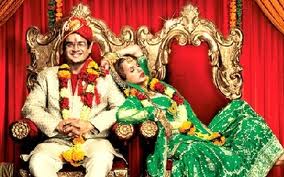 It is a tribute to “India Shining” that the latest popular “away” location for the Hindi film industry is not Switzerland or Mauritius, but the semi-urban environs of North India, where the regional patois offers as much authenticity as the Mumbaiyya Hindi dialect. There’s been a rash of movies based in the North recently, like Dev D., Delhi 6, and of course, Band Baja Baraat, which made stars of two very ordinary looking people by focusing on a tight script, clean editing, and the colorful North Indian wedding ethos.
 As writer Grady Hendrix puts it in
 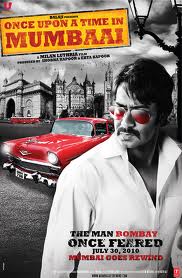 The Mumbai underworld has been fertile soil for gritty Bollywood movies. Directors on a slump often return the well to reestablish their credentials; indeed, there are some directors like Ram Gopal Verma who have found success almost exclusively in this genre. The familiar territory of the Mumbai underbelly and its colorful characters have made it easy for scriptwriters to capture authentic gangster dialect and mannerisms and set up gripping conflicts, all the way from Parinda in 1989 to Kaminey in 2009.
 Writes filmmaker Rehana Mirza –
 Before Tulsidas’ retelling turned him into an infallible God, Rama was designed to be the first self-aware, doubt-ridden, painfully human avatar of Vishnu. In Valmiki’s epic, he makes many questionable moral choices, like the killing of Vali and the banishment of Sita. By contrast, Ravana, the king of Lanka, is a renowned scholar, lover and patron of the arts, and a great king, a civilized demi-god whose power blinds him to good advice at crucial moments.
 It is often said that every story ever to have been told is in the Mahabharata. It is no wonder that the sweeping epic has been the inspiration for books and movies like Shashi Tharoor’s The Great Indian Novel and Shyam Benegal’s Kalyug.
 Critics in India panned it; critics in the US have gushed with praise. What’s a desi to do? Should one assume that Kites has certain Western sensibilities that backwater hicks in the homeland can’t appreciate and fork over the 11 dollars in the theater? Or trust in the instincts of a billion people and go for the two-buck pirated version at the Indian grocery store?
 Prologue: Even in laid back Silicon Valley, the arrival of The Blue Mug was big news. Breathless emails were exchanged about the date, rueful regrets were broadcast about not being able to score tickets, and in general, a frisson of excitement rippled through the area, thanks to the amazing cast: Konkona Sen Sharma, Ranvir Shorey, Vinay Pathak, among others – the new wave of “actors” in an otherwise scorned Bollywwood pantheon.
 Water, No Ice