By Geeta Padmanabhan
 After being OD-ed by the filth, lies, corruption and the inhuman treatment of Delhi’s poor during the run-up to the Commonwealth Games 2010, I sat down to watch the opening ceremony, waiting for a miracle. It happened – and exactly for the reasons you would have guessed. Together, India’s music, its art, original artists and artisans have nothing comparable anywhere you’ve been. India’s might is in her soft power.
This is what I saw in the spectacular show. Bullet-pointing it is the only way I can keep out the hyperbole.
[1] In shape, variety and sounds, Indian drums have no parallels. Appropriately, the Nagada drummers beat the opening rhythms to start the extravaganza. The Rhythms of India segment had the Pung Cholum from Manipur, the Chenda from Kerala and the Gaja Dhol, Wangala, Dholu Kunitha and the Bhangra. They beat in unison, the resonance of each standing out while blending perfectly with the other sounds. That’s when you felt your heart filling and the gooseflesh jumping.
[2] Among the hundreds of swirling drummers sat seven-year-old Keshav, a prodigy from Puducherry, playing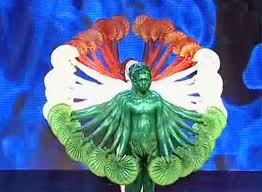 the tabla like a maestro. He didn’t miss a beat!
[3] The earliest jaw-dropper was the helium-filled aerostat balloon, the centre piece acting like a giant round television screen. As “snake charmers” played their flutes, it rose, hoisting India’s touch with technology. Through the evening the aerostat floated, reflecting the colours and pictures of the programmes. Words from 18 different languages of India appeared on its surface, all translating to ‘Welcome’. Simply marvellous!
[4] What does one say about the Indian kids’ virtuosity on stage? Hundreds of Delhi school children piled in, swayed to Hariharan’s mellifluous “Swagatham”, changed formations smoothly, switched costumes, and in a mind-boggling sequence, painted mehendi on a cloth held above their heads. As they painted from below, magically the ‘namaste’ gesture appeared on the surface facing the audience. Where can one see something like this?
[5] The yoga sequence was a master-stroke. As hundreds of yogis in their smooth golden costumes performed asanas to soothing music, a shining wire-yogi sitting at Padmasana rose out of the middle of the homakundam-like stage. As explanation flowed in Hindi and English, the kundalini appeared inside the wire-figure as a hologram. It was a spectacle meant to pooh-pooh the sinister propaganda that yoga has nothing to do with Hinduism or India. Ha!
[6] Our classical dances – Kathak, Bharathnatyam, Kuchipudi, Mohiniattam, Manipur had their own striking segment. This is when you realised that experts in the classical arts have been entrusted with the job of putting the show together. The music, the mudras, the formations and of course the costumes were simply out of the world. Colourful, but elegantly so!
[7] And the segment which had even those watching the show on TV stand up, laugh, scream and applaud: The 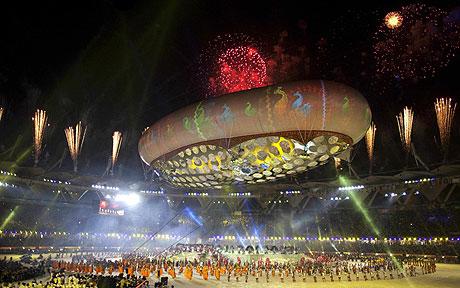 Indian train. Our trains symbolise so many things – the British legacy, the aam admi’s life, the railways’ reach to the remotest parts of India. As the bogies rolled across the stadium each carrying its unique merchandise in exaggerated sizes and colours, you saw the India that you grew up in – the India of the masala chaiwala, the banglewala, balloonwala, roadside mithaiwala, highway chandelierwala, street rope-walkers. And scurrying to catch the train were the dubbawalas, the potted women, the coolies and others. In that chook-chook gadi, the true, honest, un-hypocritical India, the endearing India that you see in the hinterland was unveiled. Just think. This is how the ordinary, but extra-ordinarily resilient Indian lives his life. It’s a scene that cannot be replicated anywhere else!
[8] It was a day after Gandhiji’s birth anniversary – and isn’t Gandhi the pillar of our British legacy? This is how the event organisers saw it. Around a brightly lit table on the stage stood painting artists, and “drew” the picture of the Dandi march in a few minutes by simply removing fine mud from the surface. As their thumbs worked creating white areas on the mud-filled surface, Gandhi, a woman carrying the national flag and followers miraculously appeared. In the background you heard “Vaishnava Janato” played live. There was stunned silence as history unfolded. The spectators had no energy left to suitably applaud this wonder.
[9] AR Rahman’s song was billed to be the last – his CWG signature tune had come into a lot of criticism from our classical dancers who had to accompany the beat. “Too slow, too uneven”, they had complained. He was asked to tweak it. Now he walked in followed by city dancers – women in dervish-like costumes and men wearing gloves in India colours. The dance began, Rahman began singing “Jiyo, Utho, Badho, Jeeto” and all waz well, almost. Our folk dancers bravely caught the rhythm and swayed, the drummers kept time. The hesitation vanished and the stadium pulsated with dance when Rahman switched to Jaiho and took it to its crescendo. That was a clever move.
A word about the spectators. They paid huge amounts – upto Rs. 25,000/- for the seats and filled the 60,000 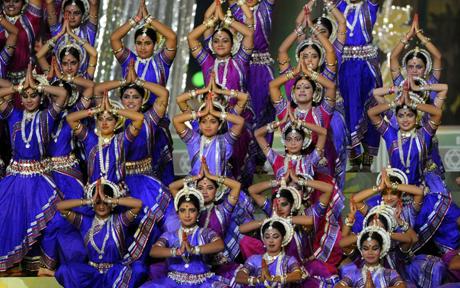 seats. They were on cue, participating in the show, clapping encouragement. In a wonderful gesture, they cheered, very loudly, the Pakistan contingent. It was a moment that made us world class. We proved we are civilised in a way that only an old culture can bequeath. Well, they booed Kalmadi as he spoke, but that’s discussion for another day.
Summary: Finally, the cameras had something beautiful about the CWG to capture. The most remarkable part of the opening ceremony was that only one complete dress rehearsal had been held at the Jawaharlal Nehru Stadium. For those who count the paisa: The ceremony cost 150 crores – an example that India now speaks in crores.
India’s clout went far in silencing a lot of criticism about the “unlivable” Games village and the apparent racism in allotting rooms, but it didn’t go far enough to acquire the privilege of declaring the games open. Prince Charles held on to the tradition by making the declaration at the end of his reading of the Queen’s speech. In a sort of compromise, the Republican lady shouted a “Let the Games begin!” with a flourish.
The show wasn’t about technology. It wasn’t perfect either. Among the 7000 artists there were a couple without costumes, the movements were a bit chaotic at times, but that just made it all so warm and endearing “unlike the show in Beijing that was so perfectly plastic,” as someone put it. This show was about who we are, what we should be proud of. In putting together a my-own kind of desi event that included a humourous take on our unique aspects of life, we definitely proved something. We Indians are not ashamed of our past. We get along, in our own inscrutable ways. We find our joys in spite of our politicians. That is a true show of maturity.
It is encouraging that the powers woke up to the fact that India’s cultural icons, and not some stiff-necked babus who must be given the task of choosing and organising the events for the ceremony. India had arrived long ago. It’s the world that wore blinkers.
Will the Games bring us more biz contracts? Quite possible, and I hope it is in our garment designing and handicrafts, not in hard manufacture that strips the poor of land and water.
Will the Games give us a cocky gait? May be. A new accent in our speech? Quite likely.
But I’m living in the euphoria of our ancient cultural artistry. Let the feeling last!
 Here we are, ramping up to a season of Hindu festivals which began with Ganapati’s arrival in September. Yet, these occasions have evidently lost their original spiritual significance and are more likely opportunities for consumption of spirits, instead! Some Hindus do go through the motions of performing “sacred rituals” but, often, with the attitude of a child who is made to repeat a hundred lines in detention. Even multiple enactments of the Ramayana may have failed to rescue us from our ignorance. Some of us were probably mortified by the inconceivable Vanar Sena!
 In case you’re among the despondent Democrats or indecisive Independents who doesn’t know which side to pick, I give you the accomplishments of the last 2 years, courtesy Daily Kos poster
  There’s usually a considerable amount of apathy over non-presidential year elections. Democrats, with their party in power, are staying home in disappointment engendered by legislative compromises and a poor economy.Young voters, who came out in droves to support Barack Obama in 2008, don’t feel the same sense of idealistic purpose.
 As writer Grady Hendrix puts it in
  The South Asian community in the United States may be super successful, but mental health issues are our Kryptonite. The stressors of leaving our support systems behind, adapting to a different culture, and redefining success and prosperity are very real, but our approach and response to mental health issues remains one of avoidance.
 The website busts several myths, the first being that mental health is not as important as physical health. A section on food is unusual, but sets a warm and welcoming tone to make readers comfortable with the site.Typical mental health queries are answered in the blog section. The content is entirely written by Deshpande, who credits her cultural background and clinical training with helping to establish a good connection with readers.
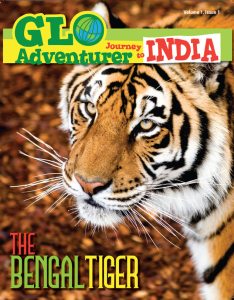 As the school year gets going, kids rarely have time to read for pleasure, so to bring out yet another magazine aimed at educating and entertaining kids seems like a fool’s errand. But literature is a passionate subject for bibliophiles, and that passion is very evident in
 the team has set up a Kids Advisory Board that provides ideas and feedback. Apart from the regular team, a review team looks over the magazine just before it goes into print to make sure everything is perfect. Such attention to detail is visible in the high production and editorial quality of the magazine and each issue feels like a keeper.
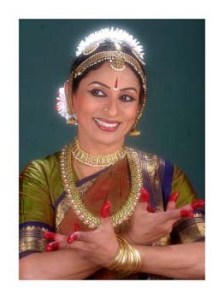 “Samarpanam” or the art of giving back, takes on a new meaning and form this fall of 2010.
 As the election approaches, the Republicans have predictably raised a hot button issue that they hope will drive their voters to the polls, now that gay marriage is no longer as inflammatory as they would like. Their latest boogieman is the 14th amendment which, among other things, gives anyone born in the United States the right of citizenship automatically. The proposal is to amend the Constitution so that children of illegal immigrants can no longer be citizens.
 Water, No Ice