Nobel sentiments

obama2It was just a couple of weeks ago that my husband and I were discussing President Obama’s beleaguered situation, over the Sunday papers. The right was going nuts over perceived and imagined horrors of the proposed health care reform; the left was dismayed over Guantanamo prison closing delays; the Israelis were digging in their heels with respect to settlement expansion; and a new nuclear facility had been discovered in Iran.

“Dilettante!” “Narcissist!” “Traitor!” “Communist!” were words freely bandied around, as Obama struggled to implement his policies in a spirit of cooperation, bipartisanship, and consensus.

“That guy deserves the Nobel Peace Prize!” I said in dismay.

Little did I know the Prize committee was eavesdropping that day.:)

Yesterday’s news must have caused the premature demise  of dozens of computer keyboards, as coffee went spraying out of reader’s mouths when they saw the headlines. It almost seemed like a hoax; indeed, one White House staffer is said to have asked if it was April 1st, when informed of the momentous news. Conflicting emotions warred in the hearts of the even the most devoted Obama supporters. Too premature, was the consensus. My Indian American friends muttered darkly about the committee’s snub of Mahatma Gandhi, surely a much more deserving candidate. Of course, conservative heads nearly exploded, and the reactions from the American right-wing were the comic element in a very confusing day, as the US and the world tried to deal with the news.

The dust has settled today, as even the most vicious critics of the president came to the belated realization that it is highly unpatriotic to carp about such an honor. One State Department official’s comment puts it in perspective-“Certainly from our standpoint, this gives us a sense of momentum — when the United States has accolades tossed its way, rather than shoes.”

And that is perhaps as good as explanation as any as to why Obama was given the prize so early in his Presidency. We in the US perhaps do not realize how close the world was to the brink of Armageddon before Obama won the election last year; the war in Iraq seemed endless; there were rumblings among the American neocons about the next war with Iran; the Middle East situation looked highly destabilized; the global economy was in tatters; and the US’s refusal to sign the Kyoto treaty had removed any credibility it had with respect to climate change.

Yes, Obama may not have signed any significant legislation yet. “What has he done so far?” is the familiar refrain. But here’s what the world looks like after the short 9 months that he’s been in office-

– There is renewed hope for negotiations with rogue nations like Iran.

– There is improved cooperation with Russia after the missile program was modified.

– A climate change bill is in the works in the US, giving impetus to similar efforts around the world

-The global economy is sending out green shoots of recovery.

It is easy to criticize Obama as the guy who just makes pretty speeches, but words have power. There is a sense today, that mistakes notwithstanding, the most powerful nation in the world has its heart in the right place; that the direction the world is taking is the right one. By repeating the mantra of cooperation and consensus over and over, this President has sought to reassure the rest of the world that America is no longer an empire-builder; by admitting America’s mistakes, he is opening the door to  a new era of global coaction.

The dynamics of both internal American politics and overseas realpolitik may not permit quick decision-making, but as Obama himself put it, the kind of change he was expected to deliver required him to steer a massive ship; the directional changes can only be slow and incremental, but they will happen.

The Peace Prize committee may have jumped the gun on this one, but the more I think about it, the more I see their point of view. This is a man who has de-fanged Al Qaeda by welcoming and acknowledging the right of Muslims to self-governance; within the US, despite intractable resistance from the opposition and special interests, he has managed to get several bills passed to correct some of the damage done by the previous president.

Yes, these efforts have not always been perfect, and there is much, much more work to do, but the sincerity is unquestionable, as is the genuine desire to make the world a better place. 9 months ago the world was in cardiac arrest; perhaps the prize was given to Obama for being the “defibrillator.”

And before you mock the Prize committee too much, just imagine what would have happened had John McCain won. Then take a deep breath and let the sense of unfairness out as you exhale.

Less summer, more school

school-bus2For the last month the refrain in the Pradhan household has been something like this:
“What did you learn today?” I ask my 7-year-old.
“Not a thing,” she replies.

It’s the beginning of October, a month after school started, but it seems we are still in revision mode, designed for those kids who spent summer assiduously forgetting whatever they learnt in 1st grade.  Not that my daughter spent summer swotting; she has just managed to retain whatever she knew 3 months ago.

It’s frustrating for a parent, even if school is free (well, paid for only indirectly by my property taxes, anyway). While it is fine to treat school as a place where 7-year-olds go to socialize, one wishes they would get on with the program- it’s not reassuring when I get bombarded with data everyday that show kids in other countries doing better in every educational metric than kids in the US.

So the announcement last week that the Obama administration is going to propose longer school hours/more school days is very welcome. Education secretary Arne Duncan even dared to make the announcement on The Colbert Report; if that isn’t serious talk, I don’t know what is.

Geetha Venkatraman, a parent in Raleigh, North Carolina, concurs. “More school days would mean subjects get taught in more depth,” she says. “For instance, if kids are learning about electricity, there would be time to visit the local plant as a field trip.” Her kids are already on an experimental track system at their school. Instead of having the holidays all bunched together in the summer, they have 9 weeks of school followed by 3 weeks off. The number of instructional days is the same as the rest of the country ( a miserly 180 days or so), but the staggered holidays mean

a) there is less chance of kids forgetting what they’ve learnt and

b) teachers use the intervals to give struggling kids extra work and extra help to catch up with the class.

Kids also use the break to de-stress and pursue their hobbies. “My kids and I love this system,” says Geetha, who concedes that it can be tough on parents who both work and have to arrange for child care several times a year. (Camps in the county run throughout the year helping out working parents.) On the other hand, travel to India would be a lot easier as vacationers would not have crowd the airlines, lemming-like, in the months of June and December.

I asked a teacher friend in the local school system whether the long summer break was indeed a problem for kids. “Absolutely! I have to begin with alphabets and blending all over again because kids have forgotten everything.” (She is a first grade teacher.) Her school has more kids from poorer homes. One of the effects of the long summer holiday is the exacerbation of the rich/poor gap, as kids from upper middle class homes retain learning better through reinforcement in the form of either enrichment camps during the summer or a lot more reading at home.

This friend is in favor of more school days even though it would mean more work for her. Would other teachers feel the same? “I’m sure there would be some resistance,” she admits. Long time teachers (and thanks to tenure, most teachers have been around for a while) are used to a pattern of work on/work off that may be hard to give up. But there are some definite advantages for teachers too. Presumable one is looking at higher pay levels, but there is also more time to get the curriculum into unwilling heads. There’s time, as Geetha said, to get into a subject in more depth, and there would be the whole month of September to devote to the grade-appropriate curriculum instead of wasting on revision.

For homes with 2 working parents, the concept of more school is particularly attractive. Less summer=fewer summer camps=more savings. Given that school is free, summer is a big drain on the wallet as we scramble to find alternate arrangements for kids.

Gone are the days of my childhood where we just lounged around in the torpid heat, content to re-read our books and be bored till the cooler evenings when we would hang out with our friends. Kids today spend summer in camps (usually with an academic component), given the busy schedules of their parents and the isolating patterns of housing development. So if more school also means more time to learn and less homework per day, the idea sounds like a win-win for just about everybody.

Picture courtesy Lone Gunman via Creative Commons.

The Sevathon experience

sevathon1First, the good news:

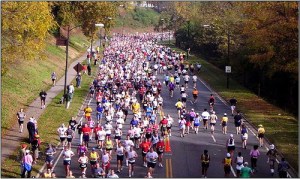
The intentions were honorable. The idea of Sevathon, an India Community Center project, was to celebrate Mahatma Gandhi’s birthday by hosting a walk/run where participants would have the opportunity to find sponsorships for their various charities by getting pledges. The format is not unlike many other runs and marathons. In addition, ICC put together several booths with non-profits offering information and services to get the word out and keep the participants entertained while doing so.

We reached the Sunnyvale Baylands park around 8 on Sunday morning. According to the flier, the event was supposed to start at 8:30 and we hung around for a while, getting our registration bibs and t-shirts. Bollywood music blared in the background as participants milled around, trying to find the starting point for the race and getting a sense of the trail. Tables were set up with water, protein bars and bananas. We hung around the health tent, where organizations like the South Asian Heart Center had set up testing stations.

Around 8:30 we were invited to a warm up session, conducted by one of the dance instructors at ICC. After we had finished stretching to the peppy “Jai Ho” there was still some confusion about when and where the race was about to start. Finally there was an announcement that the race would start at 9 and we went to our car to put away our jackets. When we returned in a few minutes, we found to our dismay that the race had already started, without any official announcement of the same. The runners in our family took off while my daughter and I started briskly walking. At this stage, I was still not sure where the official start point of the race was. We just followed the crowd and eventually wound our way back after 5 kms.

Our runners were not so lucky. They missed a crucial sign marking a turn on the path and went off in the wrong direction. Eventually, they just used their pedometers to mark out 2.5 kms and returned from that halfway point.

Ultimately, the ambiguity about the start and finish times didn’t quite matter, because there was no clear finish line either. We just sauntered back to the tents that had been set up and left a few minutes later. According to the flier there was supposed to be a mela of some sort but there was no excitement created around it, no announcements, and we saw many others leaving along with us.

Given that this was the first year of the event, the chaos was perhaps understandable, though why a simple knowledge transfer from experienced organizers like the India Literacy Project was not done is puzzling. The idea of a run followed by a fair was good, but the execution left much to be desired. One of the first rules of creating a memorable run event is to make it attractive to serious runners; that creates a buzz around it that brings the rest of the crowd. Without a clean run experience, it becomes a casual day in the park which leaves future participation to the whims of ICC supporters.

My two bits on improving the experience?

– Have clear start and finish lines. If possible, arrange to time the runners and give prizes based on the times.

– Have a fixed start time and do not deviate from it, even if participants are sauntering in on Indian Standard Time.

– Mark the trail out immaculately and arrange to have volunteers at every point of confusion, at least for the first few years.

– Have barkers to constantly make announcements about the fair and drive traffic to the booths.( This is my opinion, was the biggest shortcoming of the event, since the fair was its USP)

– Instead of letting kids run free, charge a discounted rate for them so they can have their own bibs. Have separate prizes for the kids.

Sevathon was a noble idea. Here’s hoping the kinks get ironed out by next year.

Wake Up Sid – Buttered popcorn

wakeupsidWake Up Sid can be described in half-a-dozen words: Rich Spoilt Slacker Dude Grows Up. This much-used theme has been the premise of several multiplex movies starring (the now-aging) Saif Ali Khan, who passes on his mantle to the younger, hunkier Ranbir Kapoor.
Sid (Ranbir) is content with his aimless, carefree life even after he finishes college. His lack of responsibility irks his parents, till one day a showdown with Sid’s dad (Anupam Kher) causes Sid to move out and find his way in the world. He bunks with his new friend Aisha (Konkona Sen Sharma) till he figures out what to do.

The movie is set in Bombay, not Mumbai, and the nomenclature brought the wrath of the Shiv Sena Maharashtra Navnirman Sena (thank you Geeta!) upon the head of producer Karan Johar, who ended up having to apologize. But the decision to keep the old name is completely understandable; cinematographer Anil Mehta creates a vibrant, colorful, happening, city that is as far from the grit and grind of Kaminey and Slumdog as foie gras is from pav bhaji.

In fact, Bombay looks so crisp, clean and beautiful that it almost teeters into Disneyland artificiality. What prevents that from happening is the presence of Konkona as an independent-minded, sensible, career girl bemused by Sid’s slackerdom. She brings a depth and gravitas to the movie that serves it well and makes it difficult for one to dismiss it as fluff. The lead pairing is odd, but credit must go to debutant director and screenplay writer Ayan Mukerjee for making it work.

He is also assisted by a terrific music score. Shankar Ehsaan and Loy deliver yet again, with a contemporary sound that is perfectly in tune with the aesthetics of the movie. Mukherjee makes the most of this gift, teasing out the songs in a stop/start fashion that works because of the quality of the music. The best song, though, is Iktara by composer Amit Trivedi, whose tunes for Dev D won him critical acclaim. One complaint I have is that some songs in Wake Up Sid don’t feature in the CD for the movie, a puzzling omission that I hope a reader will solve for me.

The performances are uniformly good. Ranbir Kapoor is not one of my favorite actors, and his slack-jawed cluelessness can grate after a while, but he suits this role to a T. Anupam Kher brings nuance to his small role and demonstrates why he is one of the finest actors in mainstream Bollywood. Supriya Pathak is wasted as Sid’s sentimental mom, but she brings sweetness to her role. Konkona, of course, is the jewel of the movie. In her simple kurti, jean, dupatta ensembles she is the living heart of the city of Bombay. It is her remarkable talent that has overcome her unconventional looks to propel her into a lead role in a Dharma Productions film; the success is well deserved.

Wake Up Sid is like a big tub of buttered popcorn. It’s not particularly nutritious or fulfilling, but great to have in the dark of the movie theater. I highly recommend a dekko if you’re in the movie for light, uncomplicated fare that will cheer you up.

Wake Up Sid
*ring Ranbir Kapoor, Konkona Sen Sharma, Anupam Kher, Supriya Pathak
Directed by Ayan Mukherjee
My rating – 3 out of 5 stars

Sevathon: 2K/5K/10K Walk/Run

sevathonIndia Community Center is joining over 73+ non-profit Community partners focusing on service for needy children, elderly, education to the underprivileged, free health services and for providing needed support to people in difficult times in their lives. This event centered on the noble theme of Seva (Service) is free for children to inculcate value of community and community service in them.

*      Free T-shirts to registrants for the Walkathon.
*      Food Stalls & Entertainment, Extensive Health Screening
*      Great family fun event while joining hands for noble spirit of community service
*      Please Register Here or at the ICC front-desk. To support a walker Click Here

When: Sun Oct 4th starting at 8AM

Where: Sunnyvale Baylands Park

Dil Bole Hadippa – disappointing

hadippaScript! Script! Script! It’s true that there is a dearth of good screenplays in Bollywood, but if the most influential production house in Mumbai cannot attract the right kind of talent, it is a sad commentary on the state of the industry.

Once the staple of the stable, the Yashraj romantic comedy has seen a sad decline after the reins of production passed from the hands of papa Yash Chopra to son Adi. The heart is in the right place; devoted husband poses as young lover to win his wife’s reluctant heart ( Rab ne bana di jodi); high end escort finds acceptance and redemption after a brutal introduction to life in the big, bad city (Laaga chunari mein daag); young girl realizes her dream of playing cricket by cross-dressing and playing on the boys’ team (Dil Bole Hadippa). It is the execution that’s the problem.

From the opening moments of the movie, where the refrain of “Ik Omkar” plays against the backdrop of a pristine gurudwara, it is clear the movie is going to be a stinker. And as the movie progresses, this realization does not inure against disappointment; rather, there is a crushing sense of missed opportunity and potential, as two fine stars struggle against the weak material they have to work with.

Veera (Rani Mukherjee) is the village belle with the silver jewelry and colorful clothes who plays cricket like a dream. Rohan (a post-Kaminey buff Shahid Kapur) is the cricket champ imported by his dad (Anupam Kher) from England to create and vitalize a local team that plays an annual match against a Pakistani team from across the border. To get into the team, Veera becomes Veer and the movie culminates in a twenty-twenty cricket match against the Pakistani rivals.

Both Shahid and Rani give it their all; Rani in particular works very hard at the male impersonation and even does justice to it. But all their efforts cannot make up for the inane screenplay, empty dialogues and sub-par direction by Anuraq Singh, who seems to have absorbed all the Yashraj lessons of glamour and slickness but none of the heart. The screenplay reads like it was made by a computer program:

Religious pandering? Check!

Family strife? Check!

The dumb but sexy Other Woman? Check!

Bhangra-infused songs featuring honed bodies and suggestive moments? Check!

Cricket as a metaphor for patriotism? Pind check!

Indo-Pakistan rivalry? Check! (And it is unforgivable that they make the Pakistani team cheat at a crucial moment of the game – Pakistanis as villains is so passé)

And in the interstices between these various themes is … nothing; literally sometimes, as there are moments where there are pauses between dialogues, with the actors fidgeting with nothing to do with their hands. There are many pointless moments in the movie, which could have been left behind on the editing room floor without anyone missing them. The movie plays to the most simplistic audience, and it is not surprising that it has been roundly rejected by a majority of viewers, possibly outraged at the insult to their intelligence.

One feels sorry for the leads. They try their best, especially Rani, but she has to escape from the gilded Yashraj cage and try her hand at some indie films that give her the chance to show off her prodigious acting talents; I still remember her in Hey Ram as Kamalahaasan’s ill-fated Bengali wife. The romance between Rohan and Veera is weak, as she seems to be more bemused than anything else at his (quite inexplicable) ardor. And no, Rani does not look older than Shahid, but she does look more experienced and knowing, and not quite a good fit for the gung-ho Veera and her innocent dreams.

Give Hadippa a miss, unless you’re a masochist for formulaic Bollywood movies that lack any redeeming qualities. Even the most diehard Bollywood masala film fan will find it difficult to sit through this one.

Dil Bole Hadippa

*ring Rani Mukherjee, Shahid Kapur, Anupam Kher

Director: Anurag Singh

My rating: 1.5 stars out of 5.

Desi Knowledge distributes Amar Chitra Kathas locally

mirabaiLike many others, Preeti Arora, a resident of Cordova, TN, is a mother of two and a fan of Amar Chitra Kathas (ACKs). Preeti says “The challenge for me as a mom is to constantly add new titles to my Amar Chitra Katha collection for my kids. Because of my busy schedule, I want these comics to be easily accessible and from a reliable source in the US itself.”
Most of us replenish our stock of ACKs on periodic visits to India, but it is one more thing on an already long list of to-dos to be crammed into short visits that include obligatory family outings and celebratory clothes shopping. Now local distributor Desi Knowledge partners with the ACK organization to distribute the beloved comics locally in the US and hyper-locally for those of us in the Bay Area.

Desi Knowledge now stocks all Amar Chitra Katha comics, as well as other ACK-Media titles such as Tinkle comics and Karadi Tales in their California warehouse. All these offerings can now be ordered directly from their website at www.DesiKnowledge.org for fast delivery to anywhere in North America.

The comics are priced at $2.25 each.

For me as a parent, the big advantage is not having to hunt for some of the more esoteric titles I remember from my childhood, like Indra and Shachi and Narada. Beware: if your memory is a bit hazy, you might have to try a few iterations of the spelling to find the title.

About ACK-Media
ACK Media is India’s leading entertainment and education company for young audiences. Some of India’s most-loved brands including Amar Chitra Katha, Tinkle, Karadi Tales and well-known proprietary characters like Suppandi are part of ACK Media. We develop products for multiple platforms including print, home video, broadcast television, films, mobile and online services. ACK Media is headquartered in Mumbai, has a design studio in Bengaluru and a subsidiary in Chennai.

About Desi Knowledge
Desi Knowledge is a nonprofit organization based in California.  Their mission is to connect children from around the world to India and its culture. Desi Knowledge has a webstore at http://www.DesiKnowledge.org where parents can get the latest children’s books and media from top publishers in India and abroad. Today, Desi Knowledge also partners with other organizations with similar vision to create and sponsor children’s programs that help further its mission of connecting kids to India.

Bollywood goes mainstream on American Tv

psych162USA Network’s Psych is on my DVR. The show about a fake psychic and his sidekick is harmless fun and a good way to unwind from office stresses on Friday (it’s back to back with Monk, which may explain why I’m a loyal viewer). This week featured an episode with a Bollywood twist and was heavily promoted throughout the week. I ended up watching it with my teenage son last night.

There’s good news and bad news. The bad news is that for some reason, Bollywood, once a simple term to describe the Hindi movie industry, has now got conflated with the entire idea of Indian culture. I’m sure we have no one to blame but ourselves, given that the songs and dances are captivating and instantly identifiable. Also, to many second generation Indians like my children, Bollywood is Indian culture (okay, maybe Diwali as well). It’s not surprising that when they end up as consultants on TV shows, that’s what they bring to the table. The theme song for yesterday’s show is an execrable mix of sitar and bhangra, but my son was quite bowled over. “My goodness, that is Indian,” was his response, and he was quite delighted.

The writers also find themselves unable to avoid the cliches of the crotchety granny (Bollywood Hero, anyone) and the spicy Indian food, and of course, there’s the inevitable dance number thrown in. The entire premise of the episode is based on a “curse,” proving that the western view of India as a land of snake-charmers and elephants still flourishes.

But….mercifully the actors are straight up second generation Indian Americans, who speak and act like the Americans they are. Sendhil Ramamurthy does a fine job as the cursed lover and he gets able support from Madhur Jaffrey as the grandma and the Lisa Ray as his troubled sister-in-law-to-be. It’s all a bit silly but not disrespectful, and if Bollywood is what captures the American viewer’s imagination, then I’m glad to get a foot in the door.

Here’s the trailer and repeats of the episode run throughout the week. Check it out.

Drishya Kaavyam Kautvam: A review of Mythili Prakash's presentation

By Lehkikaa

drishya-kavyamA decent turnout on a Friday evening-Sep 11, 2009 at Cubberly Auditorium, Palo Alto- was ample proof that Mythili Prakash’s debut of the Drishya Kaavyam production was eagerly awaited by the serious rasikas of Bay Area, CA. It was indeed a treat to the eyes; almost every piece had the dancers in different costumes, and every group piece was a visual delight. The pace throughout was…well, Mythili-esque- fast and staccato, a shot of mental caffeine. The lighting and orchestra deserve special mention, as both were outstanding.

The beginning of “Aum, The Sound of Silence” was spellbinding. Shiva (Mythili) was silhouetted on a pedestal with the dancers assuming various static poses below. As the music chimed in, some danced while others spun, some others paused while the rest performed frantic nritta. Out of this clamor arises Shiva, with his damaru punctuating the chaos. However, the damaru sounds were not heard above the orchestra; this could’ve easily been achieved by the percussionist. Also, the narration stated that the piece was about the sound of silence, yet, that was the only thing missing. What was sorely missed was the Aum- the effect of pulsating silent vibration. Were it not for this conflict between title and description, the first item would be faultless.

“Surya Kanti Nalini”, the blossoming lotus was well conceptualized. The group seemed to hold their own without Mythili. Some of the formations were refreshing. The flower was multi-layered, and the most lotus-like of all stage depictions. The blossoming was explored individually, and in teams; keeping time with a fast and then faster beat.

“Prithika” deserves a thorough critique, because it shows promise of being a great piece. The idea of showcasing paths to Divine Love always holds appeal. Choreographed as a solo, Mythili first portrayed the jeevatma transforming to paramatma: Radha-Krishna’s sensual devotion to one another, via the ashtapadi Kuru Yadunandana. Mythili’s portrayal was more youthful than the usual quiet presentation of shringara, but held true to the spirit of familiarity between the lovers. One could feel Krishna’s presence by how Mythili showed herself being lifted by him.

The choice of the Taj Mahal as the next showcase piece was an indicator of the originality that drives Mythili to excellence. Shah Jahan’s pining for Mumtaz Mahal was well depicted, the highpoint being him resting his head on her tomb. The piece was set to Jagjit Singh’s Hoton Se Chulo Tum, which, while a match in its mood was not a match in the lyrics- Shah Jahan’s was a pining for the dead lover, not the elusive lover (the song talks about “ban jao meet mere”/ be my lover). A humming of the soulful melody might have been more appropriate here; also because a comparison to Jagjit Singh’s stirring original is inevitable. Showing Mumtaz Mahal reaching down from her spiritual self was a touching tribute to Divine love. The jarring note though was that Shah Jahan reaches for her hand and places it on his head, a distinctly South-Indian gesture. It would be more in keeping with the Islamic practice to place it on his cheek or even touch his lips to it. Mythili’s interjection of the lines in between the pieces “…take away everything that takes me away from you…”, while innovative, because it was in English, seemed repetitive. She could’ve used the same words but done it BharataNatyam sanchari style- different gestures to depict the same meaning. The use of the dupatta was excellent symbolism.

The third snippet was the fusion of male and female energies in Ardhanari. Taken in isolation, it was great. It was a visual feast to see the superb choreography giving the illusion of two divinities fusing and dancing in tandem. However, it took a while to get used to the fast pace after the gentle touch of the preceding song. She should have this be a stand-alone piece and look for a different third love-couple or another Ardhanari song to complete the trio in her Prithika.

“Dashavataram”, right after the Intermission, was steroid-fast. It was superbly choreographed and presented; highlights being the depiction of Rama’s life in couplets; Parashurama’s ending; and Kalki avataram. “Current” was a marvel to watch, and with all of Mythili’s pieces, one needed to catch one’s breath at the end. It could have been christened better, though…even Currents would be a better title. Nobody said “SwaraLahiri” was going to be just the orchestra, one kept waiting for the dance to begin. Since it was designed as an audio piece, they should’ve identified the raga first; the presentation was good but not superlative. A long strip of cloth could be used here, to show the movement of currents, and depict petals/ lake-surfaces as the wind presses down on them- to make for more visual allure.

The thunder from “Khuda Ki Tasveer” was stolen by other dancers dancing to other Sufi songs in the years past. The notable difference here was the singing- Flautist Mahesh Swamy somehow coaxed a Nusrat sound from within himself. The qawaali-esque clapping and vocal support was impressive. Mythili could’ve used more dancers here, especially at the end, it would’ve been diverting to watch several dancers doing the Sufi trance-twirling.

All in all, Drishya Kaavyam was a noteworthy presentation, Mythili has a sense for drama. With some tightening of the storyboards and more props to heighten the visual poetry already accentuated by great lighting effects (if it is drishya kaavyam, then more attention must be paid to the drishya elements), it will blossom into a memorable production.

Lehkikaa is a Bay Area dance and drama critic.

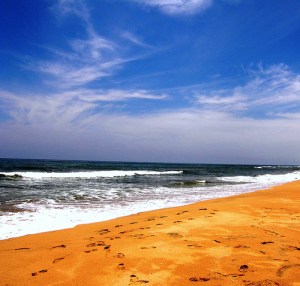
If you've ever been to a beach in Chennai…..

chennai-beach…sign this petition

http://www.thepetitionsite.com/1/abandon-the-elevated-highway-and-save-chennai-beaches

Urban planning has never been one of the Indian government’s strengths, but their latest attempt to build an elevated expressway along the Chennai coastline has found grassroots opposition from a coalition of local residents, activists, and fisher-folk. The latter, in particular, have been mobilized by the project’s cavalier plan to “relocate” them without proper attention to their basic needs. Also, as it happens in many government projects, many loopholes are being exploited to ignore the area’s environmental status.  More information on the proposed project and opposition efforts can be found here –

http://saveourbeach.wordpress.com/

http://timesofindia.indiatimes.com/articleshow/4356980.cms

And just a reminder of what’s at stake here.

The entire text of the letter is below.

We, the below-mentioned, are residents, non-resident Chennai-lovers and fisherfolk of Chennai, particularly from Central and South Chennai area such as Mylapore, Santhome, Adyar, Thiruvanmiyur and Kottivakkam.

We are deeply concerned about the Elevated Expressway project proposed by the Highways Department, Government of Tamilnadu, connecting Marina Beach to East Coast Road, near Kottivakkam. Disturbingly, the State Government is seeking to implement the project in two phases, with the first phase running from Marina Beach to 5th Avenue, Besant Nagar, and the second phase running from Besant Nagar to East Coast Road, near Kottivakkam.

We wish to place on record our total opposition to this project, and urge you to drop the project and consider less-disruptive alternatives that prioritise public transport and the safety of bicyclists and pedestrians, rather than yet another subsidy for car and private vehicle owners.

Our concerns are due to the following reasons:

a) Eviction of Coastal Communities and Disruption of Fishing Livelihoods: The proposed highway will cater primarily to the private car owning elite and will come up on the destroyed houses of fisherfolk and coastal poor. The road, in two phases, will run through several major coastal hamlets, including fishing villages such as Nocchikuppam, Nocchinagar, Dommingkuppam, Srinivasapuram, Pattinapakkam, Urur Kuppam, Olcott Kuppam, Odai Kuppam, Odaimanagar, Thiruvanmiyur Kuppam and Kottivakkam Kuppam. The Feasibility Report admits that the project will necessitate “removal of fisherman villages on a temporary  basis”  The project area admittedly has a population of 1.009 lakhs according to the Wilbur Smith Feasibility report. The Tamilnadu Government’s record of rehabilitation of urban oustees is pathetic. The current relocation sites- in Semmancheri, Kannagi Nagar are all in low-lying areas prone to flooding, and with no sewage, water, educational, transportation or medical infrastructure, and far away from the people’s places of work.

After construction of the highway, use of beach spaces for net-mending, shore-seining etc will be restricted.

b) Violation of Coastal Regulation Zone Notification, 1991: As a project with investment over Rs. 5 crores, this project will require Central Government clearance under Clause 3(v) of the Coastal Regulation Zone Notification, 1991. Further, no application for such clearance can be considered in the absence of an Environmental Impact Assessment, which will reveal the unmanageable nature of the environmental fall-outs of the project. The project has been conceived as an integrated project in two phases, and the environmental and social impacts should not be presented in two separate phases. Rather, the cumulative impact, after considering the existing pressures on the coastal system, and factoring in sea level rise, and extreme weather events, must be assessed and presented. CRZ clearance too should be sought in for the project in its entirety, rather than on a piecemeal basis. The Wilbur Smith Feasibility Report states that “The elevated alignment is proposed to run on wherever existing roads are available and also on the seashore and open land to minimize impact on congested fisherman settlements”

Ever since the project was conceived, there have been numerous attempts at constructing illegal roads on the beach. Currently, Zone 10 of the Corporation has made several aborted attempts at constructing a road on the seaward side of the existing habitation in Urur Kuppam. However, opposition from the Urur Kuppam fisher panchayat has kept this project in check.

The Government of Tamilnadu has shown a remarkable restraint in taking action against CRZ violations and violators. Even worse, public authorities such as Corporation of Chennai and the Public Works Department have frequently violated and continue to violate the CRZ Notification. Evidence of such violations can be found in the construction debris dumped on the beach area, on the southern bank of the Cooum Estuary, the ongoing dumping of construction debris at the Southern end of the Marina beach in preparation for the elevated expressway, the construction of concrete structures (a bathroom north of the swimming pool on Marina, and viewing galleries on Besant Nagar beach) on the beach without CRZ approval, and the wholescale landscaping and alteration of beach ecosystem within the remodeled and expanded Governor’s bungalow on Besant Nagar beach.

The Feasibility Report, drafted by Wilbur Smith Associates, repeatedly refers to Phase 1 of the project as a “Reconstruction of existing road with Elevated Corridor from Light House to Besant Nagar. . .reconstruction of existing bridge across river Adyar with “Signature bridge”

It refers to the Phase 2 of the project as “Construction of Elevated Corridor from Besant Nagar to East Coast Road (ECR) along the coast by making use of the existing road alignments.”

It is noteworthy that the “existing bridge” referred to in relation to Phase 1 is a dilapidated structure of a pedestrian bridge that was washed away in a major cyclone in the 1970s, and has never been reconstructed since. Replacing a broken, unused pedestrian bridge by a 6-lane expressway can in no way be construed as a mere reconstruction. Such mischievous wording is intended to facilitate CRZ clearance for a project that otherwise cannot be accorded such clearance.

Violating the CRZ Notification is not merely a legal infraction. Rather, as a yet another instance of inappropriate land use, the road project will add on to a long list of existing encroachments in the coastal area, and exacerbate the effects of extreme weather events that are anticipated to occur more frequently and with greater intensity in the future.

The Government of Tamilnadu has wrongly designated the entire coast of Chennai as CRZ 2. By notifying even ecosensitive areas including sandy beaches, Olive Ridley turtle nesting grounds and estuaries as CRZ 2, they are opening these areas for unregulated development. This despite the fact that the Ministry of Environment & Forests, through a letter to the Chief Secretary, Government of Tamilnadu, dated 27.9.1996, has issued clear instructions that “In addition to the information already available with the Government of Tamilnadu, all ecologically important and sensitive areas shall be demarcated on the basis of the following sources of information and be classified as CRZ 1”.The suggestive list mentioned by the Ministry in this letter include: mangroves, mud flats, breeding grounds for turtles, areas rich in genetic diversity, and areas of outstanding natural beauty.

The Wilbur Smith report admits that “the first phase of the proposed road project crosses the marine environmtal sensitive place of Adyar estuary. The estuary is also name demarcated as bird sanctuary by the Tamil Nadu Forest Department. Noise generation arising during the construction activity will drive the birds away and cause an ecological imbalance to the estuary and the fish population”.

c) Disruption of Olive Ridley Turtle Nesting Habitat: Marina, Besant Nagar, Thiruvanmiyur and Kottivakkam beaches are known nesting grounds for the Olive Ridley turtles. Ridley turtles are listed in Schedule 1 of the Wildlife Protection Act at par with the Indian tiger. Turtle hatchlings are extremely light sensitive, and strike out towards the moonlit-oceans in the absence of any background light. With a highway running through the beach, the lights are likely to fatally confuse Ridley hatchlings. In 2008-09, about 65 turtle nests, with roughly 100 eggs each, were recovered from the area between Neelangarai and Adyar Estuary.

The Wilbur Smith feasibility report states: “The proposed construction activity has significant impact on fauna. The proposed site is known for the breeding ground of Olive Ridley Turtle (Green Turtle). The construction activities will have major impact on the turtle breeding”.

d) Theosophical Society and Adyar Estuary: At one time, the Government of Tamilnadu had declared the Adyar Estuary as a bird sanctuary. Even now, despite the polluted nature of the waterway, the estuary and the densely wooded grounds of Theosophical Society continue to attract a variety of birds. The developments on the Northern shore of the Theosophical Society (MRC Nagar) and the increased urbanisation since 1989 have already taken a toll on the local bird bio-diversity, which remains impressive for an urban setting despite the beating it has taken. According to a comparative study done in 2009 by EMAI, a Chennai-based registered Trust engaged in environmental monitoring and action, at least 109 birds were spotted in the Theosophical Society and Adyar Estuary area in 2009. This is in contrast to 175 in 1989, before the constructions in MRC Nagar came up, and 124 in 2004. At least two species, listed in Schedule 1 of the Wildlife Protection Act, 1972, have been sighted in the Theosophical Society grounds. The Black Baza (Aviceda leuphotes) and the White-bellied Sea Eagle  (Haliaeetus leucogaster) were regi;ar visitors to this area until 1989 and 2004 respectively. The fact that such species frequented this ecosystem underscores the ecological importance of the area, and indicates that the region should be revived to make it hospitable for these and other species.

The Theosophical Society is also a haven for birds, bats and other wildlife and is the last remaining lungspace within South Chennai. Constructing an elevated road along the Society’s edges is bound to disturb the carefully protected ecosystem within the Society grounds.

Indeed, one of the last surviving patches of tropical dense evergreen forests is to be found in the grounds of the Theosophical Society. The TS has a balance of gardens, orchards and forests, and indigenous and exotic tree species. The Saraca Indica [Asoka, not Nettilingam] as well as a graft from the Bodhi (Ficus Religiosa) tree under which the Buddha is said to have attained his enlightenment are to be found within the lands of the Theosophical Society. The Tropical Dense Evergreen Forests within the Society are different from the Guindy National Park in that the latter accommodates large herbivores like the Chital. Absent the grazing herbivore, the ground cover in the Society is intact, rich and abundant, displaying all three layers of vegetation typical of an evergreen forest. The freshwater ponds are home to terrapins, frogs, chameleons, snakes and insects. Jackals and mongoose too are residents of the Adyar-Besant Nagar area.

The edges of the estuary along the Theosophical Society also host the last remaining mangroves, and the state of the estuary calls for massive efforts to rehabilitate the water body, rather than activities that will degrade it further. Reviving the estuary would go a long way in improving fish population in the coastal waters, and improving the local economy of fisherfolk. The Wilbur Smith report too concludes that:”The estuary is also name (sic) demarcated as bird sanctary by the Tamilnadu Forest Department. Noise generation arising during construction activity will drive the birds away and cause an ecological imbalance to the estuary and the fish population.”

e) Disturbance to places of learning and cultural importance: The second phase of the proposed highway will run through or alongside important cultural centres like the Vailankani Shrine, Ashtalakshmi Temple and the Kalakshetra Foundation. The latter, declared ‘an institute of national importance’ by an Act of Parliament, promotes the arts, houses two schools and a unit for weaving and natural vegetable dyes, and is recognized worldwide for its integrity in upholding the highest values of India’s artistic traditions. Phase II of the project, if implemented as fleetingly outlined in the Wilbur Smith feasibility report, will run through the Central Government-owned Kalakshetra Foundation’s estate that stretches right up to the beach.

f) Destruction of one of the last remaining open spaces in Chennai: The beaches of Chennai are the last remaining open spaces available to Chennai-ites. The prospect of losing the beaches as recreational spaces will coalesce not just Chennai residents, but also tourists and other visitors who frequent these areas.

g) Construction debris and workers’ housing: Dumping of construction debris on the beach, even if temporarily, will alter coastal ecology and hydrology and exacerbate the effects of seasonal flooding. Construction of the expressway will also involve the labour of hundreds of workers. Their accommodation needs, and sanitation requirements will put a massive strain on an already stressed coastal environment. Filling in of low-lying areas for construction of culverts and embankments will permanently alter coastal topography and aggravate the effects of flooding on vulnerable coastal residents.

h) Violates Masterplan and National Urban Transport Policy: The Elevated Expressway project was not presented or even mentioned in the Draft Masterplan published for public consultation. As a result, this project has not been subject to any public scrutiny and does not find any legitimate mention in the the 2nd Masterplan. Further, there is no explanation as to how the project meets the stated objective of achieving a modal shift to 70:30 in favour of public transportation. Neither is there any explanation of how the project prioritises public transportation. In fact, the feasibility report says

i) Absence of examination of alternatives: The project fails to examine alternatives, including policy measures and planning interventions such as measures to discourage private vehicles, increasing public transportation capacity, staggering office and college/school hours etc.

For these reasons, we request that this project be abandoned and the State and Central Governments should begin a sincere search for long-term mass transportation alternatives in consultation with the public.