Geeta Padmanabhan
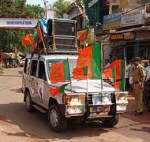 People in the know – CEOs and HR consultants – have told me that the impact of global economic meltdown will be relatively less in India. Among the many reasons they proffer are
-financial conservatism
-smaller % of exports
-large local markets
-strong banking regulations.
Yesterday an activist added two:
-a lot of our money is safely stored in Swiss banks
-we can’t get poorer than this.
Of course, the IT industry has had to make “corrections”. No one talks about increments and salaries that have been pruned to jaw-closing levels. Appointment orders for fresh graduates have been put on hold. Workers have been retrenched in export oriented industries (Tirupur, Surat).
In this election year, the government and the political parties aren’t taking chances. Unlike in the US where every dollar spent comes under an electron microscope( editor’s note – we wish!), the parties here have come to a tacit understanding. We need economic stimulus. We can’t allow the country to slide into massive unemployment . We need to pump money into the markets, purchasing power into people’s hands. So we will make the general elections a grand one. We can’t let all the cash and kind to go into IPL players’ hands alone!
How does the election stimulus work?
Apart from placing full-page ads in newspapers and clippings/jingles on TV, Radio, Internet and Social networks, political parties are seeking professional help to campaign for the Lok Sabha elections.
The Congress Party has announced that it will be using the services of three advertising agencies. Rs. 150 crore has been allocated for this. If you think this is huge, well, the party doesn’t. Additional amounts will be distributed on public rallies, posters and handouts.
The party has bought the rights of Jai Ho for campaign use. (Amount paid not disclosed.)
I hear a lot of people who lost their jobs will make a killing in this election market. You get paid for joining the rallies – every party needs “crowds” to wave flags, to clap – hey, the TV cameras are rolling! In a previous election, Congress lackeys hired dancers known for their off-colour antics on stage to “attract” crowds.
Mayavathi of BSP has made huge elephant statues (1 crore each) to be placed in vantage points. I saw them. They are works of art. This is her election symbol.
It speaks to the level of maturity of the Indian electorate that they are completely bi-partisan.
The same guys will make posters for all parties (500?), do wall paintings, clean those up on election commission’s orders, and then write them again. You might even see the same crowds in all the meetings and rallies.
The same ad agencies will make posters, videos, newspaper page-outs. Ad agency Crayons has extended its services impartially to Congress, BJP, Samajwadi Party and Shiromani Akali Dal. It is not likely to go out of business ever. Ad budgets are likely to go up by 25-30% (Economic Times, Sep 23 2008) the Business Standard ran its story under the heading “Political Advertising comes of Age”. Ha!
All this is official. Unofficially, money is disbursed on the pretext of “It is our culture to give money when a kid is named.” “We always distribute cash during Holi!” All this has been caught on camera. One board in Thirumangalam whose townizens got instant fame for auctioning votes said: “Twelve votes here. Bids invited.”
Political watcher Vinod Anand writes in his report, “Unlike the US, there is no requirement for political parties in India to disclose their campaign expenditure. The media has speculated that all the political parties are expected to spend around 500 crore rupees on advertising and communication alone, which will be but a fraction of the total campaign cost.”
The report concludes, “What will be the total cost of campaigning for this Lok Sabha election? It might be enough to fund the free mid-day meal scheme in (all)our schools for the duration of this campaign. So next time you trash a publicity flier/brochure handed to you by your friendly neighbourhood politician, just consider that a kid in India went hungry to fund it.”
How much is the government spending for this great exercise in democracy?
Here is a sample: 20,140 litres of violet ink will be used in elections this year. This, when we have electronic voting machines that work.
Watch this space for more.
Picture by Bryce Edwards under Creative Commons License

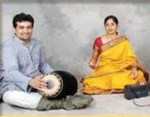 Every South Indian growing up in almost every major city between Delhi and Madras has some memory of the Thyagaraja Aradhanai: Melodious singing and rhythmic beats round the clock, the crinkle of rich kanjeevarams, the sharp commentaries by mamas, the reverence on the faces of the audience as maestros ascended the heights of achievement, the performing children looking quite grown up in their pattu pavadais and mundus; the aroma of vadais and kaapi, the ongoing musical discussion at home and en route.

 Who doesn’t love cake? But most of us try to avoid it. All those calories! For those of us with a sweet tooth having to refuse that slice of cake causes a lot of heartbreak and inner turmoil and the few times that we do give in (few!! who am I kidding ? I give in almost every time) we are full of guilt.
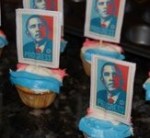 One of the easiest ways to decorate is with cupcake picks. You can pick up readymade picks from party stores or make them at home. Print two copies each of any design example tiaras or animals etc. Take a tooth pick and stick the printout on both sides of the tooth pick, ice your cupcake any color you like and stick in your picks. I recently made special Obama cupcakes for my daughter’s class on the Presidents inauguration day.
 Last but certainly not the least I was able to use my hobby as a means to teach my children a lesson in charity. Last year my daughters sold cupcakes at the Induz volunteer
 Bay Area non-profit
 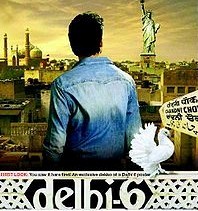 With Rakeysh Omprakash Mehra, one is never quite sure what one is going to get. The former ad maker directed the successful and critically acclaimed Rang De Basanti in 2006 but it took a good five years before that for us to forget the wildly experimental Aks, a nightmarish movie featuring long Hamlet-style soliloquies and body-swapping killers.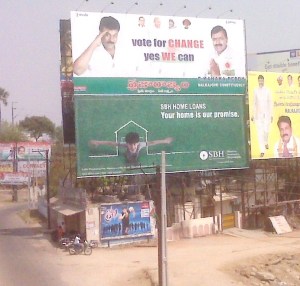
 “The squeaky wheel gets the grease” is the aphorism by which community activists live. And the biggest community organizer of them all is the President of the United States today. But the sleepy suburban town of Fremont is hardly the typical setting for activism. A bedroom community in the Bay Area with a large population of immigrants, the city has muddled along with haphazard development plans for years, with only fringe input from its residents.
 A billion Indian voices went “Jai HO!” as AR Rahman stepped on stage to accept his second Oscar statuette at the Kodak Amphitheater. Crackers were burst in front of his house, his sister was caught gushing about brother Rahman on TV cameras. A nation stood up and applauded.
 Water, No Ice