Parent Talk Episode 46: Working Moms

Saturday September 15: Career and Motherhood: A spirited discussion on how moms working outside the house do it all. Guests: MFT Sushma Trivedi and working moms Sushma Srivastava and Ranju Ganesan.

Here is the recording of the show for those who missed it.

[mp3player width=150 height=100 config=parent-talk.xml file=https://waternoice.com/wp-content/uploads/Parent-Talk-Episode-46-Working-Moms.mp3]

ICC Parent Talk is a weekly radio show sponsored by the India Community Center. It airs on Radio Zindagi, 1550 AM, live on Saturday mornings at 10 a.m. The call in number for the show is 510-7701550.

If you have questions or comments about the show, or if you would like to participate on the show, please drop me a line at radio@indiacc.org. For news about the upcoming shows, check out the ICC Parent Talk page.

Reduce, Re-use, Recycle … Your Wardrobe?

Quick show of hands – How many of you have lovely Indian saris and outfits moldering in your closet, worn once and never to be worn again? Or worse, those lehngas that your aunt sent that don’t fit you, or the sari received as a gift at a wedding that just isn’t your style?

I do, and Dina Patel of Didi’s Wardrobe is betting you do too.

After 10 years in the finance world, putting in 100 hours a week, Patel was ready to try something different. Noticing how didis wardrobe 1she always ended up exchanging clothes with her friends when she needed party outfits, and how many of her own clothes were worn so infrequently, she set up Didi’s Wardrobe, a place for buyers and sellers of gently used clothes to come together.

“I looked at the rental concept first,” says Patel, “but there are just so many players in that area.” (see Borrow it Bindass). “Plus, they have a significant inventory investment, and I wasn’t ready to do that based on my market research.”

Didi’s sellers operate in two ways. For the enterprising ones who want to use Didi’s as a consignment store, Patel offers an easy way to get the clothing details up on the site. She does expect the seller to be good with measurements and to put up pictures of the clothes offered. Also, to protect the buyer, payment is not made to the seller till confirmation of receipt of goods is received from the buyer. For this kind of seller, Didi’s Wardrobe keeps 18% of the sale proceeds.

For the more typical seller, who has a bunch of clothes but can’t be bothered to sort them out, Didi’s Wardrobe has a much more convenient option. Just bundle up the  clothes and ship them and DW will sort them, measure them, put a price on them, and display them effectively on the site. In this case, DW keeps 50% of the sale price.

“Customers are quite happy with this option and the prices we set on their clothes,” reports Patel. And buyers can clearly see if the clothes are from DW’s inventory or directly from the seller. Best of all, the clothes are rated on their condition.

Based in the Midwest, Patel has been setting up drop-off days in the area this summer, and says she has met with tremendous response from sellers who have, on occasion, brought garbage bags full of clothes to the location.

Supply doesn’t seem to be a problem, but how comfortable are people wearing used clothes?

Indian Saree 1155aNot surprisingly, 50% of DW’s buyers are non-Indian. I guess DW is a great way to try out Indian clothes at a low entry price. “But I’ve been pleasantly surprised at the profile of my Indian clients,” says Patel. They’ve been fairly high net worth customers, and DW has been able to meet their discerning standards.

I tried DW’s system a couple of months ago and purchased an olive silk sari with a blouse that claimed to be my size. I received my purchase in short order, and found the sari as lovely as it looked in the picture. I did have to make adjustments to the blouse, but a local seamstress was able to do that with no trouble and I ended up with a printed silk sari and blouse for $60, which, frankly, I thought was a steal.

DW has been growing slowly and some of it has been by design. “I was very concerned about getting the mechanics of it right,” says Patel, and her site has been growing organically, with minimal marketing. And she has resisted efforts to make it a mall kind of experience, where many sellers of new clothes can congregate.  “Our aim is to be environment friendly, and selling new clothes defeats that purpose. The idea is to reuse clothes and recycle our wardrobes,” says Patel.

Didi’s Wardrobe has been getting good traction over this summer and quite a few repeat buys. “The biggest challenge is to overcome inertia,” says Patel. “We all have beautiful clothes in our closet that we would be happy to sell, but it is making the effort to send us the stuff that daunts people.” Still, the drop-off days have been very successful and Patel plans to expand the area covered for the drop-offs.

Other expansion plans include a bridal section. “We haven’t really pushed this segment, but we are growing slowly,” says Patel.

Go check out Didi’s Wardrobe to help you prune your closet. And if you are looking for pretty outfits you don’t have to pay a fortune for, Didi’s Wardrobe is a great place to find those bargains. Best of all, you’ll end up spending less, having more, and knowing that your lovely clothes will be cherished and worn by people who appreciate them as much as you once did.
Parent Talk Episode 45: Praise and Criticism

Saturday September 8: Praise and Criticism: An interesting discussion on the different ways to praise and criticize our kids and whether some methods were more effective than others. Guests: Dr. Leena Khanzode and Namita Maunder.

Here is the recording of the show for those who missed it.

[mp3player width=150 height=100 config=parent-talk.xml file=https://waternoice.com/wp-content/uploads/Parent-Talk-Episode-45-Praise-and-Criticism.mp3]

ICC Parent Talk is a weekly radio show sponsored by the India Community Center. It airs on Radio Zindagi, 1550 AM, live on Saturday mornings at 10 a.m. The call in number for the show is 510-7701550.

If you have questions or comments about the show, or if you would like to participate on the show, please drop me a line at radio@indiacc.org. For news about the upcoming shows, check out the ICC Parent Talk page.

Parent Talk Episode 44: Back to School

Saturday September 1: Back to School: Talking to sleep specialist Dr. Nitun Verma about getting kids used to the new sleep schedules. Teacher Seema Ramanathan discussses learning losses in kids during the summer break and why teachers spend so much time reviewing the previous curriculum at the start of the school year.  Guests: Dr. Nitun Verma and Seema Ramanathan.

Here is the recording of the show for those who missed it.

[mp3player width=150 height=100 config=parent-talk.xml file=https://waternoice.com/wp-content/uploads/Parent-Talk-Episode-44-Back-to-School.mp3]

ICC Parent Talk is a weekly radio show sponsored by the India Community Center. It airs on Radio Zindagi, 1550 AM, live on Saturday mornings at 10 a.m. The call in number for the show is 510-7701550.

If you have questions or comments about the show, or if you would like to participate on the show, please drop me a line at radio@indiacc.org. For news about the upcoming shows, check out the ICC Parent Talk page.

Parent Talk – Episode 39: Empty Nesters

Saturday July 28: Empty Nesters: What happens to our marriage when the kids leave? How do we find  a purpose in life after being focussed on the kids for so many years? Guests: Dr. Leena Atul Khanzode and empty nester Malini Patel.

Here is the recording of the show for those who missed it.

[mp3player width=150 height=100 config=parent-talk.xml file=https://waternoice.com/wp-content/uploads/Parent-Talk-Episode-39-Empty-Nesters.mp3]

ICC Parent Talk is a weekly radio show sponsored by the India Community Center. It airs on Radio Zindagi, 1550 AM, live on Saturday mornings at 10 a.m. The call in number for the show is 510-7701550.

If you have questions or comments about the show, or if you would like to participate on the show, please drop me a line at radio@indiacc.org. For news about the upcoming shows, check out the ICC Parent Talk page.

Induz Dandiya For a Cause

Since the 1970s school art and music programs across the United States have been drastically cut and the recent downturn in the economy has once again forced the schools to make further cuts in the art and music curriculum.

Induz, a Bay Area non-profit, is collectively working towards addressing this problem. Induz provides free art education for orphan children in India and at 14 low-income schools across San Francisco Bay Area. Induz organizes regular  events in the Bay Area to raise funds for these projects.

The aim is to connect people and cultures through the magic of art. “Art is immensely important yet it seems to constantly take a backseat in today’s society” said Ray Mitra, founder of Induz. ”That needs to change. When people learn about the different forms of art from different cultures; when they are exposed to different communities and really see the beauty and benefit of what these cultures have to offer, lives change.”

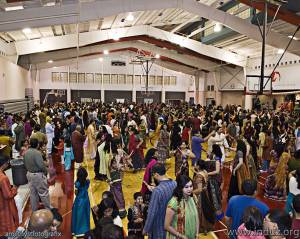
Induz has organized a super exciting “Induz Dandiya” fundraiser evening on October 6th 2012 at Centerville Junior High School in Fremont, to raise funds for projects in both the United States and India. This “Dandiya” event is to celebrate the “Navratri”  (“Nav’=night and “ratri”=nights) festival of 9 nights where, as per the Hindu mythology is believed that “Maa Durga/Ambe” visits the earth  destroy the evil and bring peace, love and harmony to people on earth!

This fundraiser event will enable Induz to raise funds to reach out and offer the Apollo project to more low income schools in Bay Area, and also continue to support the Tulika project for the under privileged children in the orphanages in India. Please visit http://www.induz.org/ for more details on these projects.

Induz Dandiya Induz Dadiya was a sold out event last year, and this year features dandiya with a spectacular laser lights display! The very popular and well-known Bay Area artist, Dimple Patel and Troupe, will be the DJ for the Dandiya/Garba event.
“Dandiya” is a traditional folk dance of India from Gujarat state. It is played with 2 sticks and is very gracious and energetic dance, which has its own form of style and art to it. Ray Mitra said, “Art – all art, be it music, dance, painting or any other form – is a medium for bringing diverse cultures and communities together. That’s our vision. We see the point of connection as being Where Art Meets Heart. If we can accomplish that for our children then the world of their future will be a peaceful and happy place.”

Tickets for Induz Dandiya can be bought online from sulekha.com/Induz or by contacting Ray Mitra at (510) 875-5006 or Sanjay Saxena at (510) 449-8530. Ticket prices are $12 for Adults and $7 for children up to 10 years old. Children under 5 are free.

About Induz

Induz is a 501(c)(3) non-profit organization driven by Silicon Valley professionals with a
passion to promote art and culture across the globe through its mission Where Art Meets Heart
(WAMH). WAMH aims to (1) Nurture artistic talents by exposing individuals to the world of art
and culture (2) Promote and encourage the awareness and aptitude toward art and culture in
children, in particular the underprivileged, by setting up programs through which they can
learn various forms of art, such as visual art, music, and dance (3) Use art as a medium to
bring diverse communities and cultures together and encourage volunteerism and active
participation

Girls and Computers

I might have stumbled on to something…

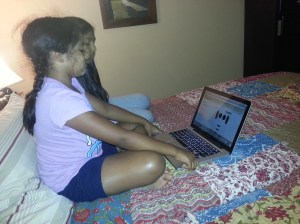
The spousal unit is big into computers. He believes a working knowledge of computers is absolutely essential for the next Lori on computergeneration, regardless of the profession or career they ultimately choose. ( I suspect some of his enthusiasm is proxy for his own silicon-chip-free childhood!) So when MIT came out with Scratch,he quickly got our 9-year-old daughter on to it, and it then spread like wildfire to her friends.

(Scratch is a programming language learning environment enabling beginners to get results without having to learn syntactically correct writing first. Created by the MIT Media Lab, it is intended to motivate for further learning through playfully experimenting and creating projects, such as interactive animations, games, etc. – Wikipedia)

Scratch allowed our daughter to build cute animation with sound from a set of pre-programmed commands. She has been having fun with it, though she hit a wall when she needed some knowledge of programming to go beyond the simple tasks that Scratch allows beginners.

That’s where Khan Academy came in.

We had been trying to get her to work on the math segments in the popular tutorial program and, while she was initially interested in solving the exercises and getting the reward points, she lost interest when she got to the point where she needed to watch the videos to learn the concepts. “Its so boooring,” she whined, and we didn’t push, mystified that Salman Khan’s easy breakdown of concepts was not appealing to her.

Then came the computer science module.  After loooking through the simpler programs she got to a point where she had to watch a tutorial. I figured that would be the end of her interest in this module as well. I was wrong.

“Finally!” she said when the tutorial began, “It’s a girl talking about computers.” The tutorial was not only in a female voice, it was perky, fun, and made my daughter feel comfortable about her ignorance. “I can relate to this,” she said and happily continued with her lesson.

My epiphany is echoed in contemporary attempts to get more women interested in the STEM fields. The AAUW Educational Foundation Commission on Technology, Gender, and Teacher Education found that “…girls are critical of the computer culture, not computer phobic. Instead of trying to make girls fit into the existing computer culture, the computer culture must become more inviting for girls.” In a report entitled “Tech Savvy – Educating Girls in the New Computer Age,” they add that “girls assert a ‘we can, but I don’t want to’ attitude toward computer technology: They insist on their abilities and skills in this area even as they vividly describe their disenchantment with the field, its careers, and social contexts. Although some of this attitude may be defensive, it is important to take a hard look at what these girls are feeling defensive about.”

The current environment is obviously not working. As academic and researcher Vivek Wadhwa points out, “Only 1 percent of high-tech startups have a woman CEO; there are almost no women in the ranks of chief technology officers; and to make matters worse, the proportion of women studying computer science has been steadily declining, from 37 percent in 1985 to 19 percent today, according to the National Science Foundation.”

Luckily, I am not the only one discovering what makes my little girl enthusiastic about computers. Organizations like AAUW and the Anita Borg Institute actively support women in technology and encourage girls to enter fields usually dominated by men. Their mission is to not only create role models to motivate girls but also to determine how to nurture that interest in early education. Social scientist and scholar Jane Margolis explains in a CNET interview, “There’s concern in all computer science departments about the low number of women and low number of African-American and Latino students….What we found is that intervention has to be done at every stage of the education pipeline, and it’s not too late at the stage of higher education.” She and other scholars in the field have found that women approach computing as a mechanism for problem solving, not necessarily as an end in itself. Universities like Carnegie Mellon have begun to provide computer education in an interdisciplinary way, providing social contexts to make the subject interesting and purposeful.

I can only be glad that our daughter still has a couple of years in elementary school. Hopefully, by the time she is in high school, the efforts of these organizations and universities will lead to a better understanding of how to motivate women and girls in technology, and how to provide careers in technology that allow for better work-life integration. Meanwhile, the solution to getting girls into computer education doesn’t seem that complicated – make computers fun, have female teachers, and talk computing in a language that girls can relate to. Bias, after all, is in the eye of the beholder.

Gangs of Wasseypur – Part 1

The bad news about GoW is that it doesn’t tread on any new stuff. The good news is that where it does tread, it does so with a sure and deft touch, showcasing director Anurag Kashyap’s now-undeniable talent.

Movies about gangland empires and their bloody turf wars and successions are pretty common ( and, in my opinion, easy to make). Pick almGoWost any of Ram Gopal Varma’s oeuvre and you’ll see what I mean. The difference here is that instead of setting the confrontations in Mumbai’s dank and fecund underground, Kashyap takes on the coal belt towns of Dhanbad and Wasseypur and the gory butchering industry to craft a multi-genrational saga that has more than a passing resemblance to the Godfather series in its delineation of characters and their relationships.

Family rivalries begin in 1940s India between the Qureshis and the Khans and continue unabated as the momentous events of Indian independence simply translate to a changing of the reins of power without any impact of the lives or fortunes of the poor. British oppression gives way to exploitation by the corrupt politicos of the district, as the protagonists quickly figure out new alliances.

GoW is told from the point of view of the Khans, with a bulk of this first movie focusing on Sardar Khan, the second generation of the Khan family as he hard-scrabbles his way to establish himself as the local goonda. As his life story is revealed, we see the complex dynamics in the power play between the two families, and can see the beginnings of the rivalries that will permeate the next generation.

If the plot sounds familiar, it is, and this tends to make the movie a tad predictable. But it is scripted, directed, and acted amazingly well. If mainstream movies aimed for even 50% of the talent that is on display here, the Indian film industry would be ready to take its place in the ranks of global cinema.

Manoj Bajpai as Sardar Khan is as good as ever, and deals with the complex character with nuance. The script and his fine acting are able to give this cold-hearted killer a sympathetic touch, which is quite a feat considering we see him hacking down rivals in the most gory ways possible.

The supporting cast is equally good, and using lesser-known actors really pays off, as they completely inhabit their characters. The women, as often happens in these gangster movies, are the wives, mistresses and victims, but the terrific writing is able to flesh out each character in the limited time she is given. Kudos to Kashyap for making the fearsome Sardar a hen-peckedcoard at home; this makes for the few laugh-out loud moments in this grim and gruesome movie. Richa Chaddha as Nagma, Sardar’s wife, is pitch perfect, and Reema Sen as his mistress is great too.

As I said before, I happen to think that gangland movies are relatively easy to make because there is so much drama to be exploited. RGV’s success with Satya, Sarkar, and Company, and his appalling failure with other genres (except for Rangeela) sort of illustrates my point. But Kashyap has already proven his mettle with such diverse movies as Dev D, a contemporary remake of Devdas, and That Girl With Yellow Boots, where wife Kalki Koechlin play the eponymous role of an expat masseuse looking for her father. Gangs of Wasseypur feels like an experiment in this particular genre,though a wildly successful one. Here’s hoping that after this saga is completed with GoW2 we’ll see another quirky movie in a different genre from this terrific movie maker.

Oh, the music? I didn’t particularly care for it, but it seemed to appeal to the guys I know a lot. Maybe a gender thing.:)

Kid Advisory: NOT FOR KIDS OF ANY AGE.

Parent Talk Episode 38: Other Tongue

Saturday July 21: Other Tongue: Why is necessary for kids to learn an Indian language? What are the different approaches? What are the challenges? Guests: Madhu Aggarwal of the Madhu Bhasha Kendra and Manoj Empranthiri of the Kerala Club.

Here is the recording of the show for those who missed it.

[mp3player width=150 height=100 config=parent-talk.xml file=https://waternoice.com/wp-content/uploads/Parent-Talk-Episode-38-Other-Tongue.mp3]

ICC Parent Talk is a weekly radio show sponsored by the India Community Center. It airs on Radio Zindagi, 1550 AM, live on Saturday mornings at 10 a.m. The call in number for the show is 510-7701550.

If you have questions or comments about the show, or if you would like to participate on the show, please drop me a line at radio@indiacc.org. For news about the upcoming shows, check out the ICC Parent Talk page.

Parent Talk Episode 37: Resolving Parenting Conflicts

Saturday July 7: Parents and Partners: How to navigate the roads of parenting our children while remaining a couple with different opinions, sensitivities and way of parenting.How to resolve the inevitable conflicts in parenting styles, beliefs, and approaches. Guest: Dolat Bolandi.

Here is the recording of the show for those who missed it.

[mp3player width=150 height=150 config=parent-talk.xml file=https://waternoice.com/wp-content/uploads/Parent-Talk-Episode-37-Parenting-Conflicts.mp3]

ICC Parent Talk is a weekly radio show sponsored by the India Community Center. It airs on Radio Zindagi, 1550 AM, live on Saturday mornings at 10 a.m. The call in number for the show is 510-7701550.

If you have questions or comments about the show, or if you would like to participate on the show, please drop me a line at radio@indiacc.org. For news about the upcoming shows, check out the ICC Parent Talk page.