Yearly Archives: 2008

36 hours in Bengaluru

By Geeta Padmanabhan

New Bangalore Airport

New Bangalore Airport

My office in Chennai said, “No one will meet you at the Bengaluru airport.” I protested. My conference venue was far away from the new airport and I was scheduled to land at 6:30 am.

“Not to worry,” said the boss. “Bengaluru cabbies are honest, highly professional. Their meters work. You just pay the amount.” I checked with the Conference Secretary. “If we send a cab, we pay up and down. Just hop into one at the airport, please!” She was going to sign the bill, so…

The new Bengaluru airport is impressively large, with a glass-house terminal, neat and spacious. I stepped out and sat down on a square stone (meant for sitting?). The air was cool and bracing. As far as the eye could see, there were neatly laid flower beds dotted with saplings. When they mature, the terminal will have a wooded look. Nice.

That pleasant feeling was soon replaced by confusion. Where was I supposed to get a cab? The boards outside had no information. There is a coffee shop, airlines booths, but no info on cabs. Does one walk up and down to find one? There were a couple of parked cabs, but they had no drivers. I then noticed a few men across the street in front. I crossed, one came up. “Taxi, madam?”  He pointed at some distance. “The car is there.” I carried my bag a half kilometre to the car park, stopped and asked, “Gadi kahan hai?” He said, “Bhool gaya.” I asked him what people who couldn’t walk this far did. “You would be standing at the spot where you saw me. I would bring the car.” Where I stood was a narrow pathway. What if there was a crowd?

I gave the cabbie the address. “I know Nagarbhavi,” he said. I sat back. At the exit point he said, “Please pay Rs. 100/- for parking.” I did.

For about 30 kms it was riding bliss – wooded areas, smooth roads, one-way traffic. Then the car got into the semi-urban area. Slowly, the road turned bad, the air got foul and we met heavy oncoming traffic. It was nearly 8 m. I tried to read the shop boards to know where I was. Nothing was in English. The cabbie asked, “Have you been here?” I said the place looked familiar. “The route to Nagarbhavi is always choked with lorry traffic.” We stopped, we moved, stopped and asked for directions. We reached the Mysore road, got into the University campus. Another two kilometers on a lonely road inside the campus, and we were in front of the NLS training centre. It was 9 am.

I asked for the bill. The cabbie fiddled a bit, and gave me the paper. It said, “Rs. 950/- That’s right.  “It’s 60 kms, madam.” A man from the Centre came down. Should I pay? “Yes,” he said. They always charge for both ways. He has to go back to the airport.”

I talked to several people at the meetings. An Asst. Commissioner from Delhi said, “I landed at midnight, flagged a passing taxi, bargained and got here for Rs. 600/-!” A rehab officer from Andhra Pradesh paid Rs. 713/-. Giving me this information, a Commissioner from AP complained, “How can we pay different charges? My meter showed Rs. 735/-!” I tried not to laugh.

I left the campus the next day at 2 pm to catch my flight back. It was a working day. But then this was a different car, a different driver. He left through another gate which faced the main road. He took city roads I had not seen on the way down.  He quickly hit the highway to the airport and whizzed through. I asked him to note the distance. I said I was writing about the journey.

I reached the airport in one and a half hours. The meter showed Rs. 700/- and the distance was 50 kms. I narrated this to the guard checking the ID at the arrival gate. He said, “If you had asked me I would have arranged a pre-paid taxi at reasonable rates.” When was this system installed?

I had a long wait. I had my overnight bag, my laptop and a bag stuffed with Conference material. I put them in a cart and looked for a telephone. I couldn’t find one. I scrutinized all the boards in the main baggage checking area. The two huge ones had no picture of a telephone. In fact, there was no indication of a telephone anywhere.

In the old airport the telephone booth is in the sitting area. In this vast modern sea of tiles, glass and high ceiling, the telephone is an obsolete device. I could have sworn there were fewer seats too.

I stopped an airport guy. He said, “I don’t know, madam. But please use my mobile. What is your number?” That is India, I guess. Ill-informed, but helpful. He offered to go with me looking for a telephone. We found a couple near the packing material vending stand. He didn’t know which one would take STD calls. He walked down to the far end, found one and called me. I wheeled the cart down and made the call. I thanked him.

I walked back all the way to the other side and had tea at the only café. It was half a regular paper cup of bad tea. I paid Rs. 65/- for it. That over, I wanted to browse at the shops. Only there were none. You take a seat and all you can see are rows and rows of airlines booths that open both on the outside and inside. The shopping area is on the first floor, up an escalator. With my three pieces of luggage I wasn’t going up. If I took the elevator (I didn’t know where that was) I would still need a cart. People I spoke to felt the same way.

This is my take on this swanky airport: it is meant for airlines that’ll soon choke the Indian sky. It is for state-of-the-art gadget users, fit Olympians. It is not for elderly and disabled passengers like me. In a melting economy it is people like me who have the wherewithal to travel. All the delegates – about 200 – flew down. They must fly. They are in wheelchairs, they are blind.  They are elderly. They have money, will travel, will buy. Why doesn’t the industry welcome us, fill the seats and run profits, instead of sacking employees?

This was one side of India. During the one and half days of deliberations at the famous Law School I met a very endearing face of India in the Conference room and outside at night when I walked around the campus meeting the students. That is masala for another story.

Picture by vermin-jr, Creative Commons use.

Movie review – Dostana

Heavily inspired by I Now Pronounce You Chuck & Larry, Dostana is a product of Karan Johar’s Dharma Productions, directed by debutant director Tarun Mansukhani. I suppose the best way to describe it is a gay-medy.

Handsome horny hunks Kunal and Sam(eer) find themselves pretending to be a gay couple so they can get through immigration quickly(?) and also become acceptable roommates to gorgeous Neha in swinging Miami. When Neha gets interested in another guy, the duo try to sabotage the relationship so each can woo her for himself.

Since Kunal( John Abraham) and Sam( Abhishek) play gay through most of their screen time, the movie opens with a strong bid to establish their hetero credentials, in case any of the audience gets convinced otherwise by their acting talents(!) There is an abundance of female flesh but the most lascivious camera work is devoted to John’s rippling muscles as he does a Daniel Craig doing a Halle Berry and emerges from the waves. I thought Dhoom 2 was pretty risque, but Dostana flings around skimpily clad bodies with gay( no pun intended) abandon. Even Priyanka’s haute couture looks like draped towels most of the time – mercifully she has the figure to carry off the tiny pieces of cloth that pass for dresses.

As for the plot and the treatment, one reviewer at rediff called the movie “injuriously entertaining”, lamenting the setback the movie may be doing to the gay rights movement in India. I would shorten that assessment by one more word – Dostana is infuriating and disrespectful and not entertaining at all, unless your idea of entertainment is to poke fun at people by using the worst stereotypes associated with them. It is like the “Madrasi” Mehmood in Padosan – it was funny when I first saw it but it left me with a feeling of discomfort at the end because it was so campy and outrageous. The movie is also very derivative, borrowing funny bits from successful Hollywood comedies. There is a body wax scene that is ripped (again, no pun intended) straight from The Forty-year Old Virgin.

Dostana tries to do the right thing but it ends up portraying the ambivalent feelings Indians have towards homosexuality. When Sam asks Neha if she’s ok with him being gay, she replies, “Oh sure, whatever, it’s your choice.” Uh, no, it isn’t. When Sam’s mother learns that he is gay, we have a song sequence that is positively cartoonish in its lament, with an exorcism thrown in for good measure. I suppose the point was to make these reactions look ridiculous and regressive but when the mother changes her mind and accepts her son’s partner, she makes him overturn a bowl of rice at the door and gives her “bahu” kangans. So what is it exactly? A movie about accepting gays for who they are or a comedy with buffoonish characters who overreact at every twist and turn?

The only redeeming factor could be that Dostana is an equal opportunity insulter, taking on Sindhis, women, and the nursing profession with rude gusto. Sushmita Bannerjee as the Sindhi landlady hams away under the burden of terrible lines and Kirron Kher plays the Punjabi mom character she can probably pull off in her sleep.

It takes a talented director to make a movie that deals with a sensitive subject funny without being offensive and Tarun Mansukhani, while indulging in the trademark Karan Johar gloss, does not have KJ’s masterful touch behind the camera. John and Abhishek act well, and Abhishek in particular shows his playful side. This is what gives the movie its two stars of watchability. I found the script dreadful, the song sequences over-the-top and the comedy jarring. I would be surprised if the movie has legs beyond its initial boost from the Karan Johar name and the star cast – this is one movie I think even permissive Indian parents will not take their kids along to. Avoid it and rent one of Karan Johar’s well-made melodramas instead.

Dostana

*ring John Abraham, Abhishek Bachchan, Priyanka Chopra

My rating – 2 stars out of 5.

California Cricket Academy celebrates its fifth anniversary

The California Cricket Academy may have had its share of drama and controversy over the years but there is no denying that it is the premier training academy for kids interested in cricket in the Bay Area. The disciplined and dedicated approach to the game has brought the organization a tremendous amount of success and I am passing on Kinjal Buch’s report on their fifth anniversary celebrations held recently.

Cupertino Mayor Dolly Sandoval with CCA volunteers

Cupertino Mayor Dolly Sandoval with CCA volunteers

The California Cricket Academy (CCA) for youth is celebrating its fifth year anniversary this year by hosting the first international U-15 championship between USA and Canada U-15 team during the Thanksgiving weekend.

Since its inception in 2003, the academy has grown from 23 players to over 150 players. In October 2008, academy completed its fifth annual KeyPoint Cup tournament ( sponsored by the KeyPoint Credit Union) and organized the award function at Quinland community center in Cupertino. Mayor Ms. Dolly Sandoval gave a proclamation acknowledging the Academy’s achievements and assured the city’s commitment to supporting cricket as an alternative sport.

During the ceremony, the academy recognized players with outstanding performances as well as several sponsors and volunteers; program coordinator Ms. Priya Pradhan, Mr. Zain Jeewanji of G1G insurance, Mr. Mahesh Nihalani of Cupertino, Mr. Prashant Mehta of Brookside Inn in Milpitas and Mr. Himasnhu Vajir of Days Inn, Sunnyvale.

“We are proud to support California cricket academy for youth and looking forward to a stronger relationship for years to come”, says Helen Grays of KeyPoint Credit union.

Details of the Thanksgiving weekend tournament details between Canada and US  can be found on the academy’s website www.calcricket.org.  A live webcast of the event is planned on 27th of November. We expect over 10,000 cricket fans to watch the event in different parts of the country and world. Games will be played at the W.A. Wilson adult education center ground in Santa Clara on Benton Street and Dilworth Elementary of Cupertino school district on November 27th, 28th and 29th.  The academy will provide hotel rooms, lunch, dinner for the visiting teams thanks to kind support from its sponsors.

“Five years ago, my wife Kinjal and I established the academy with the goal of taking cricket to schools in Bay area and start first youth league in the country. We studied how AYSO and other youth sports league operate. We are proud that we have achieved amazing results,” says academy founder and Chairman of the USA Cricket Association western region chairman Hemant Buch. Now after five years, the academy has won national championships for last 3 years. 8 academy players have represented USA in international competitions and the academy has conducted tours of India and England, has organized the first ever interschool championship for middle schools in Cupertino and trained over 250 players. The U-13 team from the academy is all set to go to India in December of 2008 and will play 9 games in 12 days in different part of the country.

Airport Rage

By P.R. Ganapathy

Bangalore Airport

Bangalore Airport

When I last counted, I estimated that you have to stand in line 7 different times before you board a plane in India. At the entrance to the airport, baggage scanning line, check-in line, security line,
check-your-boarding-pass line, to get on the bus, and finally, to get on the plane.

Over the last few trips, I’ve noticed a certain hyperaggressiveness among passengers in India.

One of the most egregious experiences I had was on the last trip to India. Very often, when a flight is called, a long line forms in front of the counters to check your boarding pass. And you’ll often notice someone sidle up to some meek-looking soul in the line, hoping to be
able to slide in, and avoid having to go to the back of the line. Very little makes me see red, but this is unfortunately one of them. And so, I make it a point to call them, and ask them to go to the back of the line, even if they’re not trying to slide in in front of me.

So on this particular instance, I was boarding a flight to Mangalore, and a tall young man stands beside and slightly ahead of me. The line is already 5 or 6 people deep behind me. So I look him in the eye and say “Excuse me, I think the end of the line’s back there”, pointing
behind me with my thumb.

Whoa, did that set off a nerve somewhere. He started shouting at me for “acting smart” and being a “villager who seemed to be traveling for the first time”, etc., ad nauseaum. So I told him I was surprised that he was being so aggressive about such a small issue. That really set him off – he took a few menacing steps towards me, and I almost reached up and took my glasses off so that they wouldn’t shatter when he hit me. Thankfully, it didn’t come to that. He then proceeded to
bully a smaller guy right behind me to let him stand in line, and shadowed me all the way through the bus ride to the aircraft, glaring at me at every concievable opportunity.

What’s driving this? Some of you may say that this is because airline travel in India has become progressively less expensive, and that’s brought a whole new stratum of travelers into airports. People who may be traveling for the first time, in some cases, or less familiar with airport procedure. That could be true, but I don’t think it adds up.

Have you had such experiences when you travel in India? Why do you think it’s on the rise? Can something be done about it? If so, what? I’d love to hear your thoughts.

Picture by Soumik Kar

Jaman – an update

I last wrote about Jaman, the internet movie site, almost a year and a half ago. Despite excellent picture quality and a good collection of NFDC movies, I had pretty much passed up on the site because of the small library of Bollywood films.

In the past year, though, Jaman’s movie collection has improved significantly. There are now over a 150 Indian films available now, including some really popular ones like Devdas and Seeta aur Geeta. The rental price varies from 99 cents to $2.99 and the rental expires in 7 dys from the moment you click play and 30 days from the day you rent.

I spoke to Geetanjali Dhillon, the Executive Producer for South Asia. She was reluctant to share growth numbers and financial data( a financing deal is in the works probably) but seemed upbeat and confident about Jaman’s prospects in a Hulu/Itunes world. Certainly the company has been constantly updating the technology to emphasize the social networking component that is Jaman’s USP.

One such development is the Cinemaslots, a randomizer widget that lets you pick and share a movie with friends via social networking sites like Facebook and MySpace or by email. Then there is the Subtitler, which offers clips from movies that you can then subtitle and pass along to your friends( reminds me of the hilarious Telegu/Tamil song subtitled songs on YouTube, except it is up to your creativity.) One feature that has been discontinued is the sale of movies..I guess it just wasn’t very popular. But now there are a number of movies that are being streamed free.

Tie-ups with Eros and Shemaroo have boosted the Bollywood content and more Indian movies are in the works. “Bollywood is one of our most popular genres,” admits Geetanjali. The appeal is across country and mother tongue. Rentals still take a while to download but if you are in a hurry to watch the movie, you can get started right away – the progressive download feature makes this a breeze. The picture quality is as good as the original print of the movie ( better than DVD for sure). I had deleted my Jaman Player sometime over the last year and reinstalling took just a couple of minutes.

The Jaman team has been adding so many features and promotions it is hard to find them all on the website. Use the links in this article to make your way to the widgets. And if you are interested in a couple of free movies when you sign up, click here. It is a great way to carry some movies with you on your vacation and if you want to watch a movie this Friday with the family, an S-cable from the laptop to your big-screen TV can do the trick.( Or so I’m told!)

Book review – Marrying Anita

One of the benefits of leading an interesting life is that you can get a book out of it. Anita Jain, who has had a long and varied career as a global journalist, turns her wry observation skills on herself. After failing at the New York dating scene, Anita decides to go back to India and “arrange” a marriage for herself, using the help of friends, family and online matrimonial sites.

She quickly settles into the Delhi party and clubbing scene but the suitable boy keeps eluding her. Many almost-Prince Charmings and more Ugly Ducklings later, her quest to connect is still alive as she bids the reader goodbye.

Though autobiographical, “Marrying Anita” is more interesting as a look at the changing social mores in urban India. The Delhi scene Anita describes is startling, with commitment phobic young men taking full advantage of the sexual liberation of career-minded women. The women are the aggressors, determined to separate themselves from the marital ambitions of the previous generation and yet there is a wistful need for connection. Anita herself rides an emotional roller-coaster, being attracted to the most unsuitable men and dismissing offhand any prospects that look even remotely likely. I was puzzled by her behavior at first, but it dawned on me that she perhaps was unconsciously sabotaging any possibility of a real relationship.

The book is a curious mixture of hopefulness and pathos. When Anita finally embarks on a somewhat serious relationship, she exhibits a combination of high expectations and neediness that all of us remember from our teenage years, and that seems out of place in an older, more experienced woman. She breaks it off for what it would seem to an older generation to be a trivial reason, then transfers her affection to a completely unobtainable object of desire, mooning over him like a lovesick puppy. “Marrying Anita” left me glad I was in a committed long-term relationship where there was no need to play games.

As for literary style, the book starts off well, with overtones of “Eat, Pray, Love”, Elizabeth Gilbert’s lovely travelogue through life. But it soon veers off into self-indulgence, forsaking any sense of chronology or continuity. The chapters are like samplers; pick any one for a quick read. The prose is effortless, though it has a tendency to pretension sometimes (I still have to look up the meaning of “plangency”, but her tendency to occasionally use complex language could simply be the result of a long writing career).

Anita is surprisingly coy about her sexual adventures, a fact that could perhaps be explained in her acknowledgements where she thanks her parents for their “as-of-yet unconditional love and support.” This leads to the sense that she is holding back, which make the book feel incomplete.

Despite its shortcomings, I enjoyed reading “Marrying Anita”. It gave me insight into a social world that is closed to me and descriptions of Delhi are funny and witty without condescending. Take it to the beach for a fun read.

Keeping classical dance traditions alive – the Abhinaya Dance Company

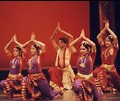
In an article entitled “Random thoughts” on the website for the Abhinaya Dance Company, Mythili Kumar muses on the future of Bharatanatyam? Is it destined to become “Bhangranatyam”, she wonders. Do kids today have the time and patience to devote to this pure art form when they have so many demands on their time? Her doubts notwithstanding, she and the talented dancers of the Abhinaya Dance Company in San Jose soldier on, bringing their latest performance “Rivers, A Mystical Journey” in a fall concert at the Mexican Heritage Center this weekend.

Nearly 30 years ago, Mythili started teaching dance to kids of friends as a way of staying in touch with her dancing roots. In India she had the opportunity to perform about twice a month; here she was lucky if she could get to perform twice a year.

She supervised the arangetrams of several of her students over the next few years and eventually started the Abhinaya Dance Company, choreographing her first production “Shiva the Cosmic Dancer.” The dance was very well received. The company applied for grants from the Arts Council of Santa Clara County (now the Arts Council of the Silicon Valley ) and the California Arts Council and never looked back.

“As a dancer in India, I was used to just showing up to dance and the stage management was left to professionals, but here we had to reach out to friends and family to do the sound and lighting,” reminisces Mythili. Even today Abhinaya remains a small friendly group largely supported by the efforts of volunteers. Even the school restricts itself to around a 100 students per year. “If we expend all that effort in teaching, that takes away time from creating and performing,” says Mythili. “We would like to keep the emphasis on innovating and choreography.”

The company has one big concert every year in the fall and the theme and choreography are always new. “We don’t want to dilute the technique,” emphasizes Mythili. “The lines have to be perfect, the grace has to be there and the emotions have to be properly displayed. We don’t want to turn folksy or get influenced by Bollywood. But at the same time we want to innovate within the tradition.”

That innovation can be seen in this year’s theme, which features the five important rivers of India – the Ganga, Yamuna, Narmada, Godavari and Cauvery. For Ganga, the choreography follows the mythological story of King Bhagiratha and his quest to bring the river down from the heavens. For Narmada however, the dancers decided to tackle the contemporary issue of the controversial dam and the displacement of villagers. It is a bold way of using an ancient art form to convey a modern message.

Some of the innovation this year is also the result of young blood. Mythili’s daughter Rasika has been deeply involved with the choreography and production this year. Her day job as a software engineer informs her art. “I am much more methodical in my approach,” laughs Rasika. “I try to find patterns in the choreography. Unlike my mother, whose creativity is inspired by her vast experience as a dancer, I have to work at it.”

Keeping the age-old tradition of Bharatanatyam alive is a challenge. “I think that is true of any classical art form,” says Rasika. “Even though the number of students interested in dance has increased and the number of dance companies in the Bay Area has grown significantly, I still find that the average Indian American is not well-informed about classical dance. Our goal of informing the public about this dance and making it accessible to the lay viewer has remained the same ever since the inception of the company.”

It doesn’t help that kids today have so many competing demands on their time – Once able to devote 3-4 hours a day to practise, now they join multiple clubs and sports activities and Mythili conducts most of her rehearsals over the weekend to accommodate busy lives and busier schedules. But the spirit of innovation remains strong and “Rivers – A Mystical Journey” promises to be a treat for lovers of dance.

“Rivers – A Mystical Journey” – Fall Concert
Saturday, November 15, 2008 – 7pm
Sunday, November 16, 2008 – 4pm
Mexican Heritage Theater,
1700 Alum Rock Ave., San Jose, CA 95116
Tickets for November 15th here.

Tickets or November 16th here.

Sound Experiments

By Rennu Dhillon

Craft 1

Goal: To develop your hearing senses and identify between sounds.
Materials: Plastic eggs (available at the Dollar Store), rice, dried beans,
popcorn, cereal, salt.
Procedure:
1. Take 3-5 plastic eggs.
2. Number each egg.
3. Fill each egg with different items e.g. Egg 1 – dried beans, Egg 2 – rice,
Egg 3 – cereal, Egg 4 – salt, Egg 5 – popcorn.
4. Now try and identify what is in each egg by shaking the egg and listening
to the sounds it makes.
5. Repeat the exercise with a friend and have them guess what is inside
each egg. Show them a list of items which they can guess from.
Additional Experiment: You can repeat the experiment using different amounts
of rice in different cups and listening to how the sounds differ depending on
the quantity of the item in the cup.
Explanation of what is happening:
Sound is made when the air around us is pushed and creates a sound wave. This
sound wave causes our eardrums to vibrate. Our brain can decide what sound
we just heard depending on how fast the ear drum vibrates or moves back and
forth.


Craft 2
Goal: Make a Kazoo or a Humming Flute
Materials: wax paper, cardboard tube ( from a left over kitchen towel or toilet
roll), tape or rubber band, pencil.
Procedure for a Kazoo:
1. Cut a small square of wax paper about 1 inch larger than the end of the
cardboard tube.
2. Wrap one side of the tube with the wax paper using a rubber band.
3. Poke a small hole near the covered end of the wax paper.
4. Decorate the tube with colors or stickers.
5. Now hum or sing a tune through the open end of the tube and feel how
the kazoo will vibrate depending on how loud your sound is.
6. Make different tunes by humming loud and soft into the tube and create
music.
You can repeat the same exercise using a toilet roll to make a flute.
Procedure for a Humming Flute
1. Using a pencil, poke 3-4 holes in the cardboard roll about 1 inch apart.
Now repeat the steps 1-6 above.
Using these techniques, people have created music over the years. Music can
be made using different things such as cans, wires, cardboard tubes, craft
sticks and bells.

Rennu Dhillon is the founder of Genius Kids Inc, “Never 2 Little 2 Learn”.
Dhillon has a BSc. in Pharmacy, DSc. Naturopathy. She has combined her
education and experience to develop an award winning curriculum at Genius
Kids, a very hands on learning program incorporating a full academic
curriculum to include public speaking, drama, science, art and cartoon art to
children ages toddlers to K.

In memoriam – B.R. Chopra

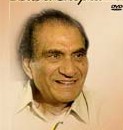
A titan of Hindi films, Baldev Raj Chopra passed away on November 5th at his home in Mumbai. Successful at both the typical Bollywood musical and hard-hitting social dramas, BR reigned over a golden period of Indian cinema when movies could carry a message while not sacrificing their entertainment value.

BR, who is the elder brother of Yash Raj Chopra, came to Mumbai as a casualty of the partition. A journalist by profession, he decided to take his chances in the movie industry, producing his debut movie Karwat in 1949 with the help of investments from his family. The movie bombed and he was forced to go back to his day job for a couple of years.

He decided to switch to direction for his next attempt, Afsana, a movie about mistaken identity that starred Ashok Kumar in a double role. This one struck box office gold and he never looked back. Over the next few decades, his production house B.R. Films churned out many memorable films, some directed by his talented younger brother, Yash.

In 1973, Yash Raj broke away to create his own production company called Yash Raj Films. BR continued to make movies in the 80s but the company’s star has been on the wane since then except for a spectacular success with the television serial Mahabharat, which created history by entering the Guinness Book of World records for highest worldwide viewership. In 1998, B.R. Chopra received the DadaSaheb Phalke Award for his contribution to Indian cinema.

Today his son Ravi Chopra holds the reins for the venerable production house. Box office success has been fleeting, though one notable exception was Baghban, a sentimental melodrama about the plight of senior citizens abandoned by their children. The production house has also been involved in colorizing and re-issuing its classics like Naya Daur. A colorization of Gumrah is also in the works.

Here are some of the memorable movies directed by B.R. Chopra –

Naya Daur (1957) – The movie’s message was a lament about the effect of modern technology on rural tradition. But with stars like Dilip Kumar and Vyjayanthimala and an inspired race between a bus and a tonga for a climax, it was also a cracking entertainer.

Sadhna (1958) – Starring Sunil Dutt and Vyjayanthimala, this was a bold movie for its time. VYjayanthimala stars as Champabai, a mercenary prostitute who is rehabilitated by the love and affection of a good man and his mother. In the surprising end, the mother even accepts the dancing girl as her daughter-in-law, showing a redemptive morality that regressed in the movies in subsequent decades.

Kanoon (1960) – Insulted by a comment at a German film festival that Indian movies contained “nothing but songs”, B.R. Chopra decided to take it up as a challenge. Kanoon is a complex thriller that has no songs. I highly recommend this movie to lovers of classic Hindi movies.

Gumrah (1963) – Once again treading on the boundaries of acceptable social behavior, B.R. Chopra made this movie about a woman who, trapped in a marriage not of her choosing, decides to continue her relationship with her ex-lover. Sunil Dutt was perhaps miscast as the scheming lover.

Pati, Patni Aur Woh( 1978) – This time adultery has a definite comic tone, with Sanjeev Kumar playing the role of the husband with the roving eye. He convinces his nubile secretary (Ranjita) that his wife is on her deathbed and unrepentantly takes advantage of her sympathy. This was the only comedy directed by B.R. Chopra.

Insaaf Ka Tarazu (1980) – a much grittier movie than some of his earlier efforts, the movie bowed to the modernization of Indian society and dealt with rape in a realistic and stark manner, shocking audiences with the graphic depiction of the act. Zeenat Aman gave a bravura performance as the woman who kills the rapist after he molests her younger sister.

Nikaah (1982) – Made with a complete unknown for a lead actress, Salma Agha, Nikaah nevertheless was a blockbuster dealing with the a love triangle that is complicated by Muslim marriage law. Salma’s unusual voice made for a striking soundtrack that was a huge hit.

Mahabharat (1988) – The epic Hindu saga got its first professional treatment as a long television series. This format that allowed many of the lesser known stories to be told, fascinating audiences worldwide. It entered the Guinness Book of World Records as having been watched by over 96% of Indians around the world.

These movies can usually be found at Indian grocery and video stores.

Movie review – Fashion

From the dingy, dark, drinking holes in Chandni Bar to the spotlit world of high fashion in quite an arc for filmmaker Madhur Bhandarkar, who makes another faintly exploitative movie exposing some more dirt under the complexity that is Mumbai.

Fashion is the ex-video distributor’s 8th movie as director. Priyanka Chopra is Meghna Mathur, the small town girl who dreams of becoming a supermodel in the big, bad metropolis. With the help of a few friends she has a spectacular rise to success and an equally explosive fall before she realizes a few home truths about herself and the strength of her small town values.

If this sounds like a fairly conventional parable, it is. The plot is far less complex than the director’s earlier efforts like Page 3 or Traffic Signal. Meghna’s success in the glittering world of fashion comes far too easily, considering the struggles most aspiring models go through to make it and how many fail. It feels that her quick rise is just a setup for the troubles that come after, and even these seem forced. The way Meghna’s character is developed early in the movie, she seems like a pretty sensible, level-headed girl and it is not quite clear how she could fall prey to drinking and diva-like behavior in such a short time.

Kangana Ranaut is supermodel Shonali Gujral, whom Meghna deposes as the queen bee of the catwalk. She emotes well, though her diction still needs work, but she is danger of being typecast as the boozing out-of-control prima donna( previous roles in Woh Lamhe, Gangster and Metro all had her alcoholically impaired and she seems to have become the go-to girl for characters like these).

Priyanka Chopra as Meghna gives a heartfelt performance, showing that in the hands of a good director she is capable of competent work. She has the looks and figure to pull off the character of a supermodel, though in real life she probably would have been asked to lose 10 pounds. But all her earnestness cannot lift this movie from being a superficial look at what must be a cutthroat industry, full of scheming and politicking. People are just too nice to be real. Meghna gets an unbelievable amount of support from designers, talent agents and fellow models, something even I, with my limited knowledge of this industry found hard to swallow.

It is as if the filmmaker, having tasted commercial success, has added a glossy patina to what used to be gritty and raw moviemaking. Madhur Bhandarkar makes a cameo in the movie, gently mocking his tendency to capitalize on the pain and the hurt that lingers just under the surface of so much of Mumbai’s successes. And in a nod to how well the formula is working, Karan Johar shows up too.

I would rate Fashion as watchable, at least for those of us with limited knowledge of this environment. Unlike Chandni Bar and Page 3, expect it to fade from your memory quickly, though.

Fashion

Directed by Madhur Bhandarkar

*ring – Priyanka Chopra, Raj Babbar, Kangana Ranaut

My Rating: 2.5 out of 5 stars.