By Lehkikaa
The poet Yeats wrote,
“O body swayed to music, O brightening glance,
How can we know the dancer from the dance?”
 Bay Area dance rasikas had a similar experience when four gurus of Kuchipudi and Bharatanatyam danced at the YuvaBharati concert at the Mission City Center in Santa Clara on Apr 12, 2009. Presented as a tribute in bells to Oothukkadu Venkata Subayyar and Maharaja Swathi Thirunal, it was a heady experience to see four stalwarts on stage together for the first piece: Himabindu Challa, artistic director Nrityananda (Kuchipudi), Jyothi Lakkaraju, artistic director of Natyalaya (Kuchipudi), Shreelata Suresh artistic director of Vishwa Shanthi (Bharatanatyam), and Vidhya Subramanian, artistic director of Lasya (Bharatanatyam).
It was very refreshing to see the oft-presented Pushpanjali in conjunction with Sri Vighna Rajam Bhaje. Along with the dancers, the highlight of this piece was the poses of Ganesha in duplicate. Getting the artistes of similar styles to dance concurrently was a great idea; it brought out the differences in the two art forms.
 For her first solo presentation, Vidhya strung together 3 distinct pieces; Kaliya Nartana, Swagatham Krishna and Taye Yashoda. It would have been such a treat for Vidhya to have danced any one of these for the entire length of her solo. The pieces felt hurried, kind of like watching sunrays dimpled through the clouds, now here, now gone. Certainly, there were flashes of brilliance, both in the dancing (Kasturi tilakam, shame while complaining about Krishna’s kiss to Yashoda) and the vocals (the part in tandem by Asha Ramesh and Madhavi Cheruvu lent a dramatic effect for Kaliya Nartana), but one longed for a long stretch of warm light which Vidhya is otherwise so good at infusing.
Jyothi brought out the nuances of ‘Mani Nupura Dhari’ well. Her left half seemed to be in an engaging conversation with her right half as she danced, she brings a lilting quality to Kuchipudi. At times, the jathis were danced to just music, and it seemed as if the nritta was also doing abhinaya. Jyothi is a treat to watch. Madhavi’s sollukattu here was fire power, she should explore a career in nattuvangam.
Shreelata’s ‘Ati Nirupama Sundarakara’ was a serenade to Delhi Krishnamoorthy’s nattuvangam/sollukattu…or was it the other way around? The recluse in the poet Subbayar would’ve been pleasantly surprised by teasing/ breath-suspending (in a good sense) quality of the vocals; the bhakta in him would’ve been happy with the familiarity which the nayika showed to Krishna. It was intensely diverting for the audience, and one was alternately tapping to the nattuvangam and involuntarily grinning at the sheer joy pulsating in the voice of the singer. Bay Area was fortunate to unexpectedly experience Delhi Krishnamoorthy.
It would’ve been nice to have live orchestra for ‘Marakatha Mani’ by Himabindu. It was an interesting piece that Asha and the Narayanans would’ve brought so totally to life. Himabindu’s use of repeated patterns of nritta served well to punctuate the lyrics. Her finish with the dancing on the plate was ofcourse arresting.
 The conclusion at the end of the first half was: The similarities between Bharatanatyam and Kuchipudi are only in attire; the former seeks to electrify, the latter to enchant. If one were to comment on the style of love each dancer has for her art, Vidhya’s can be defined as a Veera Shringara, she approaches her dance as an equal, with respectful pride. Shreelatha’s is a lover’s shringara, she does not even need reciprocation, she’s enraptured, enamored. Jyothi’s is a mature and masterful Shringara, her path is sure, complete, and transcendental. Himabindu approaches her art with bhakti, willing to be led rather than make a statement.
With such varying styles, the second half was eagerly awaited. True to her bhakti path, Himabindu’s rendition of ‘Paripaahi Ganaadhipa’ was humble and pure. Her use of the Kuchipudi poses highlighted the poetry well. With ‘Paanagendra Shayana’, Shreelata continued her private state of rapture. Keeping a lookout for Padumanabha through the night with her was delightful. She redefines the Araimandi in her nritta, and brings out the drama in her poses. Shreelatha brings in an Ashtapadi-esque emotion to every line of poetry, and commands one’s attention at all times.
Vidhya’s ‘Chaliye Kunjan Mo’ was finally true to her style, and she drew the audience in line by line. The opening was sensual, never has a woman detangling her hair looked so alluring. Krishna one guesses, doesn’t stand a chance from the get go. The lengths she goes to get him into the bower- Water-laden hugs, bird/ feather caresses, the don’t-mistake-the-hold on his arm!
Jyothi’s ‘Sri Ramana Vibho’ was in a word, powerful. She totally mesmerizes the audience, it’s a ticket to the sublime when you watch her. There is an instant resonance in your own heart with each emotion. Her defining take on Putana got one to sympathize with this she-villain for the first time.
 The finale with Dhanasri Thillana was good. It was thrilling to watch them share the stage, and one didn’t know who to look at. The choreography was balanced, but again, not path-breaking and the synchronization slipped in some places. However, one wants to give a long rope to the gurus, it must have been extremely difficult to juggle the schedules and approaches. Thanks though to all of them for seeing it through, the audience appreciates it!
Kudos to Yuva Bharati on this one. Getting 4 gurus together is no mean feat, and whoever made this possible deserves an applause. One hopes that we will get similarly lucky again soon. The only change I’d like to see is that instead of a lengthy intro to each artist at the beginning, they could’ve introduced the orchestra at first, and each dancer before her solo. And ofcourse, if 4 gurus are dancing, then please do get a bigger auditorium next time!
Lehkikaa is a Bay Area dance and drama critic.
 Akshaya Patra
 Dear readers,



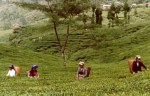 Some of my most cherished childhood memories are those of my grandmother’s tea estates, in the Dooars (foothills of Darjeeling) region of W.Bengal, sipping tea on the porch of the beautiful bungalow with a picture postcard view. Lush green tea shrubs cover the landscape, dotted with women workers picking tea leaves“ two leaves, a bud” with their nimble fingers and tossing them into the basket on their backs. I consider myself very lucky to have had the opportunity of tasting the freshness of that tea, and breathing that beautiful aroma.
 The best Darjeeling tea according to me is Makaibari
  Ingredients:
  If there’s one thing that is predictable about the 15th Lok Sabha elections, it is that it is unpredictable. Even those psephologists who consider their analyses incontestable are talking in terms of “if”.
 Deepa Mehta’s latest is a classic example of what happens when a respected and capable director gets so famous and achieves such international recognition that nobody around is willing to speak the truth to him/her. The intentions of Heaven on Earth( titled Videsh in India) are honorable; domestic violence, espectially in immigrant homes where the bride arrives from India without support systems in place, is a serious issue. The director herself introduces the subject in the opening sequences of the movie.
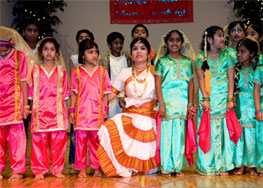 Given the profusion of dance forms that thrive in India, it would not be a stretch to say that Indians are born with a sense of rhythm. No one exemplifies the love affair that we have with movement better than Selvi Pragasam, the founder of the
 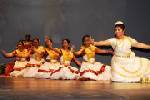 Life took a serious turn when her newborn son Aidan was diagnosed with a rare illness called Propionic Acidemia. She devoted herself to caring for his special needs for several years. Eventually she joined
 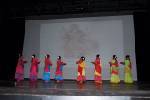 The school prides itself on the creativity of its offerings. “Bharatanatyam is a lovely art form, but it does have its fixed set of rules,” says Selvi, “and artists like Shobana who have tried to experiment with it have been heavily criticized. I would rather keep its purity and experiment outside the format.” She and her partner Lavanya Gopal experiment with incorporating belly dance, jazz, salsa and many other forms of dance into their performances.
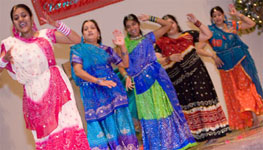 IFDA is not limited to teaching Bharatanatyam and fusion dance classes. Because of her background with special needs, Selvi puts up shows as fundraisers for Jeena and the Propionic Acidemia foundation, among other worthy causes. The academy also makes it possible for middle and high-school students volunteer at her special needs dance classes as part of their community service requirements through Selvi’s connection with
  The
The 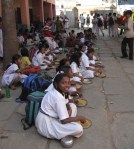 Through kitchens specially designed by engineers to leverage technology and sourcing its food stocks from local markets, Akshaya Patra is able to reduce costs associated with transportation and food spoilage while supporting the local economy. In a short time, the foundation has grown to become the largest, and certainly most innovative, school lunch program in the world. Akshaya Patra is a great example of what a non-profit organization can achieve– a cost effective, scalable solution with high quality service delivery.
 Water, No Ice